Summary
There is no single perfect age for every child to begin Kathak. Many children are ready for structured beginner training around ages five to seven, while some benefit from a more playful introduction earlier and others start successfully at eight, ten or even later. Readiness depends on interest, attention span, coordination, comfort in a group class and the ability to follow simple instructions more than on age alone.
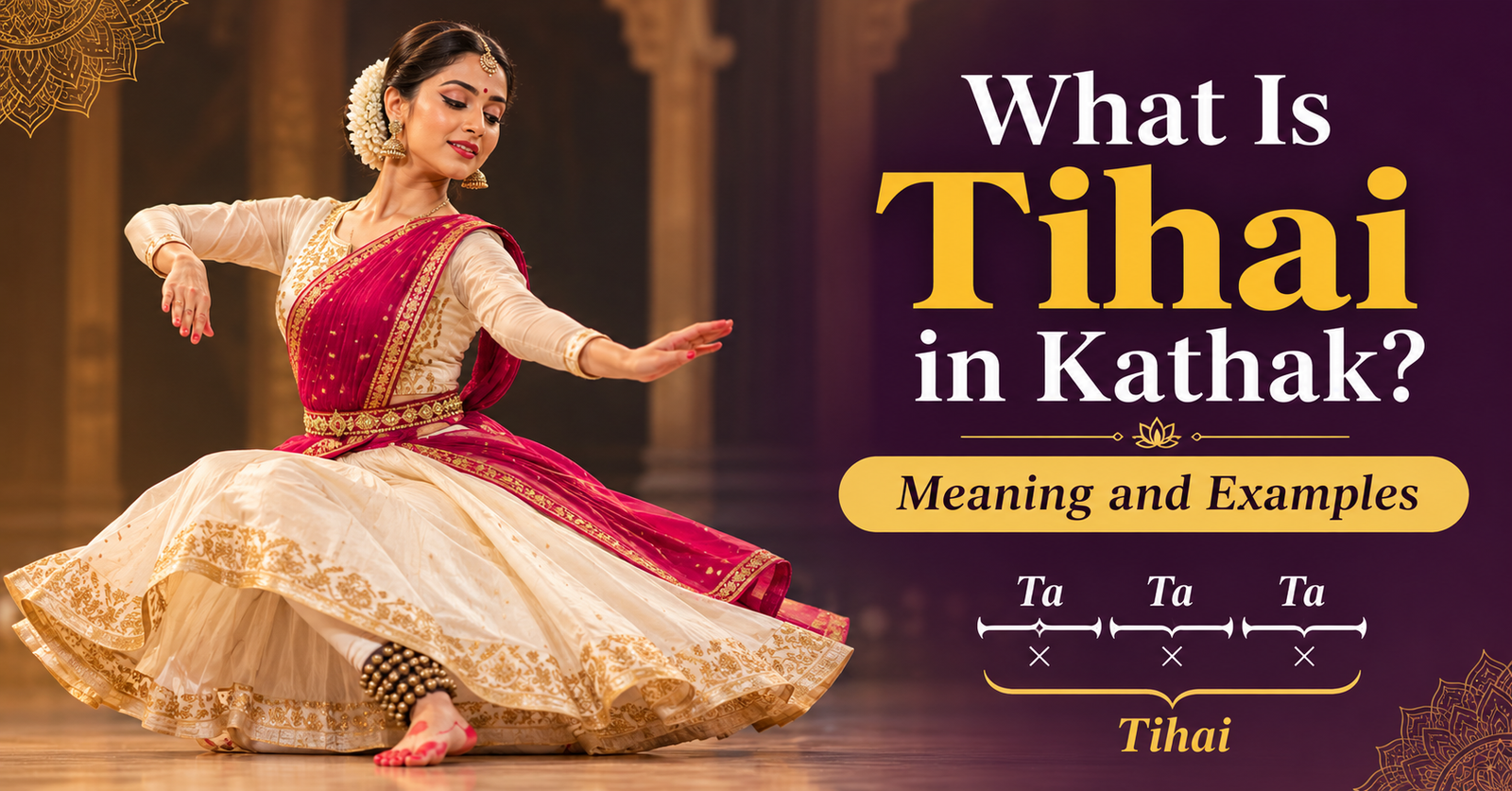
Parents often ask, “What is the best age to start Kathak?” because classical dance looks highly disciplined: dancers coordinate footwork, rhythm, hand gestures, expressions and spins while listening carefully to music. It is natural to wonder whether a young child is physically and mentally ready for that level of learning. The reassuring answer is that Kathak can be introduced gradually. A good children’s class does not begin with complicated chakkars or long compositions. It starts with posture, rhythm games, simple tatkaar, counting, storytelling and movement that match the child’s age.
Is There a Minimum Age to Learn Kathak?
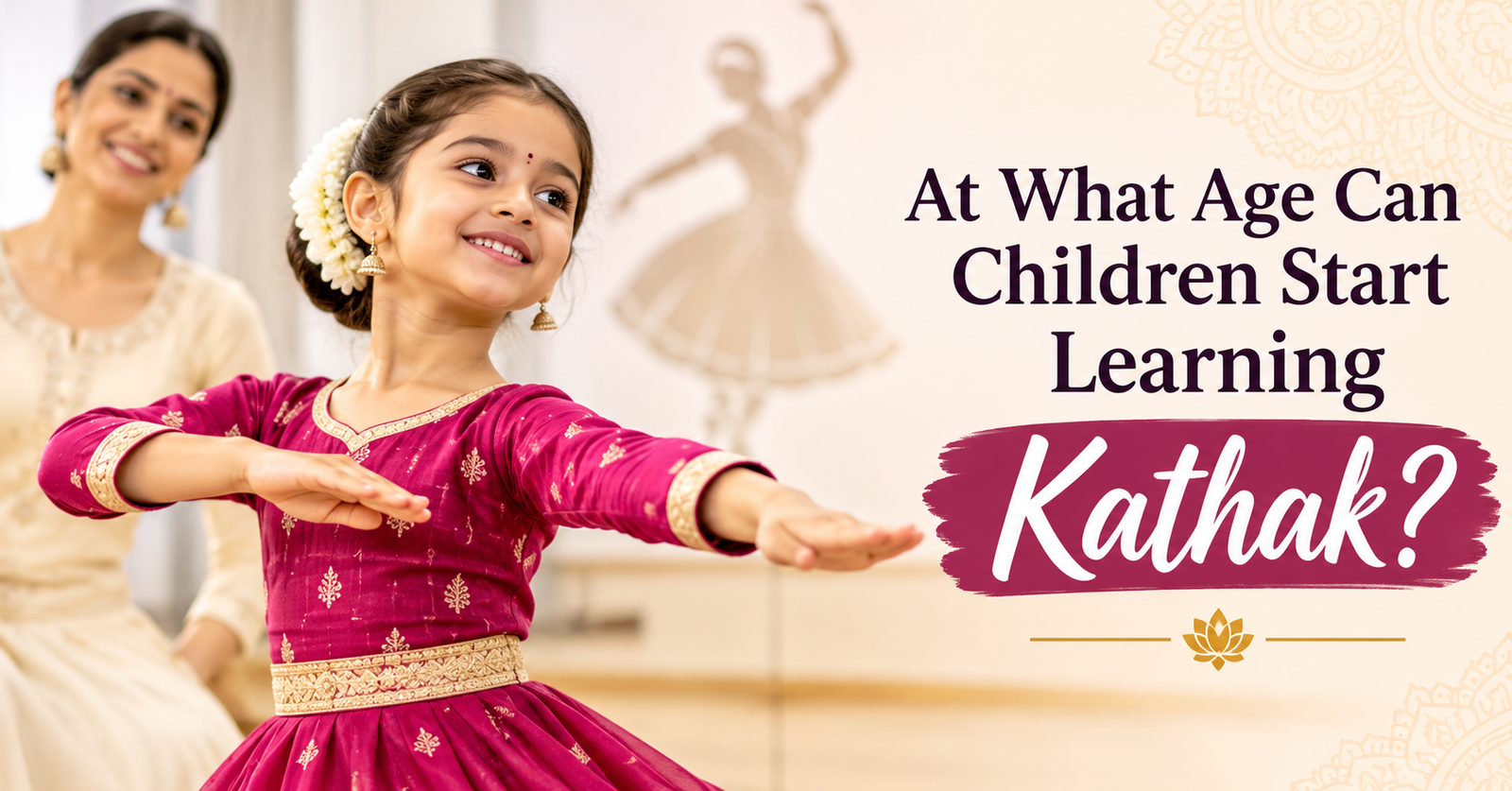
Kathak does not have one universal minimum age. In practice, many structured children’s programmes begin around five to seven years because children at this stage are often better able to listen, copy movements, remember short sequences and participate in a group class. Introductory workshops for children commonly use five years and above as a starting point, but this should not be treated as a strict rule.
A child who is four and highly interested in music and movement may enjoy a playful foundation class, while a six-year-old who is uncomfortable in structured activities may benefit from waiting a little longer. Older beginners are not at a disadvantage. A child can start at eight, ten or twelve and still build excellent classical technique with consistent training.
Why Ages Five to Seven Often Work Well
Between roughly five and seven, many children begin developing the concentration and motor control needed for formal dance learning. They can usually follow two- or three-step instructions, recognise simple counting patterns and repeat short movement sequences.
This age range also suits Kathak because the early curriculum can be broken into small, achievable skills. Instead of asking a child to perform a full composition, the teacher can work on one posture, one footwork phrase, one hand gesture or one rhythm pattern at a time.
At Upaj Academy, experienced Kathak instruction is offered for different ages and skill levels through its Kathak classes in Dubai. Upaj’s instructor Debosmriti Dandapat also began her own Kathak journey at the age of six, showing how early training can grow into long-term artistic development.
Can Children Start Before Age Five?
Yes, but the teaching approach should be different. For very young children, the priority is not technical perfection. A pre-foundation class can use music, storytelling, clapping, simple foot taps, balance games, hand movements and imitation.
The teacher may introduce basic ideas from Kathak without expecting a preschooler to memorise terminology or maintain long practice sessions. At this stage, the aim is to build enjoyment, body awareness and a positive association with classical dance.
What a younger child can practise safely
Short rhythm games, walking to a beat, simple namaskar, easy hand positions, storytelling expressions and gentle movement combinations are suitable starting points. Advanced spins, heavy ghungroo use and long repetitive footwork should be introduced only when the teacher feels the child has enough control.
What If a Child Starts at Eight, Ten or Later?
Starting later is completely valid. Older children often learn faster because they can understand explanations, count taal more confidently, remember longer sequences and practise independently at home.
A ten-year-old beginner may progress through the fundamentals more quickly than a younger learner, even though both are studying the same core vocabulary. Classical dance should not be treated like a race in which an early starting age guarantees better results.
Signs Your Child Is Ready for Kathak
Age is only one clue. Parents can look for practical signs of readiness. A child may be ready when they show genuine interest in dance or music, enjoy copying movements, can follow basic instructions, can participate in a class without becoming distressed and are willing to repeat a skill several times.
It also helps if the child can stay engaged for a short structured activity. They do not need perfect concentration; even adults lose focus. The question is whether they can return to the activity with guidance.
Interest is more important than pressure
A child who asks to dance, enjoys watching performances or responds naturally to rhythm often has a strong foundation for learning. Forcing a reluctant child into a highly disciplined class may create resistance even if the child is technically old enough.
What Do Children Learn First in Kathak?
Beginner Kathak training usually starts by building the body and mind for more complex work. Children may learn basic posture, simple tatkaar, rhythm counting, introductory taal, hand gestures, controlled turns and elementary abhinaya.
Upaj Academy’s guide to Kathak training for kids also emphasises posture, tatkaar, rhythm, mudras, chakkars and expression as core areas of a child’s early training.
Tatkaar and rhythm
Tatkaar introduces rhythmic footwork. Children begin slowly, learning to place the feet clearly and connect movement with counting. Accuracy is more important than speed.
Hand gestures and storytelling
Kathak is not only footwork. Children also learn to communicate ideas through gestures, facial expressions and body language. Storytelling often keeps young learners engaged because it connects technique with imagination.
Chakkars
Turns are introduced gradually. A child first needs posture, balance and directional awareness. Teachers generally focus on controlled turning rather than asking beginners to perform many spins.
When Should Children Start Wearing Ghungroo?
There is no rule that a child must wear ghungroo from the first lesson. Some teachers introduce a small number of bells after the student demonstrates basic foot placement and rhythm, while others wait longer.
Ghungroo add weight and sound, so the child needs enough ankle control to use them correctly. Parents should follow the teacher’s guidance rather than buying a very heavy set immediately.
How Long Should Children Practise at Home?
Short, regular practice is usually more effective than one long session. A young beginner may benefit from ten to fifteen minutes of focused repetition several times a week, depending on the teacher’s recommendation. Older children can gradually practise longer.
Home practice should reinforce what was taught in class. Parents do not need to become the teacher. Simply providing a clear space, regular schedule and encouragement can make a major difference.
Does Kathak Affect a Child’s School Routine?
When scheduled sensibly, classical dance can fit well alongside school. A weekly class plus short home practice is manageable for many beginners. As a student becomes more advanced or prepares for examinations and performances, the time commitment may increase.
Families should choose a realistic schedule rather than enrolling a child in so many activities that Kathak becomes stressful.
Benefits of Starting Kathak During Childhood
Kathak can support coordination, rhythm awareness, balance, memory, confidence and creative expression. Children also learn patience because progress comes through repetition rather than instant results.
The cultural dimension is equally important. Through music, stories, terminology and performance traditions, young learners gain a practical connection to Indian classical arts.
How Parents Can Choose the Right Kathak Class
Look beyond location and timing. Ask about the teacher’s training, experience with children, class size, progression system and whether beginners receive individual corrections. A supportive teacher should know how to maintain discipline without making a child afraid of mistakes.
Upaj Academy describes a student-focused approach with attention to technique, artistry and development. Parents can learn more about the academy’s Kathak instructor and teaching background before choosing a class.
Should You Book a Trial Class First?
A trial class can be useful because readiness is easier to judge in the studio than at home. Watch whether the child responds to the teacher, enjoys the movement and is comfortable with the pace of the class.
Do not judge the trial by whether the child performs every step correctly. A first class should reveal curiosity and comfort, not mastery.
The Best Age Is When the Child Is Ready to Learn
For many children, ages five to seven are a practical time to begin structured Kathak training. But there is no deadline and no single perfect number. A motivated eight-year-old can thrive, and a younger child can begin with playful foundational activities.
The most important factors are interest, readiness, a patient teacher and consistent practice. Families who want to explore age-appropriate Kathak classes in Dubai can contact Upaj Academy to discuss the right batch for their child.
- All Posts
- Bharatanatayam
- Blog
- Bollywood
- kathak
- Zumba