How Many Years Does It Take to Learn Bharatanatyam?
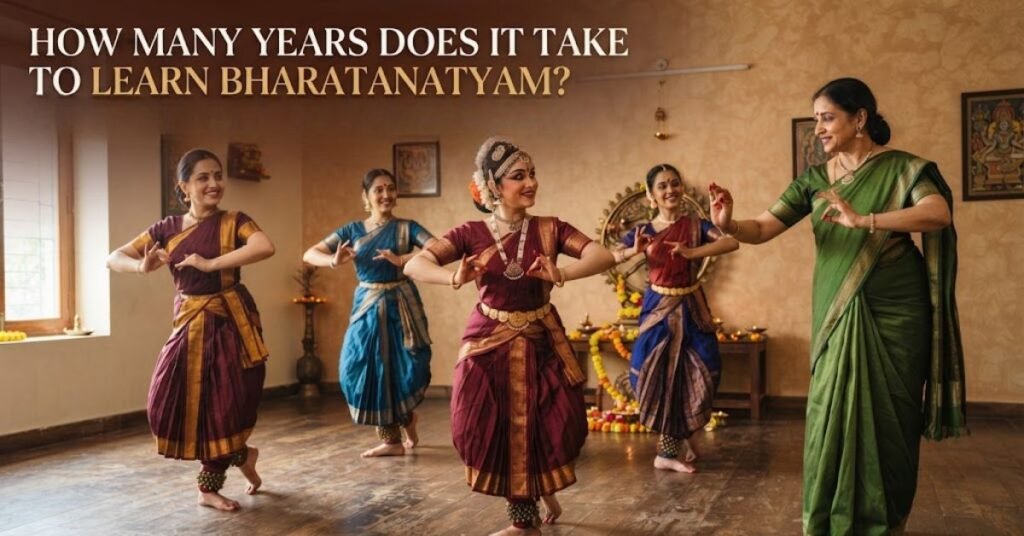
How Many Years Does It Take to Learn Bharatanatyam? Summary : Learning Bharatanatyam is a gradual journey that takes time, regular practice and proper guidance. This blog explains how many years it typically takes to learn Bharatanatyam, from understanding basic adavus and posture in the first year to developing intermediate skills over 2–4 years and reaching advanced performance-level training in around 6–10 years. One of the first questions beginners and parents ask is, “How many years does it take to learn Bharatanatyam?” There is no single answer that applies to everyone. A student can learn basic adavus and movements within months, but developing reliable technique, musical understanding, abhinaya and stage confidence takes considerably longer. Structured Bharatanatyam programmes commonly divide training into beginner, foundation, intermediate and advanced stages. So, rather than thinking of Bharatanatyam as a course that can be completed in a fixed period, it is better to view it as a progressive learning journey. How Many Years Are Needed To Learn Bharatanatyam? A student can learn the basics in a relatively short time, but mastery develops through years of repetition, correction and performance experience. 6 Months To 1 Year: Learning The Basics The first year is mainly about building a strong foundation. Students usually begin with basic postures, Namaskaram, simple adavus, hand gestures, eye movements and rhythm. They also start developing coordination between the hands, feet, eyes and body. Adavus are particularly important because they provide the technical vocabulary used throughout Bharatanatyam. Beginners also work on maintaining the characteristic posture and gradually becoming comfortable with movements that initially feel unfamiliar. At this stage, progress may seem slow. That is normal. The goal is not to learn as many dance pieces as possible. The goal is to learn movements correctly so that they can support more complicated work later. Some training programmes place foundational adavu learning within approximately six to eighteen months, depending on the student’s practice and class frequency. By the end of the first year, a committed student may be able to perform basic combinations with better rhythm and coordination, but there is still a long way to go. 1 To 3 Years: Building A Strong Foundation During the next stage, students become more comfortable with Bharatanatyam technique. They work on a wider range of adavus, rhythm patterns, hastas and simple compositions. Their body becomes more conditioned to the demands of the dance, and movements begin to look more controlled and natural. Students may also start learning pieces such as Alarippu and Jatiswaram as their technical foundation becomes stronger. This is also the period when many learners begin to understand that Bharatanatyam involves more than physical movement. Rhythm, music, expression and storytelling gradually become part of the training. Consistent attendance and home practice make a major difference here. A student who practises regularly can reinforce what was taught in class, while irregular practice can make even simple movements difficult to retain. 3 To 5 Years: Reaching The Intermediate Level After several years of consistent training, students generally move toward more advanced combinations and repertoire. This stage may include Shabdam, Keerthanam and more complex rhythmic patterns. Students also begin developing stronger abhinaya, which involves communicating meaning and emotion through facial expressions, gestures and controlled movement. The dancer is no longer simply remembering choreography. They are learning how to understand the mood and meaning behind what they perform. Intermediate students also start developing the stamina required to perform longer pieces. Balance, posture, precision and rhythm become more important as the choreography becomes demanding. Training systems vary, but several structured programmes place the intermediate period at around two to four years. 5 To 7 Years: Advanced Bharatanatyam Training Advanced training requires much more than memorising steps. Students may work on repertoire such as Varnam, Padam, Javali and Thillana, along with challenging jathis and korvais. Abhinaya becomes more detailed, while the dancer develops greater control over expression, timing and transitions. At this stage, students need to perform movements with consistency while also communicating the meaning and emotion of the composition. This is where the difference between learning choreography and becoming a trained dancer becomes especially noticeable. The dancer begins to develop an individual sense of presentation while remaining grounded in the grammar and discipline of the art form. 6 To 10 Years: Advanced Performance And Arangetram Preparation For students following a serious classical training path, six to ten years is a useful broad estimate for reaching substantial performance-level training. One established Bharatanatyam programme states that six to ten years of intensive training may be required to perfect technique and understand the intricacies of the form. Its curriculum progresses through foundation, intermediate and advanced levels before the student begins preparing for an Arangetram. Other structured training sources similarly describe Arangetram as something that generally follows several years of consistent learning rather than a short course. However, six to ten years should not be treated as a compulsory deadline. A student who attends one class per week and rarely practises at home may progress much more slowly than a student attending multiple classes and practising consistently. Age, physical readiness, learning ability and the teaching approach also influence the timeline. Why Does Bharatanatyam Take So Many Years To Learn? Bharatanatyam combines several forms of learning at the same time. A student has to develop body control, footwork, balance, rhythm, hand gestures, facial expressions, musical awareness and storytelling ability. They also need to remember compositions and perform them accurately. The key elements of Bharatanatyam dance are interconnected. A dancer may know the steps but still need years to perform them with the correct posture, rhythm, energy and expression. That is why simply counting the number of pieces a student knows does not accurately measure progress. Good Bharatanatyam training focuses on building the underlying technique first and then using that technique to support increasingly complex performances. Why Understanding Its Tradition Matters Students often find the learning experience more meaningful when they understand the history of Bharatanatyam and the cultural traditions connected with it. Bharatanatyam is not
Benefits of Dance: Physical, Mental, Social and Educational Benefits for All Ages
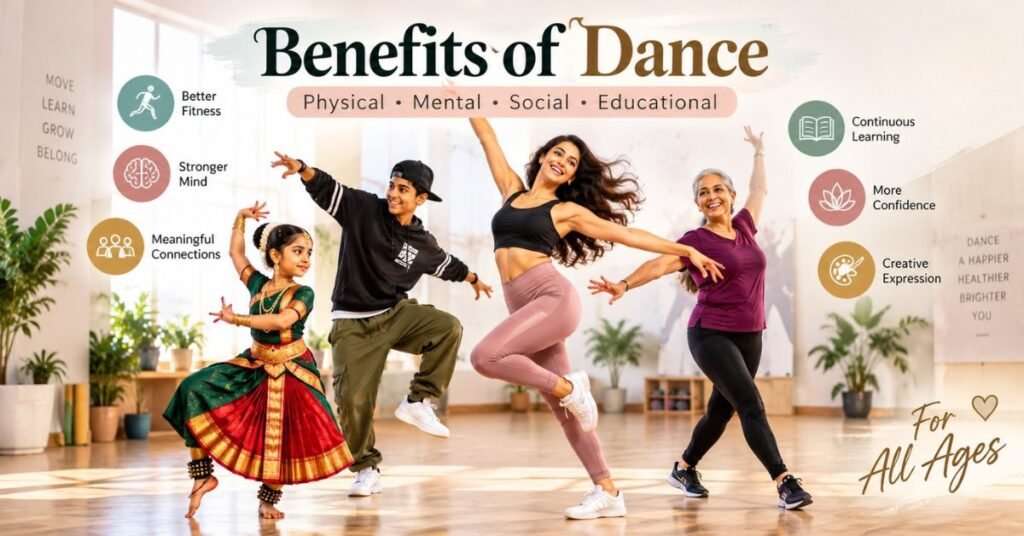
Benefits of Dance: Physical, Mental, Social and Educational Benefits for All Ages Summary : Dance is much more than learning steps or performing to music. It combines physical activity, creativity, rhythm, memory, emotional expression and social interaction in a single activity. Regular dancing can help improve cardiovascular fitness, strength, flexibility, balance, coordination and body awareness. It can also support mental wellbeing, concentration, confidence, creativity and social development. For children and students, dance provides opportunities to develop motor skills, discipline, teamwork and self-expression. For adults, it can be an enjoyable way to exercise, manage everyday stress, learn a new skill and connect with others. Whether someone chooses Kathak, Bharatanatyam, Bollywood, Zumba, folk dance or another style, the greatest benefits usually come from consistent practice, suitable instruction and choosing a form of dance they genuinely enjoy. People have danced for thousands of years for celebration, storytelling, exercise, artistic expression, community and cultural tradition. Today, people also join dance classes to stay active, improve their skills, develop confidence or simply enjoy moving to music. One reason dance is so valuable is that it engages several aspects of wellbeing at the same time. Your body works to coordinate movements, maintain balance and respond to rhythm. Your brain remembers sequences and anticipates what comes next. You may express emotions through movement while simultaneously interacting with a teacher, partner or group. Research on structured dance has reported benefits across physical fitness, physical function, mental wellbeing, cognitive functioning and social wellbeing. The exact benefits vary according to the dance style, intensity, frequency, age, health and experience of the person dancing. Here is a closer look at the physical, mental, emotional, social, educational and cultural benefits of dance and how they apply to children, students and adults. What Are the Main Benefits of Dance? The benefits of dancing can broadly be grouped into six areas: Physical: fitness, stamina, strength, flexibility, coordination, balance and posture Mental: concentration, memory, attention and cognitive engagement Emotional: confidence, self-expression, enjoyment and stress management Social: communication, teamwork, friendships and belonging Educational: discipline, creativity, listening, observation and continuous learning Cultural: understanding traditions, storytelling, music and artistic heritage What makes dance especially interesting is that these areas rarely operate separately. Learning choreography, for example, simultaneously requires memory, coordination, concentration, physical control and musical awareness. Physical Benefits of Dance 1. Improves Cardiovascular Fitness Many dance styles involve continuous movement that raises the heart rate and increases breathing. Depending on intensity, dance can therefore work as aerobic exercise. Energetic styles such as Bollywood dance, Zumba dance and other dance-fitness formats can provide particularly active sessions, while classical and slower styles may alternate between moderate activity and technically demanding movements. 2. Builds Muscular Strength and Endurance Dancers repeatedly use the legs, hips, core and upper body to control movements, maintain positions, change directions and complete sequences. Repeated practice can gradually develop muscular endurance and functional strength. Different styles emphasize different movements. Classical Indian dance, for example, may require controlled postures, footwork and sustained positions, while energetic contemporary or Bollywood routines may involve larger whole-body movements. 3. Improves Balance and Coordination Dance requires the brain and body to work together. A dancer may need to: move the feet in one pattern use the hands differently maintain posture follow music change direction remain aware of other dancers This combination continually challenges balance, spatial awareness and coordination. These skills can become more refined with regular, well-guided practice. 4. Develops Flexibility and Mobility Many dance classes incorporate controlled stretches and movements through different ranges of motion. With appropriate training and consistency, this can help develop flexibility and mobility. Flexibility should, however, be developed gradually. Good dance training prioritizes correct technique rather than forcing the body into movements it is not ready to perform. 5. Supports Better Posture and Body Awareness Learning dance teaches students to notice how they stand, shift weight, position their shoulders, control their core and move different parts of their body. This increased body awareness can help dancers recognize inefficient movement patterns and become more conscious of alignment and posture. 6. Develops Stamina Completing a dance routine requires sustained physical effort. As students practise consistently, they often become better able to perform movements for longer periods without becoming tired as quickly. This increased endurance can also support other everyday physical activities. Mental and Cognitive Benefits of Dance Dance exercises the brain as well as the body. 7. Challenges Memory Learning choreography requires dancers to remember movement sequences, directions, rhythm, timing, formations, transitions and cues from music. This makes dance a mentally active form of exercise rather than repetitive physical movement alone. 8. Improves Concentration and Attention A dancer must pay attention to the instructor, music, movement and surrounding space at the same time. Children and students can therefore practise staying focused while completing a task that requires both physical and mental participation. This does not mean dance automatically improves academic grades, but the skills practised during structured learning, including listening, concentration, memory and persistence, can also be valuable in educational environments. 9. Encourages Problem-Solving Dance is not only about copying steps. Students may need to understand how to transition between movements, adjust timing, remember spatial patterns or interpret choreography. Creative dance goes further by asking students to develop movements themselves. 10. Supports Creativity Music can be interpreted in many ways. Students gradually learn how changes in rhythm, expression, gesture, speed and energy can communicate different ideas. This creative component distinguishes dance from many conventional forms of exercise. Emotional Benefits of Dance 11. Provides a Healthy Form of Self-Expression Not every emotion is easy to communicate verbally. Dance gives students another way to express excitement, joy, strength, confidence, storytelling and other feelings through movement. Expression is especially important in performance traditions where gestures, facial expressions and storytelling form an important part of the art. 12. Can Help Reduce Everyday Stress Physical activity can support psychological wellbeing, while music and enjoyable movement can make dance particularly engaging. People may also find that concentrating on choreography temporarily shifts their attention away from
How Does Bharatanatyam Connect Children To Indian Culture?
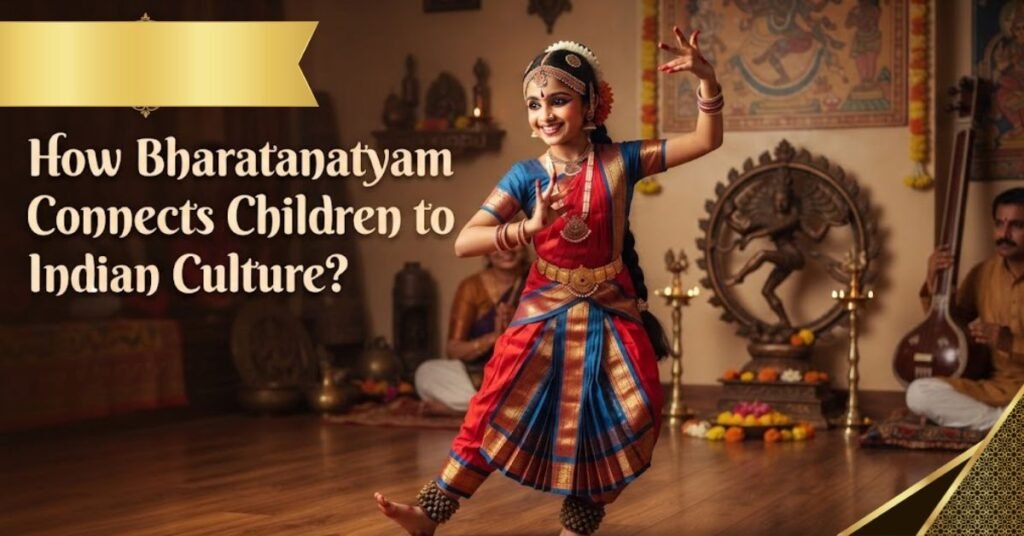
How Bharatanatyam Connects Children to Indian Culture? Summary : Bharatanatyam gives children more than an opportunity to learn dance. It introduces them to Indian stories, music, traditions, expressions and values through movement and performance. For children growing up in a multicultural environment, learning this classical art form can make cultural education enjoyable and memorable. Through mudras, rhythm, storytelling, costumes and expressions, children gradually discover different parts of Indian heritage while developing their own appreciation for the art. This blog explores how Bharatanatyam can help children understand their cultural roots, experience Indian traditions and build a meaningful connection with their heritage. What Makes Bharatanatyam More Than Just A Dance Form? Bharatanatyam is one of India’s classical dance forms, but learning it involves much more than memorising a sequence of steps. Children are introduced to movement, rhythm, music, expressions, hand gestures and storytelling as parts of one artistic experience. During regular practice, children learn how the body can communicate an idea, emotion or story. They practise traditional movements, improve their sense of rhythm and gradually become familiar with the language of classical dance. They may also learn about traditional costumes, performance etiquette and the significance of beginning a practice or performance with respect. These experiences give children an opportunity to see Indian culture as something they can actively experience rather than something they only read about. For a child, this combination can make cultural learning more engaging. A story becomes something they can perform, a gesture gains meaning, and music becomes connected to movement. Over time, these small experiences can build familiarity with Indian artistic traditions. How Does Bharatanatyam Introduce Children To Indian Stories? Storytelling is one of the most engaging parts of Bharatanatyam for children. Many performances draw from traditional Indian stories, mythology, literature and characters that have been passed down through generations. Instead of only listening to a story, a child may portray a character through posture, movement, facial expressions and gestures. This makes the experience more active and encourages children to pay attention to what a character is feeling or doing. Stories can introduce children to ideas such as courage, kindness, devotion, compassion, honesty and respect. They also give children a chance to explore different characters and situations through performance. This is where abhinaya, or expressive storytelling, becomes especially important. A dancer uses facial expressions, gestures and body language to communicate meaning to an audience. For children, this can create a memorable connection between storytelling and culture. They are not simply learning the name of a traditional story; they are exploring its characters, emotions and messages through their own performance. How Does Storytelling Make Indian Traditions Easier For Children To Understand? Children often remember experiences that allow them to participate. Bharatanatyam turns cultural stories into something they can see, hear, move through and express. A simple process can look like this: Story → Character → Expression → Movement → Understanding As children repeat this process, traditional stories can become more familiar and easier to understand. Parents can also continue the conversation at home by asking what a child remembers about a character or why a particular movement was used. How Do Mudras Help Children Understand Indian Culture? Mudras are an important part of Bharatanatyam and help communicate meaning through hand gestures. Depending on how they are used, gestures can represent objects, actions, people, emotions, nature and ideas. For children, learning mudras can feel like discovering a traditional visual language. They begin to understand that a hand position is not just a shape but can carry a specific meaning within a performance. This can make the learning process interactive. A child may learn a gesture and then discover how it fits into a story or sequence. Connecting the movement to a meaning helps make the cultural element more memorable. Mudras also show children how communication has traditionally been expressed through Indian performing arts. They encourage observation, concentration and attention to detail while giving children another way to understand the stories they perform. Why Are Facial Expressions Important In Bharatanatyam? Facial expressions are essential to Bharatanatyam because movement alone cannot always communicate the complete emotion behind a story. Children learn to express feelings such as happiness, sadness, surprise, fear, anger, affection and courage. They gradually understand how a subtle change in expression can alter the way a character or situation is perceived. This expressive training also helps children become more aware of emotions. They learn to observe how feelings can be communicated through the face and body, making storytelling more natural and engaging. How Does Bharatanatyam Introduce Children To Indian Music And Rhythm? Dance and music are closely connected in Bharatanatyam. Children learn that movement is guided by rhythm and that dancers need to listen carefully to music while coordinating their steps. As they practise, they develop a stronger awareness of beat, timing and patterns. They may also become familiar with traditional compositions, vocal elements and percussion used in classical dance performances. Learning rhythm can make children more attentive during practice because they need to listen and respond at the right moment. It also helps them understand that Indian classical dance is part of a wider performing arts tradition. The concept of tala, which relates to rhythmic cycles, can gradually be introduced as children become more comfortable with the basics. The technical side can be taught according to their age and level, allowing cultural understanding to grow naturally alongside dance skills. How Does Bharatanatyam Teach Children About Indian Traditions? Bharatanatyam exposes children to several traditions associated with Indian performing arts. This can include traditional attire, jewellery, hair styling, stage presentation, music and performance etiquette. Children may also learn namaskaram, a traditional gesture performed as part of the practice or performance process. It helps introduce ideas of respect toward the art, teachers, fellow performers and the space in which the dance is performed. Traditional costumes can also become an opportunity for cultural learning. Rather than seeing the costume only as something worn on stage, children can learn that colours, jewellery, styling
How Bharatanatyam Helps Children Build Discipline and Focus?
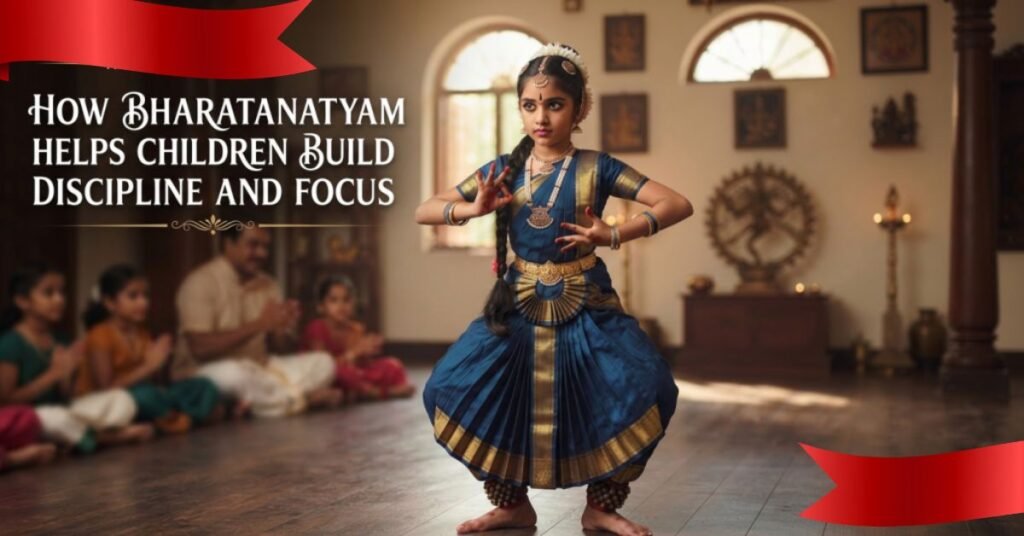
How Bharatanatyam Helps Children Build Discipline and Focus? Summary : Bharatanatyam is much more than learning dance movements. For children, it can become a meaningful learning experience that encourages regular practice, patience, concentration and confidence. Every class introduces children to rhythm, posture, hand gestures, expressions and coordinated movements that require attention and consistency. In a time when children have many distractions competing for their attention, structured activities can help them develop healthy routines. Bharatanatyam gives children a creative way to learn while also encouraging them to listen carefully, remember sequences, follow instructions and keep practising even when something feels difficult. The value of Bharatanatyam goes beyond what happens inside the dance studio. The habits children develop through regular training can gradually become useful in schoolwork, daily routines, social situations and other activities. Here is how learning Bharatanatyam can help children develop stronger discipline and focus. What Makes Bharatanatyam Different For Children? Bharatanatyam combines movement, music, rhythm, expressions and storytelling. Children are expected to coordinate different parts of the body while also paying attention to timing and sequence. This makes the learning process active and engaging. A child learning Bharatanatyam may need to watch the teacher, listen to the rhythm, remember a particular movement, maintain posture and perform the step at the correct time. These tasks require attention from both the mind and body. Another important part of Bharatanatyam is repetition. Children often practise the same movement several times before they become comfortable with it. Instead of moving quickly from one activity to another, they learn that progress often comes from staying with a task and improving it gradually. This combination of creativity and structure makes Bharatanatyam a valuable activity for children who are learning how to stay committed and attentive. How Does Bharatanatyam Teach Children To Follow A Routine? Children often learn discipline through simple routines repeated over time. Bharatanatyam naturally creates opportunities for this. Attending dance classes at regular times helps children understand the importance of being prepared and consistent. They learn that class begins at a certain time and that they need to arrive ready to participate. During a class, children also become familiar with a sequence of activities. They may begin with warm-ups, move into basic exercises, practise adavus and then work on choreography. Following this structure helps them become comfortable with routines. Over time, children can start understanding that good results are rarely achieved through occasional effort. Regular participation matters. This can also encourage useful habits outside dance. A child who becomes comfortable following a weekly practice routine may gradually find it easier to approach homework, reading, sports or other structured activities with greater consistency. How Does Regular Practice Help Children Develop Self-Discipline? Self-discipline does not usually appear overnight. It develops when children learn to continue doing something even when they are not immediately successful. Bharatanatyam gives children many opportunities to experience this. A new movement may feel uncomfortable at first. A rhythm may be difficult to follow. A sequence may be forgotten halfway through. Instead of giving up, children are encouraged to repeat the movement, understand the correction and try again. This teaches an important lesson: improvement requires effort. With regular practice, children can begin to understand the difference between wanting to do something and working toward becoming better at it. They learn to practise even when the excitement of a new activity has passed. Parents can support this process by encouraging consistency rather than demanding perfection. The goal is not for a child to perform every movement perfectly from the beginning. The goal is to help them understand the value of patience, effort and gradual progress. How Does Bharatanatyam Improve A Child’s Concentration? Concentration is an essential part of learning Bharatanatyam because children have to focus on several details at the same time. During a dance sequence, a child may need to listen to music, follow rhythm, remember the order of movements, maintain posture, use the correct hand gesture and watch for the next instruction. Losing attention for even a moment can cause the sequence to change. As children practise, they get more comfortable staying mentally present during a task. This type of learning encourages them to focus on what they are doing rather than constantly switching their attention. With regular classes, children may become more familiar with the process of listening carefully, processing information and responding through movement. It is important not to present dance as a guaranteed solution for academic performance. However, the attention and practice habits developed through structured dance learning can be useful skills in many areas of a child’s daily life. How Do Rhythm And Footwork Train Children To Pay Attention? Rhythm is an important part of Bharatanatyam, and learning it requires careful listening. Children have to understand beats and coordinate their footwork with the rhythm. They learn to recognise timing and develop an awareness of when a movement should begin, pause or change. At first, keeping up with rhythm may seem challenging. With practice, children become more comfortable listening and responding at the right moment. This can encourage several useful habits, including careful listening, timing, observation and attention to detail. Rather than performing movements randomly, children learn that every movement has a place within a larger pattern. The process also teaches children to notice small differences. A slightly early step, an incorrect beat or a missed movement becomes something they can identify and improve. How Does Memorising Bharatanatyam Steps Strengthen A Child’s Mental Focus? Memory plays a major role in learning Bharatanatyam. Children gradually learn adavus, mudras, combinations, choreography and performance sequences. A sequence has to be remembered in the correct order, and the child must recall it while also focusing on movement and rhythm. This creates an interesting mental challenge because remembering the steps is only one part of the task. Children also need to remember when to change direction, when to use a particular gesture and how to move into the next sequence. Regular practice can make this process easier over time. Children become familiar
Bharatanatyam: The Most Structured Classical Dance Form in the World
Bharatanatyam: The Most Structured Classical Dance Form in the World Summary: Bharatanatyam stands as the most rigorously structured classical dance form globally, with codified movements, rhythmic patterns, and technical principles documented in ancient texts. Originating from Tamil Nadu, India, this dance form combines precise body movements, hand gestures (mudras), and facial expressions into a highly organized system that has been preserved and refined for centuries. In the realm of classical dance, structure and discipline form the backbone of artistic excellence. While various dance forms across cultures—from ballet to Kathak—possess their own systematic approaches, Bharatanatyam emerges as the epitome of structured classical dance. With its comprehensive system of movements, strict technical requirements, and deep-rooted foundation in ancient literary texts, Bharatanatyam represents the pinnacle of organized choreographic expression. The Architecture of Bharatanatyam: Understanding Its Structure The Foundation in Ancient Texts Bharatanatyam’s structured nature is rooted in the Natyashastra, an ancient Sanskrit text authored by Bharata Muni approximately 2,000 years ago. This comprehensive treatise details every aspect of dance, including body positions (asanas), hand gestures (mudras), footwork patterns (taalam), and facial expressions (rasas). The dance form has been meticulously preserved through oral tradition and written documentation, ensuring consistency across generations. Codified Movement Systems The dance employs over 108 mudras (hand gestures), each with specific meanings and applications. These are not arbitrary movements but precisely defined positions with established rules for execution. Similarly, the adavu (basic steps) are systematically organized and must be performed with exact timing, positioning, and alignment. Every movement has a designated place within the performance structure. Rhythmic Organization Taalam (rhythm) is the mathematical heartbeat of Bharatanatyam. Dancers follow complex rhythmic cycles that range from three to twenty-nine beats. These patterns are strictly defined, and dancers must synchronize their movements with these mathematical frameworks. This creates a level of structure that is arguably unmatched in other dance forms. The Rasa System: Emotional Structure Bharatanatyam uses the Rasa theory to structure emotional expression. Nine distinct rasas (emotional sentiments) guide the dancer’s facial expressions and performance intensity. This provides a systematic framework for conveying complex emotions, ensuring that subjective feelings are expressed through objective, codified means. Performance Structure: Margam A traditional Bharatanatyam performance follows a specific sequence called Margam (path). This prescribed order includes Alaripu (invocation), Jatiswaram (rhythm patterns), Sabdam (piece with lyrics), Varnam (elaboration), Padam (song), and Thillana (concluding piece). This structure ensures that every performance has a logical progression and consistent framework. Comparison with Other Classical Dance Forms While ballet possesses highly codified technique, it focuses primarily on body mechanics and lacks the elaborate gestural vocabulary of Bharatanatyam. Kathak, another Indian classical form, is more improvisational and less rigidly structured. Contemporary classical forms in other cultures also demonstrate structure but not to the comprehensive degree seen in Bharatanatyam. The combination of textual documentation, standardized movements, rhythmic mathematics, emotional frameworks, and prescribed performance sequences make Bharatanatyam uniquely structured. The Rigorous Training Process Training in Bharatanatyam typically spans 6-8 years of rigorous study. Students learn movements in a precise sequence, beginning with basic steps and progressing to complex combinations. The training methodology itself is highly structured, with clear progression levels and mastery requirements. This systematic pedagogy ensures that the knowledge is transmitted accurately across generations. Experience the Precision of Bharatanatyam at Upaj Academy Discover the structured elegance and artistic depth of Bharatanatyam through expert training at Upaj Academy. Our experienced instructors guide you through the systematic progression of this ancient dance form, from fundamental adavus to advanced performance pieces. Join our community of dedicated dancers and experience the transformative power of one of the world’s most perfectly organized classical dance traditions. Enroll in our classes today and become part of a legacy spanning millennia. Preserving Perfection: The Timeless Structure of Bharatanatyam Bharatanatyam’s claim as the most structured classical dance form is not merely a matter of opinion—it is supported by centuries of documentation, systematic codification, and rigorous training methodologies. Every movement, gesture, rhythm, and emotion has a defined place within the comprehensive framework established by Bharata Muni and refined through generations of dedicated practitioners. This structure does not constrain artistic expression but rather provides a foundation upon which genuine artistry flourishes. In a world where improvisation and innovation are often celebrated, Bharatanatyam stands as a testament to the power of preserving, perfecting, and perpetuating a sacred art form through meticulous structure and unwavering dedication. If you’re inspired to experience this timeless tradition firsthand, enrolling in the best Bharatanatyam classes in Dubai can help you learn from experienced instructors while mastering the authentic techniques and discipline of this revered classical dance form. Frequently Asked Questions What exactly are mudras in Bharatanatyam? Mudras are hand gestures with specific meanings. There are over 108 mudras in Bharatanatyam, each precisely defined. They can represent objects, emotions, actions, or concepts. Some mudras are single-handed (asamyuta), while others involve both hands (samyuta). Each mudra must be performed with exact finger positioning and hand orientation. How long does it take to become a professional Bharatanatyam dancer? Typically, it takes 6-8 years of consistent training to reach an intermediate level. Professional performers often train for 10-12 years or more. The structured curriculum begins with basic steps and progressively introduces more complex movements and compositions. Mastery is an ongoing process that continues throughout a dancer’s lifetime. What is Taalam and why is it important? Taalam is the rhythmic framework in Bharatanatyam, functioning as the mathematical organization of time. It consists of beats and patterns that can range from 3 to 29 beats per cycle. Taalam is crucial because it structures the choreography and synchronizes the dancer’s movements with musical accompaniment, creating precision and unity in performance. What are the nine rasas in Bharatanatyam? The nine rasas are: Sringara (love/beauty), Hasya (joy/laughter), Karuna (sorrow), Raudra (anger), Vira (courage), Bhayanaka (fear), Bibhatsa (disgust), Adbhuta (wonder), and Shanta (peace). Each rasa has specific facial expressions (bhava) and body movements associated with it. This systematic categorization allows dancers to express complex emotions in a structured manner. What is the significance of the Natyashastra? The Natyashastra, written by
Bharatanatyam Dance Costumes, Jewellery, And Makeup Guide
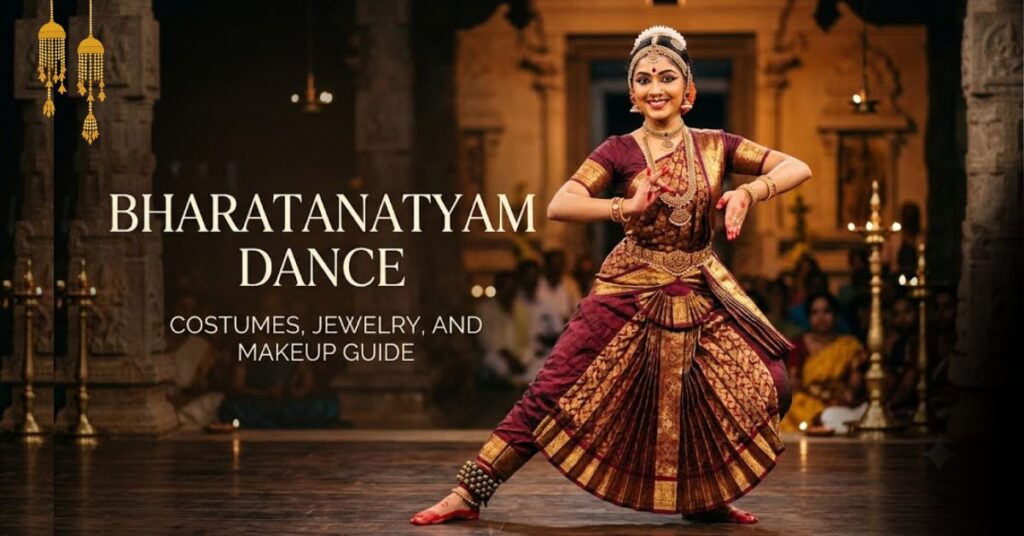
Bharatanatyam Dance Costumes, Jewellery, And Makeup Guide Summary: Bharatanatyam is known not only for its expressive movements and rhythmic footwork, but also for its striking presentation on stage. The costume, jewellery, and makeup all work together to bring out the beauty, discipline, and tradition of this classical dance form. This guide explains everything dancers need to know about choosing the right attire, wearing traditional ornaments, applying performance makeup, and preparing for a graceful stage appearance. Bharatanatyam is one of the most admired classical dance forms of India, and its visual presentation is just as important as its movement vocabulary. Every detail, from the neatly pleated costume to the shining temple jewellery and carefully applied makeup, adds to the grace and impact of the performance. A Bharatanatyam dancer is not simply dressed for appearance; each element supports expression, posture, and storytelling. For students and performers, understanding costume, jewellery, and makeup is part of learning the dance itself. These elements preserve tradition while helping the dancer appear confident, polished, and stage-ready. Whether you are preparing for a recital, exam, or cultural event in Dubai, knowing how to present Bharatanatyam correctly can make a remarkable difference in your overall performance. Why Are Costumes, Jewellery And Makeup Important In Bharatanatyam? How Visual Presentation Enhances Storytelling Bharatanatyam is a dance form that depends deeply on expression. The eyes, hands, posture, and facial movement all carry meaning. When the costume and makeup are properly arranged, the audience can clearly see the dancer’s movements and emotions even from a distance. This visual clarity helps the story come alive on stage. The Connection Between Tradition And Performance The traditional Bharatanatyam look is not chosen only for beauty. It reflects centuries of cultural heritage and artistic discipline. The costume, jewellery, and makeup are all linked to the classical roots of the dance, making the performance feel authentic and respectful of tradition. Every aspect of a Bharatanatyam performance becomes more meaningful when dancers understand the history and cultural significance of Bharatanatyam and its role in preserving Indian culture. Why Every Detail Supports Abhinaya And Expression Abhinaya, or expressive storytelling, becomes stronger when the dancer’s face and body are framed properly. Bold makeup helps the eyes stand out, jewellery adds elegance, and the costume gives structure to movements. Together, these details support the emotional depth of the performance. Understanding The Traditional Bharatanatyam Costume The History And Significance Of Bharatanatyam Attire The Bharatanatyam costume evolved to suit both tradition and movement. It allows the dancer to perform complex footwork, deep postures, and graceful gestures without restriction. At the same time, it preserves the beauty of temple-inspired art and classical Indian aesthetics. Key Elements Of A Bharatanatyam Costume A Bharatanatyam costume usually includes several important parts: Blouse The blouse is fitted closely so the upper body looks neat and structured. It helps keep the focus on posture, shoulder alignment, and arm movements. Pleated Fan The pleated fan is one of the most recognizable parts of the costume. It opens beautifully during araimandi and other seated postures, emphasizing the dancer’s stance and movement. Bottom Wear The lower portion is usually stitched in a way that allows both comfort and symmetry. It should support wide steps, turns, and quick posture changes without discomfort. Pallu Or Draped Section This part adds elegance and balance to the costume. It also gives the dancer a more complete traditional appearance on stage. Waist Belt The waist belt holds the costume in place and gives a refined finish to the overall look. It also helps define the dancer’s posture visually. How Costume Design Highlights Dance Movements A good Bharatanatyam costume is designed to move with the body. When the dancer stamps, bends, or turns, the pleats and structure make the movement more visible. This is why the costume is such an important part of performance preparation. How Do You Choose The Right Bharatanatyam Costume? Selecting Appropriate Colors And Patterns The choice of color matters in Bharatanatyam. Bright and rich tones are often preferred because they stand out well under stage lighting. Traditional patterns, borders, and contrast combinations also help the costume look vibrant and balanced. Understanding Traditional Silk And Modern Fabric Options Silk is often chosen for its richness and elegance, especially for special performances. However, lighter modern fabrics can also be suitable for training sessions or long rehearsals. The right choice depends on comfort, purpose, and performance level. Comfort, Fit, And Freedom Of Movement A beautiful costume should never feel tight or distracting. It must allow the dancer to sit, stretch, turn, and jump with ease. Proper fitting is especially important for students who perform frequently or train for longer hours. Costume Selection For Beginners Vs Advanced Performers Beginners should focus on comfort, durability, and ease of wear. Advanced dancers may prefer more detailed costumes with richer finishing and stronger stage presence. In both cases, the outfit should support confidence and movement. What Is Traditional Bharatanatyam Jewellery And Why Is It Important? What Is Temple Jewellery? Temple jewellery is the classic ornament style commonly worn in Bharatanatyam. It is inspired by temple art, divine figures, and traditional South Indian craftsmanship. Its detailed designs make it one of the most admired parts of the Bharatanatyam look. Inspired by ancient temple art, Traditional Indian Temple Jewellery enhances the beauty and classical appeal of Bharatanatyam dancers on stage. Why Bharatanatyam Jewellery Is Unique Unlike everyday jewellery, Bharatanatyam ornaments are created to match the shape, mood, and style of the dance. They are bold enough for stage visibility but still rooted in cultural elegance. Each piece helps complete the classical appearance. Essential Jewellery Pieces Every Dancer Wears Nethi Chutti This forehead ornament draws attention to the face and helps frame the expressions clearly. Jhumkas These earrings add balance and movement to the face and are an essential part of the traditional look. Choker Necklace A choker sits close to the neck and gives the upper body a finished, graceful appearance. Long Necklace The long necklace adds richness and helps balance the costume
How to Choose the Right Bharatanatyam Academy for Kids?
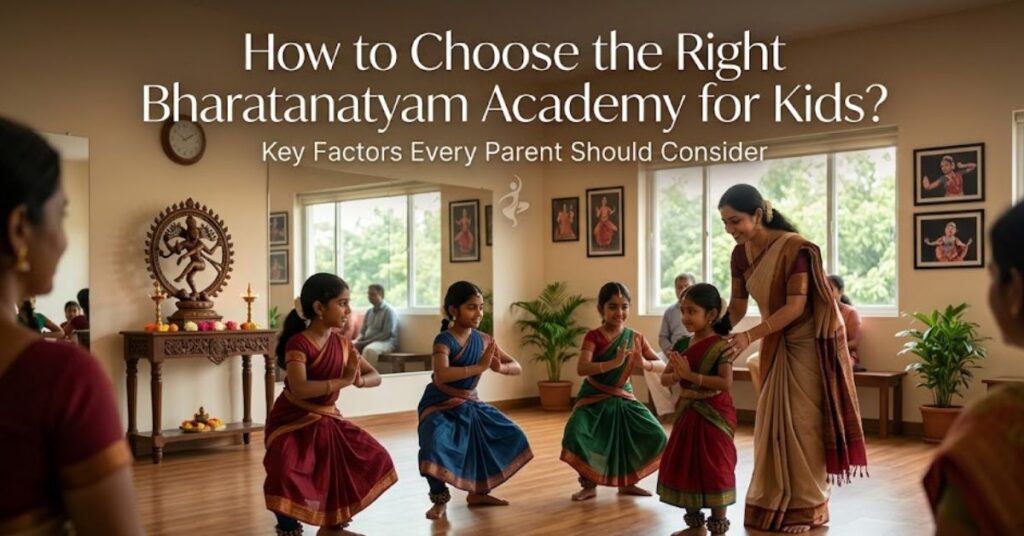
How to Choose the Right Bharatanatyam Academy for Kids? Summary : If you are searching for Bharatanatyam classes for kids in Dubai, this guide will help you understand what to look for before enrolling your child. It also covers the practical points every parent should consider, from teacher quality to class environment, location, and performance opportunities. By evaluating these factors carefully, parents can choose an academy that supports both artistic growth and personal development. The right learning environment can help children build confidence, discipline, cultural awareness, and a lifelong appreciation for classical dance. Bharatanatyam is more than a classical dance form. For many children, it becomes a beautiful way to build confidence, discipline, posture, musical understanding, and a deeper connection with Indian culture. For parents in Dubai, the challenge is not whether to choose Bharatanatyam, but how to choose the right Bharatanatyam academy for kids that truly supports their child’s growth. With so many dance schools and classes available, the decision can feel overwhelming. Some academies focus heavily on performance, while others may be more flexible for beginners. Some offer a strong classical foundation, while others may be better for casual exposure. The right choice depends on your child’s age, interest, personality, and long-term learning goals. What Parents Should Consider Before Choosing a Bharatanatyam Academy for Kids? Understand Your Child’s Interest First Before comparing academies, take a moment to understand your child’s interest level. Some children are naturally drawn to music, rhythm, and graceful movement. Others may enjoy dance after trying it in school events or cultural programs. A child does not need to be an expert to begin, but they should feel comfortable and curious about learning. Bharatanatyam is a disciplined art form, so it works best when the child is willing to attend classes regularly and follow instructions. If your child is very young, a gentle and playful introduction is often better than a highly strict approach. For older children, a more structured learning style may work well. The right academy should be able to adapt to different learning personalities. A shy child may need encouragement and patience, while a confident child may enjoy more stage exposure and advanced training. When the academy understands these differences, learning becomes more enjoyable and effective. Check the Teacher’s Background and Training One of the most important factors in choosing a Bharatanatyam academy is the teacher. A good teacher does far more than teach steps. They shape posture, rhythm, expression, discipline, and the child’s overall attitude toward dance. Verify the teacher’s formal Bharatanatyam training and certifications. Look for instructors with experience teaching children. Assess the teacher’s communication and mentoring skills. Consider whether the teacher has stage performance experience. Observe how the instructor interacts with young students. Ensure corrections are given in a supportive and respectful manner. A strong teacher can inspire a lifelong love for dance. Look for a Structured Curriculum A quality Bharatanatyam academy should have a clear learning path. This is especially important for kids, because children progress better when they know what comes next. A structured curriculum helps students move step by step from basic posture and footwork to more advanced expressions and performance pieces. At the beginner stage, the class should introduce foundation elements such as adavus, hand gestures, eye movement, balance, and rhythm. As children grow in skill, they should gradually learn combinations, choreography, stage presentation, and deeper artistic understanding. The difference between a structured academy and an unstructured one becomes very clear over time. A structured academy helps children build confidence through steady progress. It also helps parents understand how their child is improving. Consider the Class Environment Children learn best in a space where they feel safe, respected, and encouraged. The right Bharatanatyam academy should have a positive environment where students can focus without distraction. The studio should be clean, organized, and suitable for children. You should also pay attention to the tone of the class. Is the atmosphere calm and respectful? Do students seem engaged? Does the teacher give attention to each child? These small details matter because they affect how comfortable your child will feel over time. A good academy will also communicate well with parents. You may receive updates about class timings, dress requirements, practice expectations, and upcoming performances. When communication is clear, parents can support the child better at home. For younger children especially, the learning space should feel encouraging rather than intimidating. A warm environment helps children stay interested and look forward to class. Think About Location and Schedule For families in Dubai, convenience matters. Traffic, school schedules, and weekend commitments can all affect whether a child can attend classes regularly. That is why it is important to choose an academy in a practical location. If the dance school is too far from home or school, children may become tired or lose interest over time. A nearby location makes attendance easier and helps build consistency, which is essential for Bharatanatyam training. You should also ask about class timing. Some children do better in the evening after school, while others are more focused on weekends. Flexible schedules can be very helpful for busy Dubai families who balance academics, activities, and family time. A convenient academy is not just easier for parents. It also helps children maintain a steady rhythm in their learning. Ask About Performance Opportunities Performance is an important part of Bharatanatyam learning. It helps children build confidence, stage awareness, memory, and presentation skills. However, not every performance opportunity is equally valuable. A good academy should give children the chance to perform at the right time, in a way that supports their stage of learning. Find out how often students participate in performances. Ask about annual recitals, showcases, or cultural events. Check whether beginners receive age-appropriate stage exposure. Learn how students are prepared for performances. Consider how performance opportunities contribute to confidence building. Ensure stage participation supports learning rather than creating pressure. Read Reviews and Speak to Other Parents One of the best ways to understand an academy is
Top Benefits of Learning Bharatanatyam in Dubai
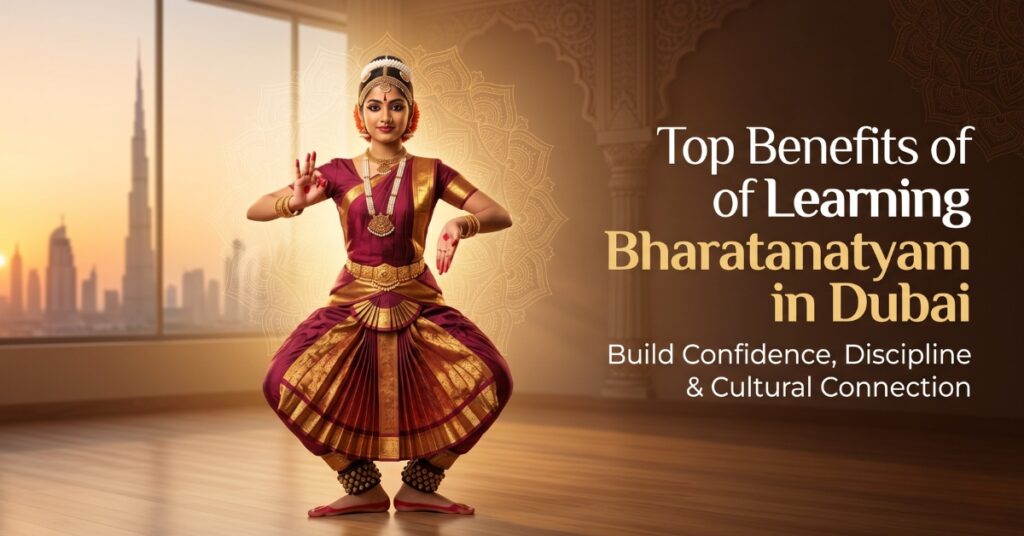
Top Benefits of Learning Bharatanatyam in Dubai Summary: Bharatanatyam is one of the oldest and most respected classical dance forms in India, known for its graceful movements, expressive storytelling, and cultural significance. In Dubai, Bharatanatyam has gained popularity among children, teenagers, and adults who wish to connect with Indian heritage while developing valuable life skills. From improving physical fitness and mental focus to building confidence and cultural awareness, Bharatanatyam offers numerous benefits that extend far beyond dance. This article explores the top benefits of learning Bharatanatyam in Dubai and why it remains a popular choice for aspiring dancers. Dubai is a vibrant multicultural city that celebrates art, culture, and diversity. Among the many performing arts available in the city, Bharatanatyam continues to hold a special place within the Indian community and among dance enthusiasts interested in classical art forms. Originating in Tamil Nadu, Bharatanatyam combines rhythm, expression, storytelling, and discipline into a comprehensive artistic practice. It is much more than a dance form—it is a journey of self-expression, cultural appreciation, and personal development. Whether you are a parent looking for an enriching activity for your child or an adult interested in learning a classical art form, Bharatanatyam offers lifelong benefits that contribute to physical, mental, and emotional well-being. What Is Bharatanatyam? Bharatanatyam is one of India’s oldest classical dance styles, with roots dating back thousands of years. It combines intricate footwork, hand gestures known as mudras, facial expressions, and rhythmic movements to tell stories and convey emotions. The dance form is deeply connected to Indian culture, mythology, and spirituality. Students learn not only dance techniques but also the traditions, values, and artistic principles that have been passed down through generations. Today, Bharatanatyam is practiced worldwide, and Dubai has become an important hub for students seeking professional training in this classical art form. Benefits of Learning Bharatanatyam in Dubai Improves Physical Fitness and Stamina Bharatanatyam is a physically demanding dance form that engages the entire body. The various postures, footwork patterns, and coordinated movements help improve overall fitness levels. Regular practice can help: Increase stamina and endurance Improve muscle strength Enhance flexibility Boost cardiovascular fitness Improve posture and body alignment Unlike conventional workouts, Bharatanatyam offers a structured and enjoyable way to stay physically active while learning an artistic skill. Enhances Flexibility and Coordination Many Bharatanatyam movements require precision, balance, and body control. Over time, students develop greater flexibility and coordination through consistent practice. Benefits include: Improved joint mobility Better balance and stability Enhanced body awareness Increased agility These physical improvements support overall health and can positively impact performance in other sports and activities. Develops Discipline and Dedication One of the most valuable lessons Bharatanatyam teaches is discipline. Learning complex movements, memorizing routines, and practicing regularly require commitment and patience. Students develop important qualities such as: Time management Consistency Focus Perseverance Responsibility These skills often translate into academic, professional, and personal success. Boosts Confidence and Self-Esteem Performing on stage and mastering challenging routines can significantly improve self-confidence. As students progress in their training, they gain confidence through: Public performances Skill development Goal achievement Positive feedback from instructors This increased confidence often extends into everyday life, helping students communicate more effectively and approach challenges with a positive mindset. Improves Concentration and Mental Focus Bharatanatyam requires dancers to coordinate movements, expressions, rhythm, and timing simultaneously. This level of engagement strengthens concentration and cognitive abilities. Regular practice helps improve: Attention span Memory retention Mental health Problem-solving skills Focus under pressure These benefits can be particularly valuable for students balancing academics and extracurricular activities. Encourages Emotional Expression A unique aspect of Bharatanatyam is its emphasis on storytelling and emotional expression. Through facial expressions and gestures, students learn to convey emotions such as: Joy Compassion Courage Devotion Sadness This ability to express emotions creatively can improve emotional intelligence and self-awareness. Connects Students with Indian Culture For many families living in Dubai, Bharatanatyam provides an opportunity to stay connected to Indian traditions and cultural heritage. Students gain knowledge of: Indian mythology Classical music Traditional values Historical narratives Cultural customs This cultural connection helps preserve traditions while fostering a sense of identity and pride. Promotes Creativity and Artistic Growth Bharatanatyam encourages artistic expression through movement, storytelling, and interpretation. Students learn how to: Express ideas creatively Interpret musical compositions Develop stage presence Appreciate artistic traditions Creative activities such as dance can contribute to a more balanced and fulfilling lifestyle. Builds Social Skills and Community Connections Joining Bharatanatyam classes allows students to interact with peers who share similar interests. Benefits of group learning include: Teamwork Communication skills Friendship development Community engagement Many students form lasting friendships and become part of a supportive artistic community. Provides Performance Opportunities Many Bharatanatyam schools in Dubai organize cultural events, competitions, and annual recitals. These opportunities allow students to: Showcase their talents Gain stage experience Develop confidence Learn professional performance etiquette Regular performances also provide motivation to continue improving and achieving new milestones. Why Bharatanatyam Is Popular in Dubai? Dubai’s multicultural environment makes it an ideal place for preserving and celebrating traditional art forms. Families often seek activities that combine education, culture, and personal development, making Bharatanatyam an attractive option. The city is home to experienced instructors and academies that offer structured training programs for students of all ages and skill levels. Whether someone is pursuing Bharatanatyam as a hobby or preparing for professional performances, Dubai provides excellent learning opportunities. Who Can Learn Bharatanatyam? Bharatanatyam is suitable for: Children Teenagers College students Working professionals Adults interested in classical dance No prior dance experience is required. Beginners can start with foundational techniques and gradually progress to advanced levels through consistent practice and guidance. Tips for Starting Bharatanatyam Training Choose a Qualified Instructor Learning from an experienced teacher ensures proper technique, posture, and progression. Practice Consistently Regular practice is essential for mastering movements and improving performance. Be Patient with the Learning Process Bharatanatyam is a classical dance form that requires dedication and time. Progress may be gradual, but the rewards are significant. Participate in Performances Stage experience
The Role of Silence and Pause in Kathak Performance
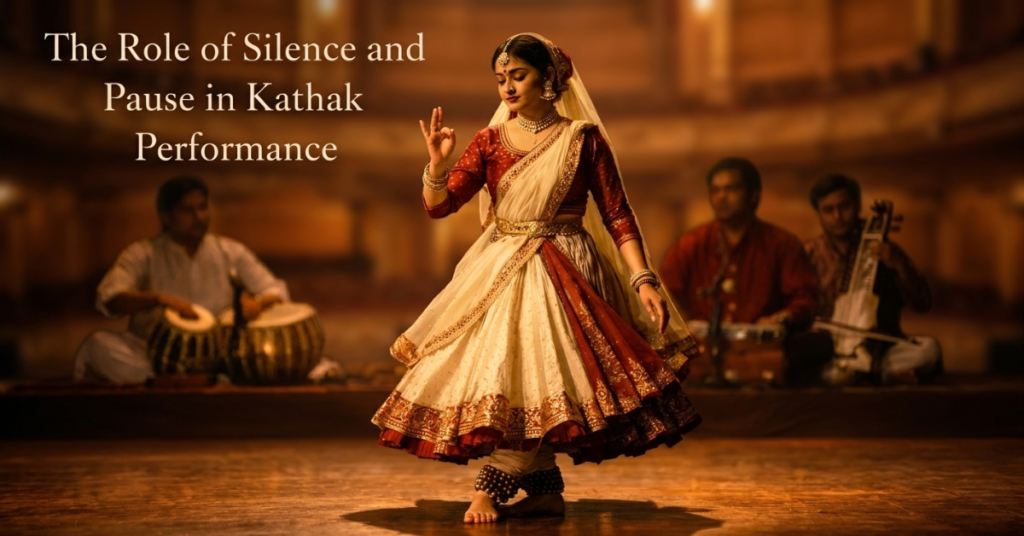
The Role of Silence and Pause in Kathak Performance Summary:-Kathak is often recognized for its rhythmic footwork, graceful spins, and expressive storytelling. The sound of ghungroo following the beats of the tabla creates a dynamic flow throughout the performance. Yet, alongside these movements and sounds, there are quieter moments that play an equally important role. Silence and pause are subtle elements that shape the rhythm and emotional depth of a Kathak performance. They allow dancers to highlight technique, emphasize expressions, and create space for the audience to absorb what is happening on stage. Rather than interrupting the dance, these moments of stillness help bring balance to the performance. Movement and Stillness in Kathak A Kathak performance is not built on constant motion. Instead, it is structured through a thoughtful balance between movement and stillness. Dancers often move through sequences of footwork, spins, and gestures, followed by brief moments where the body becomes still. These pauses help mark transitions within the choreography. They also allow the audience to notice details that might otherwise be missed, such as the precision of footwork or the clarity of a pose. In this way, stillness becomes part of the rhythm of the dance. Understanding Silence and Pause Although silence and pause often appear together, they serve slightly different purposes within a Kathak performance. A pause usually refers to a brief stop in the dancer’s movement. This might occur after completing a rhythmic phrase, a spin, or before beginning a new sequence. Pauses help organize the choreography and give structure to the performance. Silence, on the other hand, relates more to the soundscape of the performance. It may occur when the music softens or briefly stops, allowing the dancer’s expressions or gestures to become the main focus. When silence and pause occur together, they create a moment where the audience’s attention naturally settles on the dancer’s presence and expression. Silence vs Pause in Kathak: A Quick Comparison Although silence and pause often appear together in a Kathak performance, they highlight different aspects of the dance. Pause in Kathak A brief stop in the dancer’s movement. Usually appears after spins, footwork, or rhythmic compositions. Helps mark the end of a sequence and prepare for the next one. Emphasizes posture, balance, and technical control. Silence in Kathak A moment when the music softens or briefly stops. Draws attention to expressions and gestures. Adds emotional depth during storytelling sections. Helps the audience focus on the dancer’s presence. When used together, silence and pause create a balanced moment on stage where both movement and sound briefly step back, allowing the audience to fully appreciate the performance. How Pauses Shape Rhythm? Rhythm plays a central role in Kathak, and pauses help make that rhythm clearer. Dancers often perform rhythmic compositions that build in complexity. After completing a sequence such as a tukra or a tihai a brief pause may follow. This pause signals the end of the rhythmic phrase and gives the audience a moment to register the pattern. These pauses help maintain clarity within the performance, especially when the rhythm becomes fast or intricate. Silence in Expressive Sections Kathak is also known for its expressive storytelling where dancers use gestures and facial expressions to portray emotions or narrative elements. In these moments, silence can be particularly effective. When the music softens or briefly pauses, the focus naturally shifts to the dancer’s expression and movement. This quiet space allows the emotion of the scene to come forward more clearly. The audience is given a moment to connect with the feeling being conveyed before the dance continues. Creating Balance Within the Performance Silence and pause contribute to the overall balance of a Kathak performance .continuous movement can feel overwhelming, especially when sequences become fast and complex. Moments of stillness help slow the pace slightly and create contrast within the choreography. They also give dancers the opportunity to transition smoothly into the next section of the performance. Through this balance, the performance maintains both clarity and visual interest. Interaction with Music In traditional Kathak performances, dancers often perform alongside live musicians. This creates an ongoing interaction between movement and music. A dancer may pause after completing a rhythmic phrase, allowing the tabla player to respond. Similarly, a short silence in the music can signal a shift in the choreography. These subtle exchanges add depth to the performance and highlight the close relationship between dance and music in Kathak. The Control Behind Stillness Holding a still pose after a series of movements requires control and balance. After fast spins or intricate footwork ,remaining steady demonstrates the dancer’s training and focus. These moments also reflect the dancer’s awareness of timing. Knowing when to pause or remain still is just as important as executing the movements themselves. In this way, stillness becomes another aspect of technique within Kathak. Appreciating the Subtle Elements of Kathak Silence and pause may seem like small details, but they contribute significantly to the overall experience of a Kathak performance. They help shape rhythm, support storytelling, and bring clarity to the choreography. By paying attention to these quieter moments, audiences can gain a deeper appreciation of the balance and thought that goes into every performance. Discover the Art of Kathak! Learning Kathak involves more than practicing steps and rhythm. It also involves understanding timing, expression, and the thoughtful use of stillness within movement. At Upaj Academy , students receive structured training that focuses on both technique and artistic expression. With guidance from experienced instructors, learners gradually understand how rhythm, movement, silence, and pause work together to create a balanced performance. If you are interested in experiencing the elegance of this classical dance form, exploring the best Kathak Dance classes in Dubai can be a great step toward learning the depth and beauty of Kathak. Frequently Asked Questions Why are pauses important in Kathak dance performances? Pauses help structure the choreography and highlight important movements. They allow the audience to appreciate the rhythm, precision, and expression of the dancer before the next sequence begins. How does silence enhance
The Role of Facial Expressions in Classical Indian Dance
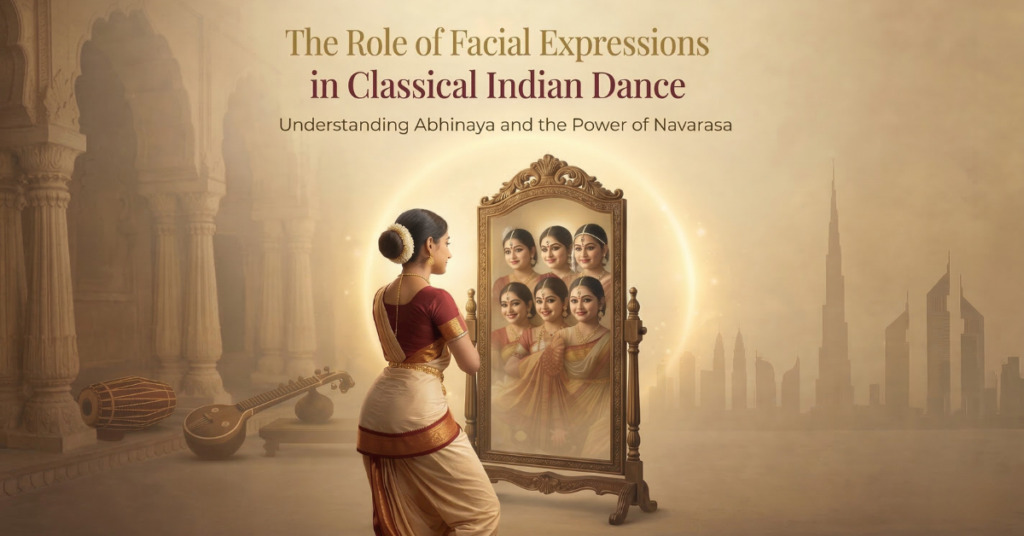
The Role of Facial Expressions in Classical Indian Dance Summary:-Classical Indian dance is not only about graceful movements and rhythmic footwork. It is also a powerful language of expression. Through subtle facial movements, dancers communicate emotions, characters, and stories that audiences can instantly connect with. In traditions like Kathak, facial expressions form an important part of Abhinaya, the expressive dimension of dance. A simple glance, a raised eyebrow, or a gentle smile can convey an entire emotion or moment in the story. These expressions allow the dancer to transform movement into storytelling, creating a deeper emotional experience for the audience. Understanding how these expressions work reveals both the artistic and scientific depth of classical Indian dance. Understanding Abhinaya: The Art of Expression In Indian classical dance traditions, the expressive aspect of performance is known as Abhinaya. The Sanskrit word comes from “abhi” (towards) and “naya” (to lead), meaning to lead the audience toward an emotional experience. Abhinaya combines several elements such as body movements, gestures, expressions, costumes, and inner emotions. Among these, facial expressions play a central role because they help communicate the dancer’s inner feelings to the audience. In Kathak performances, Abhinaya is especially visible during storytelling sequences where dancers interpret poetry, devotional themes, or mythological narratives. What Is the Science Behind Facial Expressions in Dance? While expressions in dance appear artistic, they also involve a fascinating scientific process. The human face contains many small muscles that work together to produce different emotions. Skilled dancers train these muscles so they can precisely control expressions such as joy, surprise, curiosity, or devotion. Even a small movement of the eyebrows or lips can change the meaning of an expression. Through practice, dancers learn to coordinate facial expressions with eye movements, gestures, and rhythm, creating a complete visual language. Research in human expression also shows that subtle facial movements communicate emotions effectively across cultures, which explains why audiences can understand the feelings portrayed by dancers even without spoken words. The Language of the Eyes (Drishti) In classical dance training, special attention is given to the eyes because they are one of the most expressive parts of the face. Eye movements, called Drishti, guide the audience’s attention and help illustrate the story. A dancer may look upward to indicate devotion, sideways to suggest curiosity, or downward to express humility. In Kathak, the graceful coordination of eye movements with hand gestures and footwork enhances storytelling and creates a captivating visual flow during the performance. Navarasa: The Nine Emotions in Classical Dance Indian aesthetic philosophy describes nine fundamental emotional states known as Navarasa (Nava = nine, Rasa = emotional essence or sentiment). These emotions form the expressive foundation of many classical Indian dance performances. In Kathak, dancers convey these emotions through subtle facial expressions, eye movements, and body language. Each Rasa allows the performer to bring depth and meaning to storytelling sequences. Shringara – Love and Beauty Shringara represents feelings of love, affection, and admiration. In Kathak, this emotion is often portrayed through soft smiles, gentle eye movements, and graceful gestures. It is commonly used in storytelling segments depicting romantic or devotional themes, where the dancer expresses admiration for beauty, nature, or divine love. Hasya – Joy and Laughter Hasya reflects happiness, amusement, and playful laughter. Dancers express this emotion through bright smiles, lively eyes, and lighthearted facial expressions. In Kathak storytelling Hasya may appear in playful moments between characters or in humorous situations that bring warmth and energy to the performance. Karuna – Compassion and Sadness Karuna conveys feelings of empathy, sorrow, or deep compassion. Dancers express this emotion through softened eyes, slow movements, and subtle expressions that reflect emotional depth This Rasa is often used in narratives that depict moments of longing, separation, or heartfelt devotion. Raudra – Anger Raudra represents powerful emotions such as anger, intensity, or fierce determination. The dancer’s expressions become sharper, with intense eyes and strong facial movements. Although Kathak is known for its elegance, this emotion may appear in dramatic storytelling moments where characters experience conflict or strong emotions. Veera – Courage Veera symbolizes bravery, confidence, and strength. This emotion is expressed through focused eyes, upright posture, and determined expressions. In Kathak performances, Veera may be used to portray heroic characters, moments of triumph, or expressions of inner strength. Bhayanaka – Fear Bhayanaka reflects feelings of fear, anxiety, or suspense. Dancers portray this emotion through widened eyes, tense expressions, and subtle changes in body language. In storytelling sequences, Bhayanaka can heighten dramatic moments and create a sense of anticipation within the narrative. Bibhatsa – Disgust Bibhatsa represents feelings of discomfort, dislike, or rejection. The dancer may express this emotion through slight facial contractions, raised lips, or expressions of displeasure. Although used sparingly, this Rasa helps add emotional contrast and realism to certain storytelling moments. Adbhuta – Wonder Adbhuta conveys amazement, curiosity, and fascination. This emotion is expressed through widened eyes, lifted eyebrows, and expressions of delight. In Kathak performances Adbhuta may appear when the dancer portrays moments of discovery, admiration, or awe within a story. Shanta – Peace and Tranquility Shanta represents calmness, inner balance, and spiritual peace. The expressions are gentle and composed, reflecting serenity and emotional harmony. This emotion is often used in devotional pieces where the dancer expresses a deep sense of connection and tranquility. These nine emotions allow Kathak dancers to transform movements into expressive storytelling, helping audiences connect deeply with the narrative and experience the full emotional richness of classical Indian dance. Subtlety of Expression in Kathak Different classical dance styles emphasize expressions in unique ways. In Kathak, expressions are often subtle and graceful rather than exaggerated. This delicate approach allows the dancer to transition smoothly between emotions while maintaining elegance. A Kathak dancer may portray multiple characters within a single story simply by changing expressions, gaze direction, or posture .This ability highlights the depth of training and artistic sensitivity required in classical dance. Training Facial Expressions in Kathak Learning expressions is an important part of Kathak training. Students gradually develop control over their facial muscles through guided