
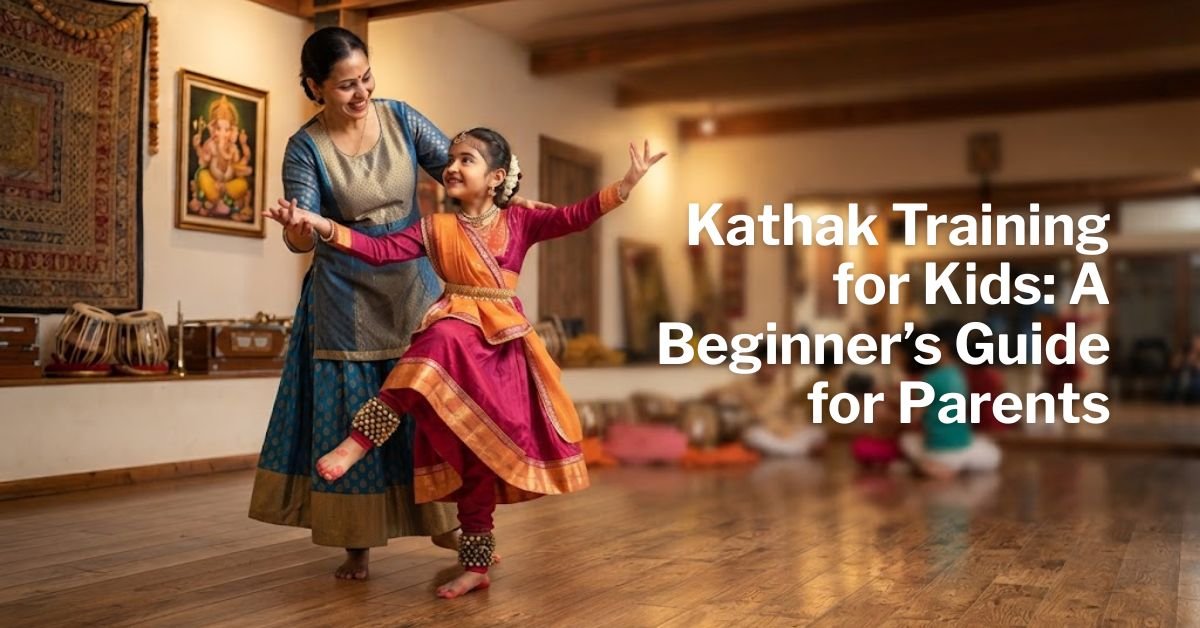
Summary : Kathak is more than a series of dance movements. It combines rhythm, footwork, expressions, storytelling and graceful body movements to create a rich artistic experience for children. For parents considering a classical dance activity, understanding how Kathak training works can make the decision easier. From choosing the right age and learning basic Tatkaar to developing rhythm, confidence and stage presence, this guide explains what parents can expect when their child begins Kathak training.
With regular practice and supportive guidance, children can gradually build coordination, discipline and self-confidence while discovering a meaningful connection with Indian culture. A well-structured Kathak program allows young learners to progress at their own pace, enjoy creative expression and develop skills that can benefit them both inside and outside the dance classroom.
What Is Kathak And Why Is It Suitable For Kids?
Kathak is one of the major Indian classical dance forms, traditionally known for its combination of rhythmic footwork, expressive movements, spins, hand gestures and storytelling. Children learn to coordinate their body movements with music while gradually understanding rhythm, expressions and performance.
One of the reasons Kathak can be suitable for children is that training can be introduced step by step. Beginners are not expected to master complicated movements immediately. Classes generally begin with basic posture, simple footwork and rhythm before progressing toward more advanced combinations. Kathak can also appeal to children who enjoy music, stories and creative activities. As their skills develop, they learn not only how to perform movements but also how to communicate emotions and stories through dance.
What Is The Right Age To Start Kathak Training For Kids?
There is no single perfect age for every child to begin Kathak. A child’s interest, ability to follow instructions, attention span and comfort in a structured class can be more important than age alone. Younger children may start with simple movements, rhythm exercises and playful activities that introduce them to dance without creating pressure. Older beginners can often work more directly on technique and structured combinations.
Can Young Children Start Kathak As Beginners?
Yes. Children do not need previous classical dance experience to begin learning Kathak. Beginner classes can introduce fundamental movements gradually and allow children to become familiar with rhythm, posture and coordination. For younger learners, the teaching approach should ideally be engaging and age-appropriate. Short activities, repetition and encouragement can help them remain interested while they build basic skills.
Signs Your Child Is Ready To Learn Kathak
Parents can look for a few simple signs. A child may be ready when they show interest in music or movement, enjoy copying simple actions, can follow basic instructions and are comfortable participating in a group activity. The most important sign is usually genuine interest. When children enjoy the activity, regular practice becomes much easier.
What Do Kids Learn In Beginner Kathak Training?
A well-structured beginner program introduces children to the building blocks of Kathak. Rather than rushing into difficult choreography, the focus is generally on developing a strong foundation.
Basic Posture And Body Alignment
Posture is one of the first areas children need to understand. Proper alignment helps them move comfortably and perform footwork with better control. Children gradually learn how to stand, bend and move while maintaining balance. These basic habits become increasingly important as the movements become more complex.
Tatkaar And Basic Footwork
Tatkaar is a fundamental part of Kathak training. It introduces children to rhythmic footwork and helps them understand how movement connects with musical beats. Beginners usually start with simple patterns before learning faster or more complicated sequences. Regular practice helps improve timing and coordination.
Taal And Rhythm
Rhythm is at the heart of Kathak. Children learn to listen to beats, count patterns and coordinate their movements with music. This process can also strengthen their ability to remember sequences and respond to changes in rhythm. Over time, children become more comfortable recognising patterns and maintaining timing.
Hasta Mudras And Hand Movements
Hand gestures add meaning and visual expression to classical dance. Children are introduced to basic hand movements and gradually learn how gestures can support a performance. At the beginner stage, understanding how and when to use a gesture is more valuable than trying to memorise a large number of them.
Chakkars And Controlled Turns
Chakkars, or turns, are an iconic feature of Kathak. However, children need balance and body control before attempting more advanced spinning techniques. Teachers can introduce turns progressively, focusing on posture, spotting, coordination and safe movement.
Abhinaya And Facial Expressions
Kathak is also a storytelling art. Through Abhinaya, children learn to communicate emotions, characters and situations using facial expressions, eye movements and gestures.
For children, this can be a particularly enjoyable part of training because it gives them an opportunity to use imagination and creativity.
Kathak Skill | What Children Learn | Early Development |
Tatkaar | Basic footwork and rhythm | Coordination |
Taal | Beat and counting | Rhythm awareness |
Mudras | Hand gestures | Hand-eye coordination |
Chakkars | Controlled turns | Balance |
Abhinaya | Expressions and storytelling | Creativity |
Posture | Body alignment | Body awareness |
What Are The Benefits Of Kathak Training For Kids?
Kathak offers children an opportunity to stay active while developing artistic and performance skills. Its benefits can extend beyond the dance studio when children practise consistently.
Improves Focus And Concentration
Learning dance sequences requires children to listen carefully, remember movements and follow rhythm. They need to pay attention to the teacher while coordinating different parts of the body. Over time, this repeated practice can help children become more comfortable with focused learning.
Develops Coordination And Physical Fitness
Kathak involves controlled footwork, turns, postures and coordinated hand movements. Regular practice can support balance, flexibility, stamina and overall body awareness. Parents looking for activities that combine movement and enjoyment can also consider how dance and fitness for children can become part of a balanced extracurricular routine.
Builds Confidence And Stage Presence
Standing in front of an audience can feel uncomfortable for a child at first. As children become familiar with their movements and participate in performances, they may gradually feel more confident. Even small achievements, such as completing a difficult sequence or performing without assistance, can provide a sense of accomplishment.
Encourages Creativity And Emotional Expression
Kathak gives children different ways to express ideas and emotions. Abhinaya, storytelling and musical interpretation encourage them to use imagination rather than simply repeat physical movements. This creative element can make learning more meaningful and enjoyable.
Builds Discipline And Patience
Progress in classical dance takes time. Children learn that improvement comes from repetition, practice and correction. Instead of expecting immediate perfection, regular Kathak training teaches children to work through mistakes and keep improving.
Connects Children With Indian Culture
Kathak introduces children to an important part of India’s artistic heritage. Through music, storytelling, traditional movements and performance, children can develop a deeper appreciation of classical arts and cultural traditions.
Parents interested in the wider benefits of dance can view classical training as both a creative activity and a long-term learning experience.
How Does Kathak Training Affect A Child’s Daily Development?
The habits children develop during dance lessons can become useful in everyday life as well. They learn to listen to instructions, remember sequences, manage practice time and work alongside other students. Group sessions can also teach children how to cooperate, wait for their turn and appreciate other performers.
Regular practice may also help children become more comfortable with structured routines. Instead of viewing progress only through stage performances, parents can notice smaller improvements in concentration, confidence, coordination and persistence.
What Should Parents Expect During The First Few Months?
The first few months should be viewed as a foundation-building period rather than a race toward complicated choreography. During the initial stage, children may focus on basic posture, simple Tatkaar patterns, rhythm exercises and introductory movements. As they become more comfortable, teachers can introduce hand gestures, expressions and basic combinations.
Later, children may begin working on more structured choreography, turns and storytelling elements. Progress will naturally differ from child to child. Some children may remember sequences quickly, while others may need more repetition. Both are normal parts of learning.
How Can Parents Keep Children Interested In Kathak?
Children are more likely to continue when dance remains enjoyable. Parents can encourage progress by celebrating small improvements rather than focusing only on mistakes. Asking children what they enjoyed in class can also help parents understand what motivates them.
It is also useful to avoid comparing one child with another. Every learner develops coordination, memory, rhythm and confidence at a different pace. Performances, cultural programs and simple opportunities to practise at home can make the learning process more engaging. Most importantly, children should feel that dance is something they enjoy, not another source of pressure.
Can Kathak Support A Child’s Mental And Emotional Well-Being?
Dance can provide children with an active and creative way to express themselves. Kathak combines music, movement, storytelling and emotion, giving children opportunities to communicate without relying only on words.
Parents often wonder how dance affects children’s mental health. While dance should not be treated as a replacement for professional mental-health support, a positive learning environment can give children opportunities for self-expression, social interaction, focused activity and confidence-building.
The emotional benefits can be especially noticeable when children feel supported by their teachers and family. Encouragement and enjoyment are important parts of creating a healthy relationship with any extracurricular activity.
When Should A Child Move From Beginner To Advanced Training?
Advancement should not depend on age alone. A child is usually ready for more challenging work when they have developed a basic understanding of rhythm, posture, coordination and movement control.
Teachers may also consider the child’s ability to remember sequences, perform consistently and understand corrections.
Some children progress quickly, while others require more time with foundational movements. There is no need to rush. A strong foundation can be more valuable than moving to advanced choreography too early.
How Can Parents Choose The Right Kathak Class For Their Child?
Choosing the best Kathak dance classes involves more than checking the schedule. The teaching environment can have a major effect on how comfortable and motivated a child feels.
Check The Teacher’s Experience
Parents can learn about the teacher’s training, teaching experience and approach toward children. A strong understanding of both Kathak technique and children’s learning needs can create a more effective classroom experience.
Understand The Teaching Method
Ask how beginner students are introduced to footwork, rhythm, expressions and choreography. Children generally benefit from a gradual approach that allows them to build confidence before moving into difficult techniques.
Ask About Class Size And Individual Attention
A class should give children enough opportunities to receive guidance and corrections. Parents can ask how teachers manage different ability levels within the same group.
Look For Performance Opportunities
Performances can give children a goal to work toward and help them become more comfortable on stage. They also allow parents to see how their child is progressing.
Consider Trial Classes
A trial session can help families understand whether the teaching style, class atmosphere and pace are suitable for the child.
The right environment should make children feel encouraged to learn rather than pressured to perform perfectly.
Final Tips For Parents Starting Their Child’s Kathak Journey
Starting Kathak can be a rewarding experience when parents focus on steady progress rather than immediate results. Choose a supportive learning environment, encourage regular practice and give your child enough time to become comfortable with the basics.
The early stages are about building rhythm, coordination, confidence and an appreciation for the art. With patient guidance and consistent encouragement, children can gradually develop their skills and discover the joy of expressing themselves through Kathak.
Start Your Child’s Kathak Journey!
A child’s Kathak journey begins with curiosity, encouragement and the right guidance. When children learn in a warm and supportive environment, they can gradually develop rhythm, coordination, expression and confidence while enjoying the beauty of Indian classical dance. Every small step can become a reason to feel proud.
Give your child an opportunity to learn, perform and grow through Kathak at Upaj Dance Academy. Our best kathak dance classes near Dubai Marina for kids are designed to make learning engaging while helping young dancers build strong foundations. Connect with us to discuss the right kathak class for your child.
Watch Our Kathak Dance Performance
Get a glimpse of the beauty, grace, expressions, and traditional techniques that make Kathak a unique Indian classical dance form. Watch the video below to experience the art and energy of Kathak at Upaj Dance Academy.