Summary: Zumba is an energetic dance workout that combines simple movements, upbeat music, and cardiovascular exercise. It is suitable for beginners who want to improve fitness, coordination, stamina, and confidence while enjoying an engaging group activity.
This guide explains the basic Zumba steps, beginner warm-up exercises, a simple 20-minute workout routine, safety tips, common mistakes, and ways to improve your movements.
Starting a new fitness routine can feel difficult, particularly when it involves dancing in front of other people. However, Zumba is designed to be welcoming, enjoyable, and easy to follow.
You do not need professional dance experience to participate. Most beginner routines use simple movements that are repeated several times. With regular practice, your rhythm, coordination, stamina, and confidence can gradually improve.
Zumba combines dance-inspired movements from salsa, merengue, cumbia, reggaeton, and other international styles. The music keeps the session exciting, while the continuous movements provide an active full-body workout.
What Is a Zumba Dance Workout?
Zumba is a dance-based fitness workout performed to energetic music. During a class, the instructor demonstrates different movements while participants follow the steps.
A typical beginner Zumba class may include:
- Warm-up exercises
- Basic dance steps
- Cardio movements
- Full-body exercises
- Short recovery periods
- Cool-down movements
- Gentle stretching
Unlike many traditional gym workouts, Zumba usually does not require machines or complicated equipment. Comfortable clothes, supportive shoes, a water bottle, and a willingness to move are generally enough to begin.
People deciding between different group workouts can also read about the difference between Zumba and aerobics.
Is Zumba Suitable for Complete Beginners?
Yes, Zumba is suitable for complete beginners, including people who have never attended a dance or fitness class.
Beginner-friendly sessions generally focus on:
- Simple and repeated movements
- Moderate workout intensity
- Basic rhythm and coordination
- Proper posture and balance
- Easy movement combinations
- Gradual improvement in stamina
You are not expected to perform every movement perfectly during your first few sessions. The main goal is to keep moving, follow the rhythm, and enjoy the workout.
Beginners who want structured guidance can join professionally guided beginner Zumba classes in Dubai and learn the movements at a comfortable pace.
Benefits of Zumba for Beginners
Improves Cardiovascular Fitness
Continuous dance movements increase physical activity and help develop cardiovascular endurance. With consistent practice, regular activities such as walking, climbing stairs, and completing daily tasks may begin to feel easier.
Supports Weight-Management Goals
Zumba keeps different parts of the body moving and can contribute to calorie expenditure. When combined with balanced nutrition, sufficient sleep, and a healthy lifestyle, it may support weight-management goals.
People comparing different fitness options can read Zumba vs gym for weight loss before selecting a routine.
Improves Coordination
Zumba requires you to move your arms, legs, hips, and upper body in rhythm. This helps improve body awareness and coordination over time.
Some movements may initially feel challenging, but they usually become more natural with practice.
Builds Confidence
Learning new dance movements can gradually increase confidence. A positive group environment can also help beginners feel less nervous about exercising in front of others.
Provides a Full-Body Workout
Zumba movements can involve the legs, hips, core, shoulders, and arms. Side steps, squats, knee lifts, arm reaches, and dance combinations help keep the whole body active.
Makes Exercise More Enjoyable
Upbeat music and changing routines can make Zumba feel less repetitive than traditional workouts. People who enjoy the activity may find it easier to stay consistent.
Supports Emotional Well-Being
Music, physical movement, and group participation can create an uplifting workout experience. Learn more about how movement and music may support emotional wellness in this guide to Zumba for mental energy and stress relief.
You can also explore the detailed guide covering the health benefits of Zumba.
What Do Beginners Need Before Starting Zumba?
Comfortable Workout Clothes
Wear lightweight and breathable clothes that allow your arms and legs to move freely. Avoid clothing that feels restrictive or becomes uncomfortable when you bend, turn, or stretch.
Supportive Footwear
Choose comfortable sports or dance-fitness shoes that provide stability and support. Avoid sandals, slippers, heavy shoes, or footwear that prevents smooth side-to-side movement.
Water Bottle
Keep a water bottle nearby, particularly during longer sessions. Take small water breaks whenever required.
Small Towel
Zumba can be energetic, so carrying a small towel may help you remain comfortable during the workout.
Positive Attitude
Do not worry about getting every step right. Focus on movement, rhythm, enjoyment, and gradual improvement.
Instructor Guidance
Tell your instructor that you are a beginner. You should also mention any previous injuries, physical limitations, or movement concerns before the session begins.
Step-by-Step Zumba Warm-Up for Beginners
A proper warm-up helps prepare your muscles and joints for more active movement. Spend approximately five to ten minutes warming up before beginning the main workout.
Step 1: March in Place
Stand with your feet comfortably apart.
Lift one foot and then the other as though you are walking without moving forward. Allow your arms to move naturally and keep your shoulders relaxed.
Continue for approximately one minute.
Step 2: Side-to-Side Step
Step towards the right with your right foot and bring your left foot closer.
Repeat the same movement towards the left.
Keep your knees slightly bent and avoid making the movements too large.
Step 3: Shoulder Rolls
Slowly roll your shoulders backwards several times.
After that, roll them forwards. Keep your neck relaxed and perform the movements gently.
Step 4: Gentle Hip Movements
Place your hands on your hips and move your hips slowly from one side to the other.
You may also perform small hip circles. Avoid forcing or exaggerating the movement.
Step 5: Arm Reaches
Raise one arm above your head and gently reach towards the opposite side.
Return to the centre and repeat with the other arm.
Step 6: Heel Taps
Place your right heel forward while keeping your left foot on the floor.
Return to the centre and repeat with the left heel. Add gentle arm movements after you become comfortable.
Basic Zumba Steps for Beginners
1. Merengue March
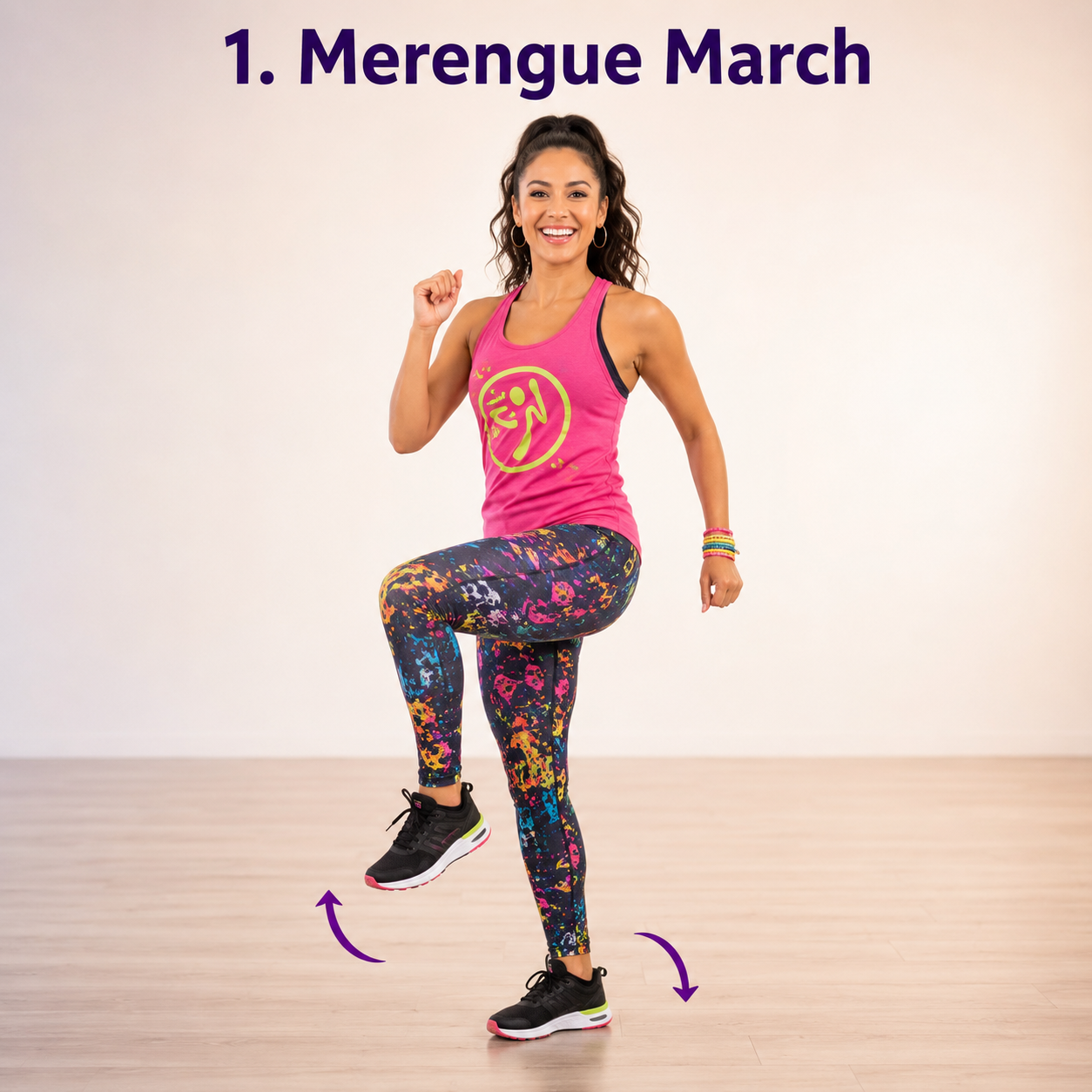
The merengue march is one of the simplest Zumba movements for beginners.
How to Perform the Merengue March
- Stand with your feet close together.
- Bend your knees slightly.
- Lift your right foot and place it down.
- Lift your left foot and place it down.
- Continue marching with the music.
- Allow your hips to move naturally.
- Add simple arm movements when comfortable.
Begin with small steps and concentrate on maintaining a steady rhythm.
2. Basic Salsa Step
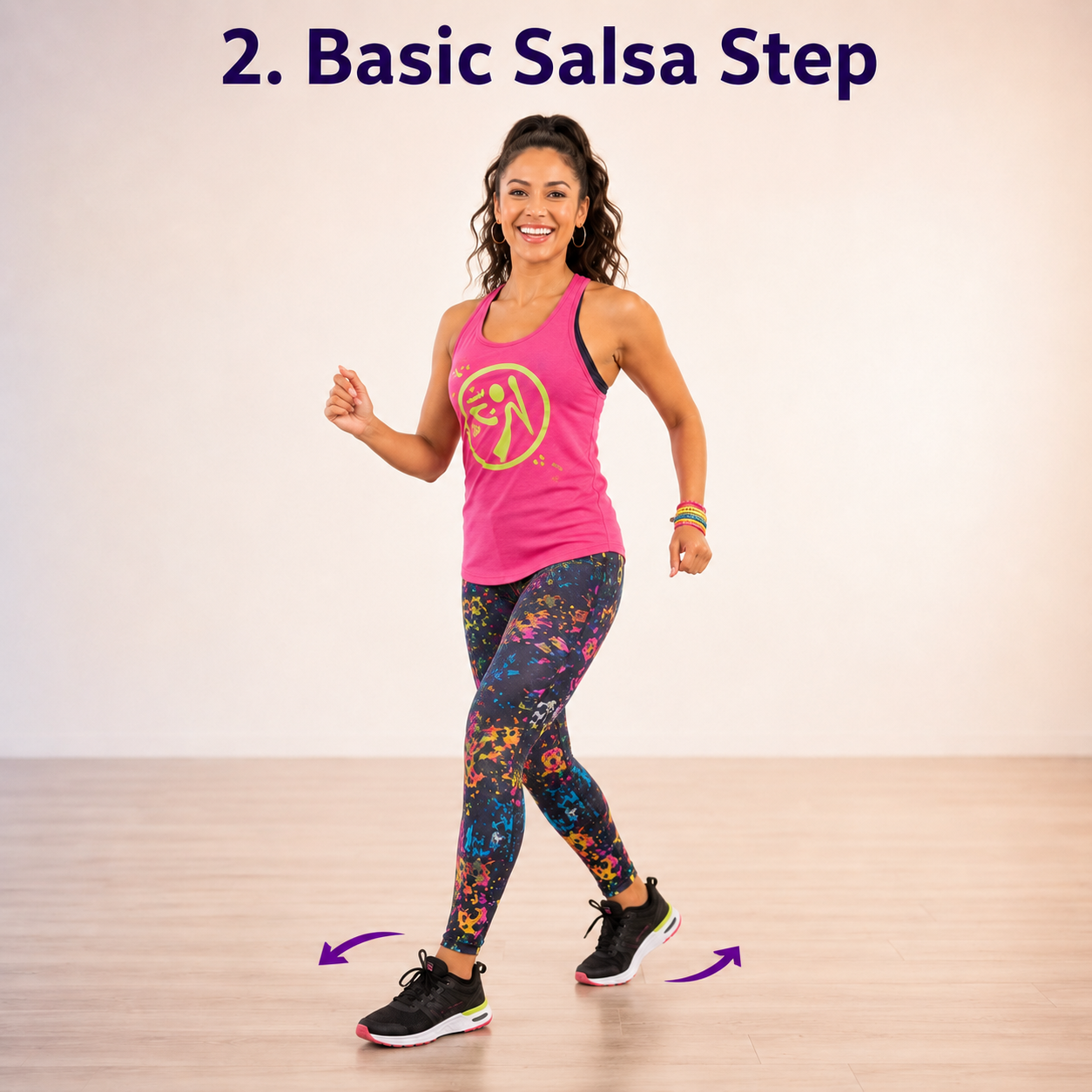
The basic salsa step introduces forward and backward movement.
How to Perform the Basic Salsa Step
- Stand with your feet together.
- Step forward with your left foot.
- Shift your body weight onto the left foot.
- Bring your left foot back to the centre.
- Step backwards with your right foot.
- Shift your weight onto the right foot.
- Return your right foot to the centre.
- Repeat the movement slowly.
Keep your upper body relaxed and avoid leaning too far forward or backwards.
3. Salsa Side Step
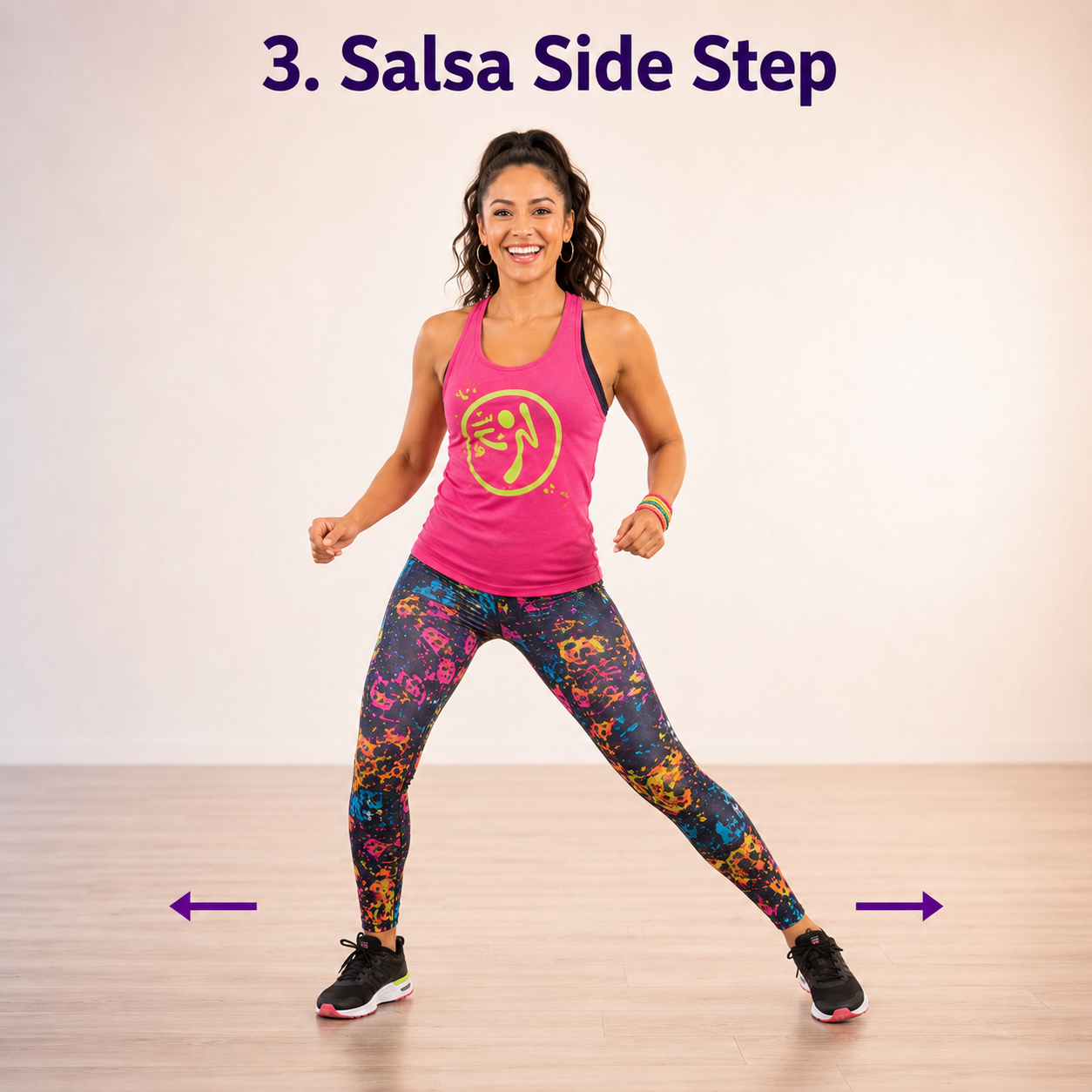
The salsa side step uses simple side-to-side movement.
How to Perform the Salsa Side Step
- Stand in the centre.
- Step to the right with your right foot.
- Transfer your weight onto the right foot.
- Return to the centre.
- Step to the left with your left foot.
- Transfer your weight onto the left foot.
- Return to the centre.
- Continue alternating sides.
You can add arm reaches in the direction of each step.
4. Cumbia Step
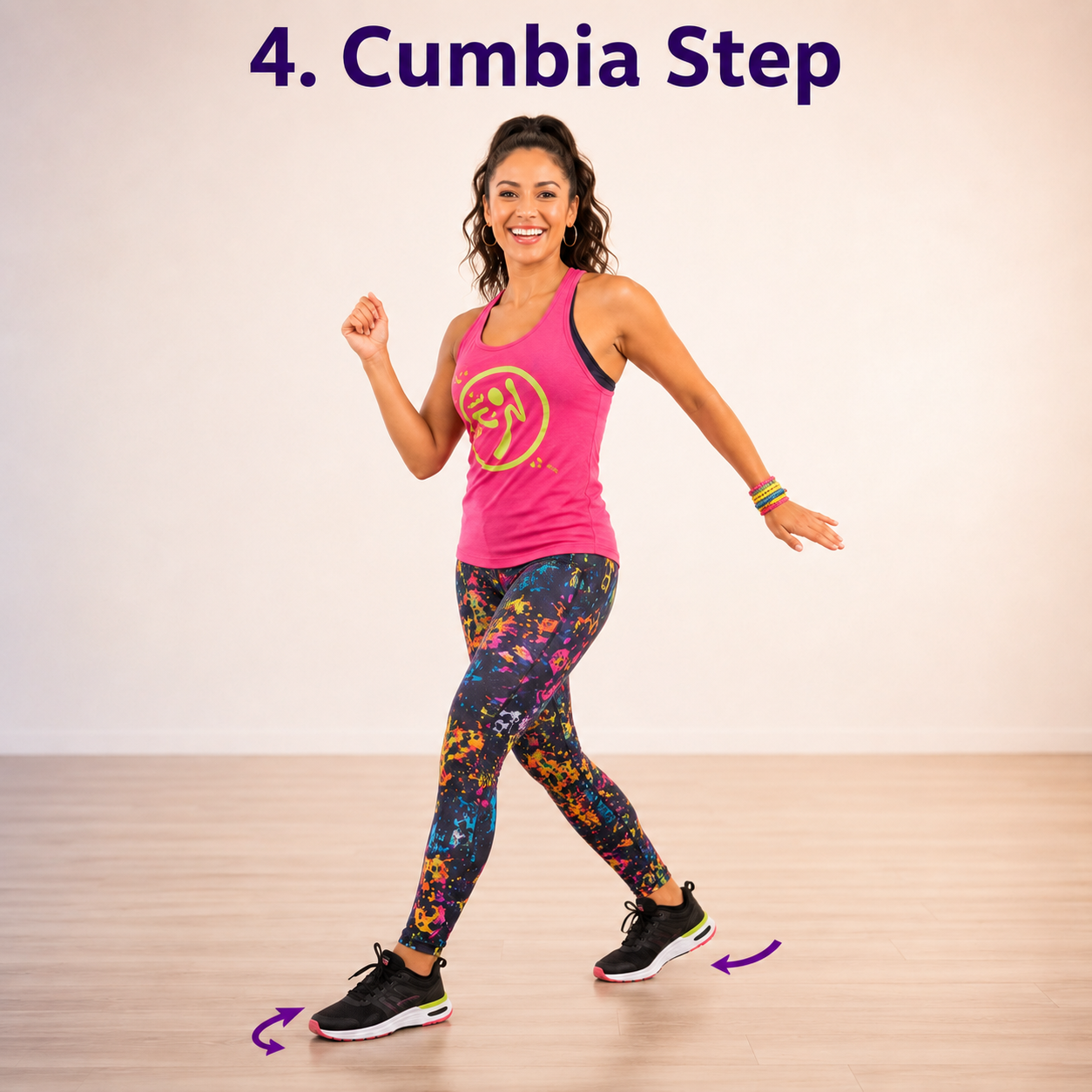
The cumbia step combines backward movement with gentle hip action.
How to Perform the Cumbia Step
- Keep your left foot in front.
- Step your right foot slightly backwards.
- Bring the right foot closer to the left foot.
- Step backwards again.
- Allow your hips to move naturally.
- Repeat the pattern several times.
- Change sides and perform the movement with the other leg.
Keep your knees relaxed and avoid twisting them sharply.
5. Reggaeton Stomp
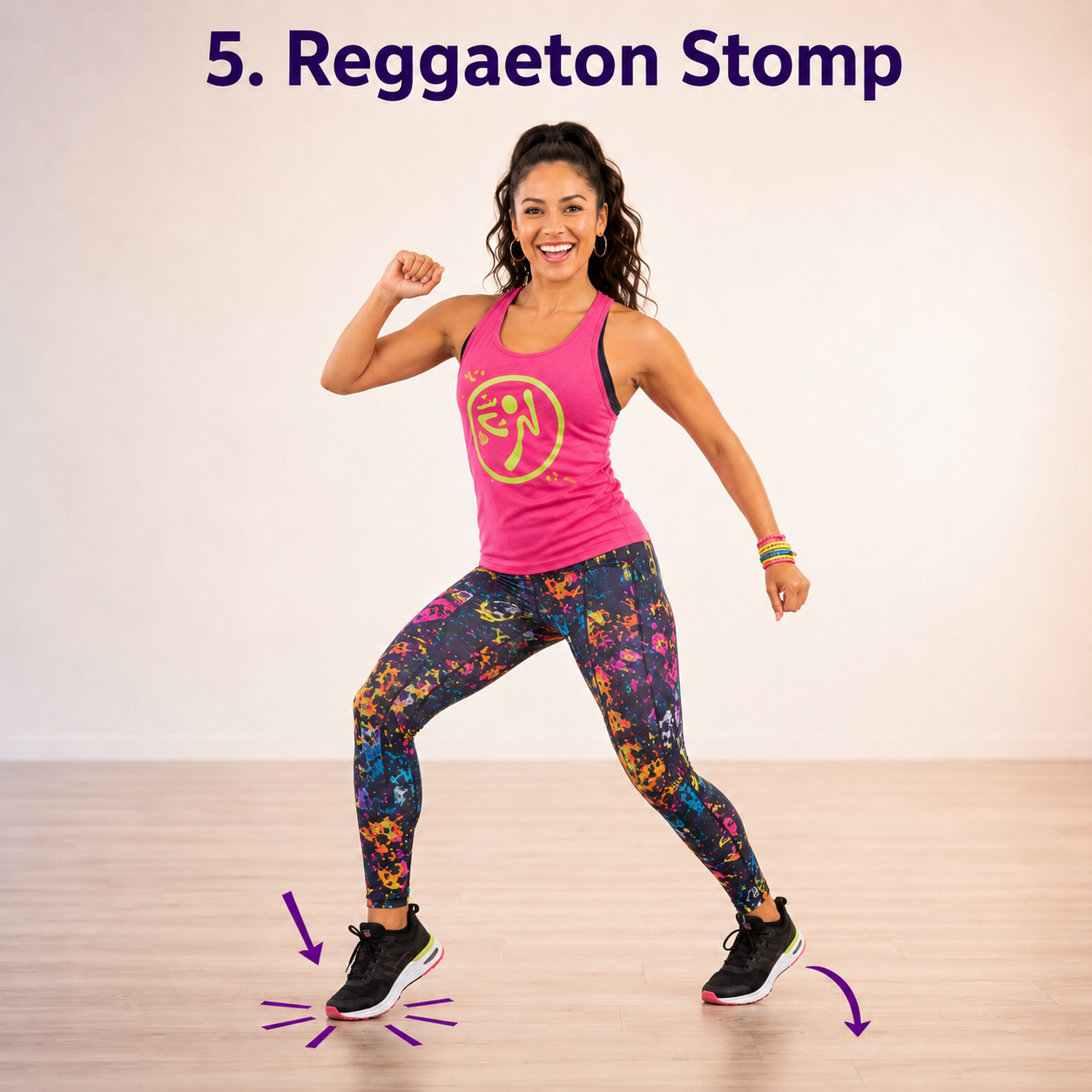
The reggaeton stomp is a strong and energetic movement.
How to Perform the Reggaeton Stomp
- Stand with your feet wider than shoulder-width apart.
- Bend your knees slightly.
- Lift one foot and place it firmly on the floor.
- Alternate between the right and left foot.
- Move your arms forwards and backwards.
- Keep your abdominal muscles gently engaged.
- Avoid locking your knees.
Beginners should perform smaller and softer stomps until they understand the movement.
6. Step Touch
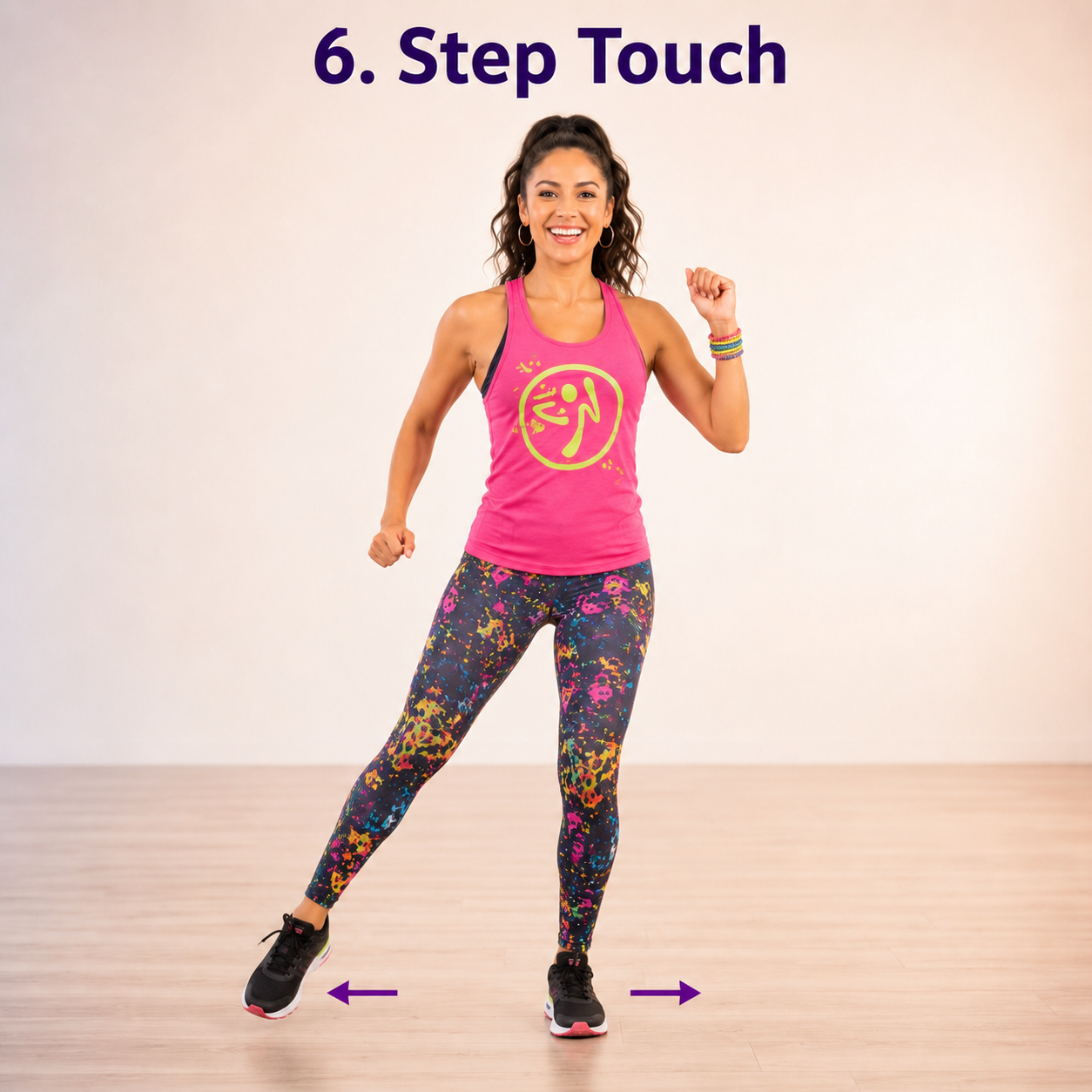
The step touch is commonly used between faster dance combinations.
How to Perform a Step Touch
- Step to the right with your right foot.
- Bring your left foot beside the right foot.
- Step to the left with your left foot.
- Bring your right foot beside the left foot.
- Continue alternating sides.
- Add arm reaches, shoulder movements, or gentle claps.
This movement can also be used as an active recovery exercise when you need to reduce the intensity.
7. Knee Lifts
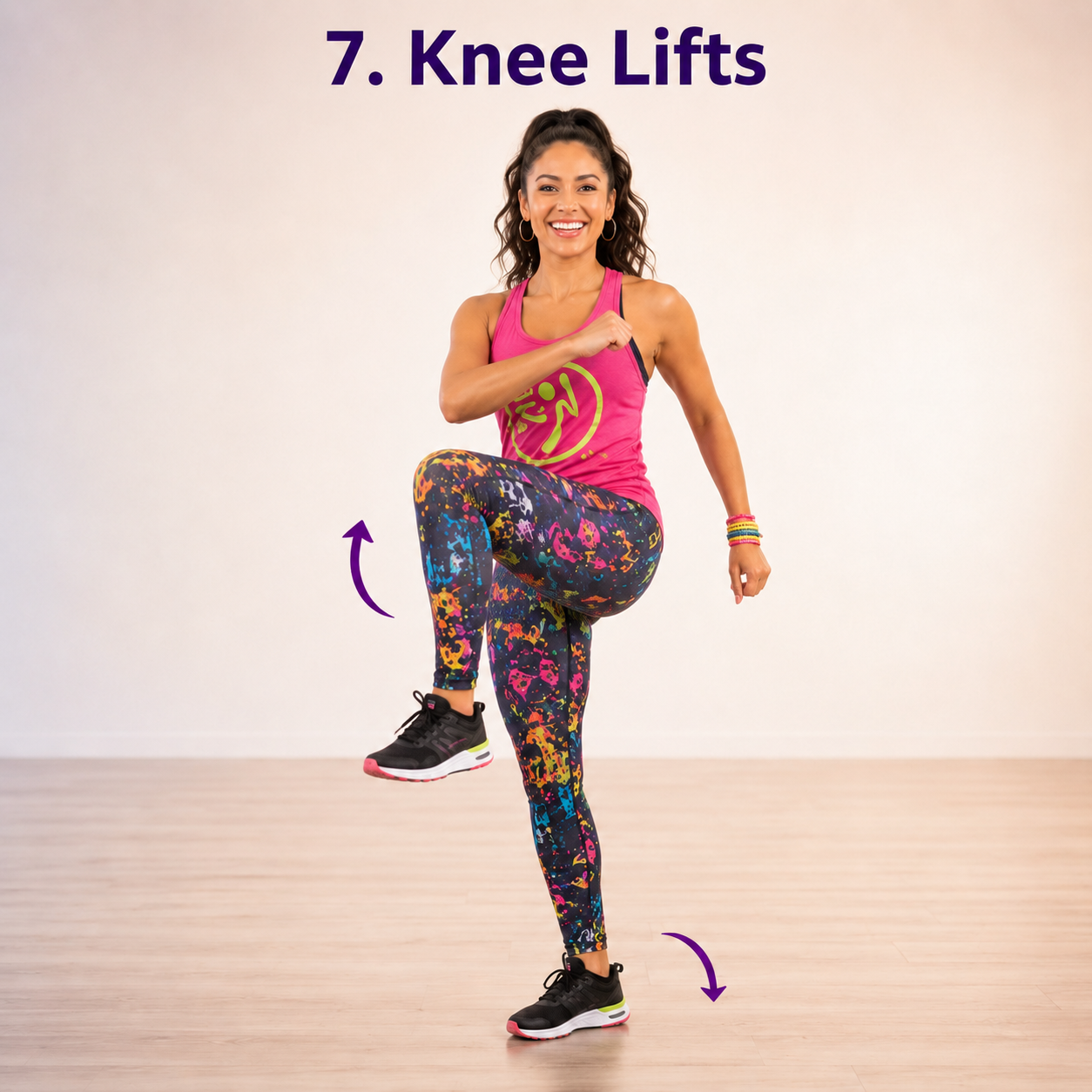
Knee lifts engage the core and increase the energy of the workout.
How to Perform Knee Lifts
- Stand upright with your feet slightly apart.
- Lift your right knee towards your chest.
- Lower your right foot.
- Lift your left knee.
- Continue alternating knees.
- Move your opposite hand towards the raised knee.
- Keep your back straight.
Raise your knees only as high as feels comfortable.
8. Beginner Zumba Squat
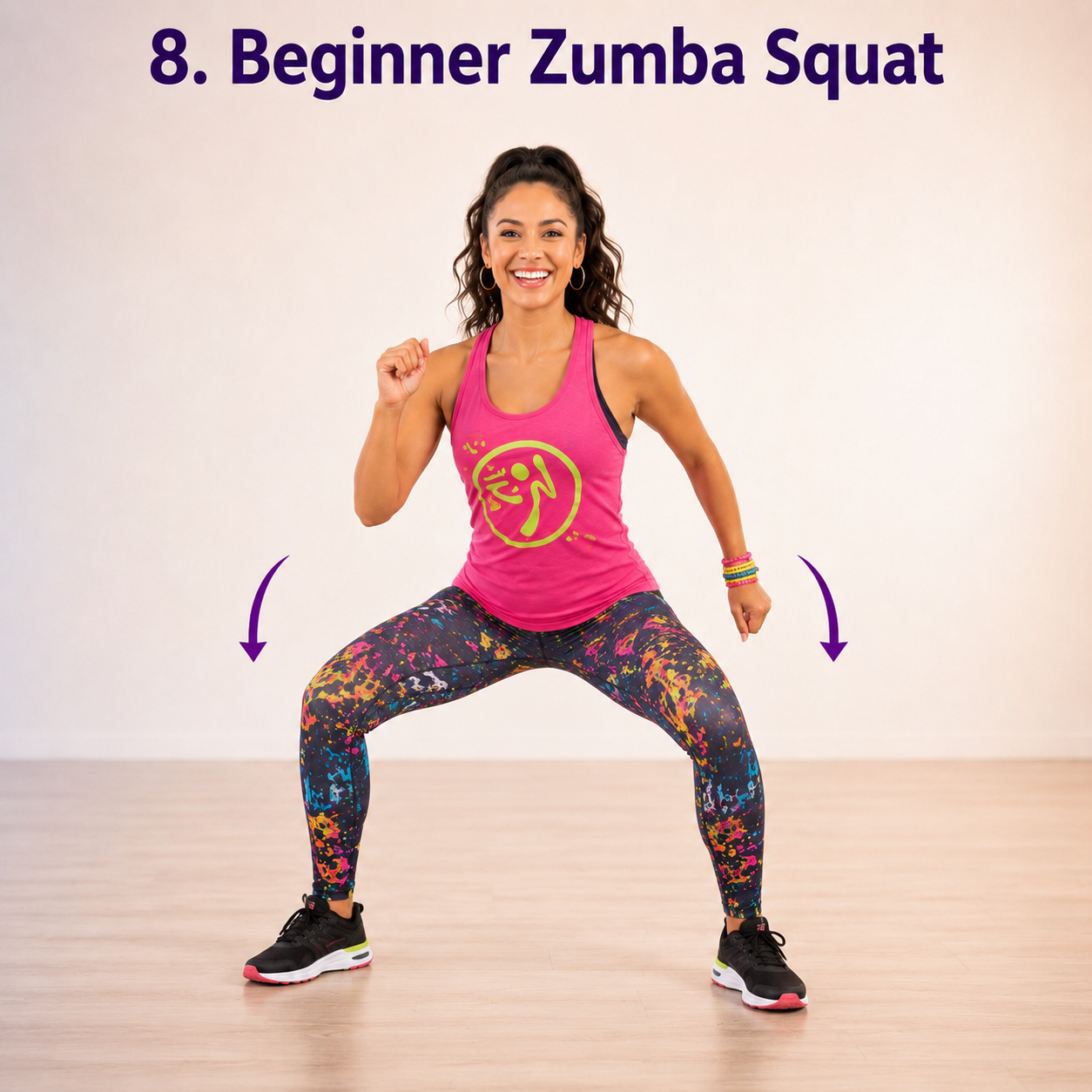
Squats help engage the legs, hips, and lower body.
How to Perform a Beginner Zumba Squat
- Stand with your feet slightly wider than your shoulders.
- Point your toes slightly outwards.
- Bend your knees and move your hips backwards.
- Keep your chest lifted.
- Lower your body only as far as comfortable.
- Push through your feet and return to standing.
- Repeat with the rhythm.
Make sure your knees move in the same direction as your toes.
9. Grapevine Step
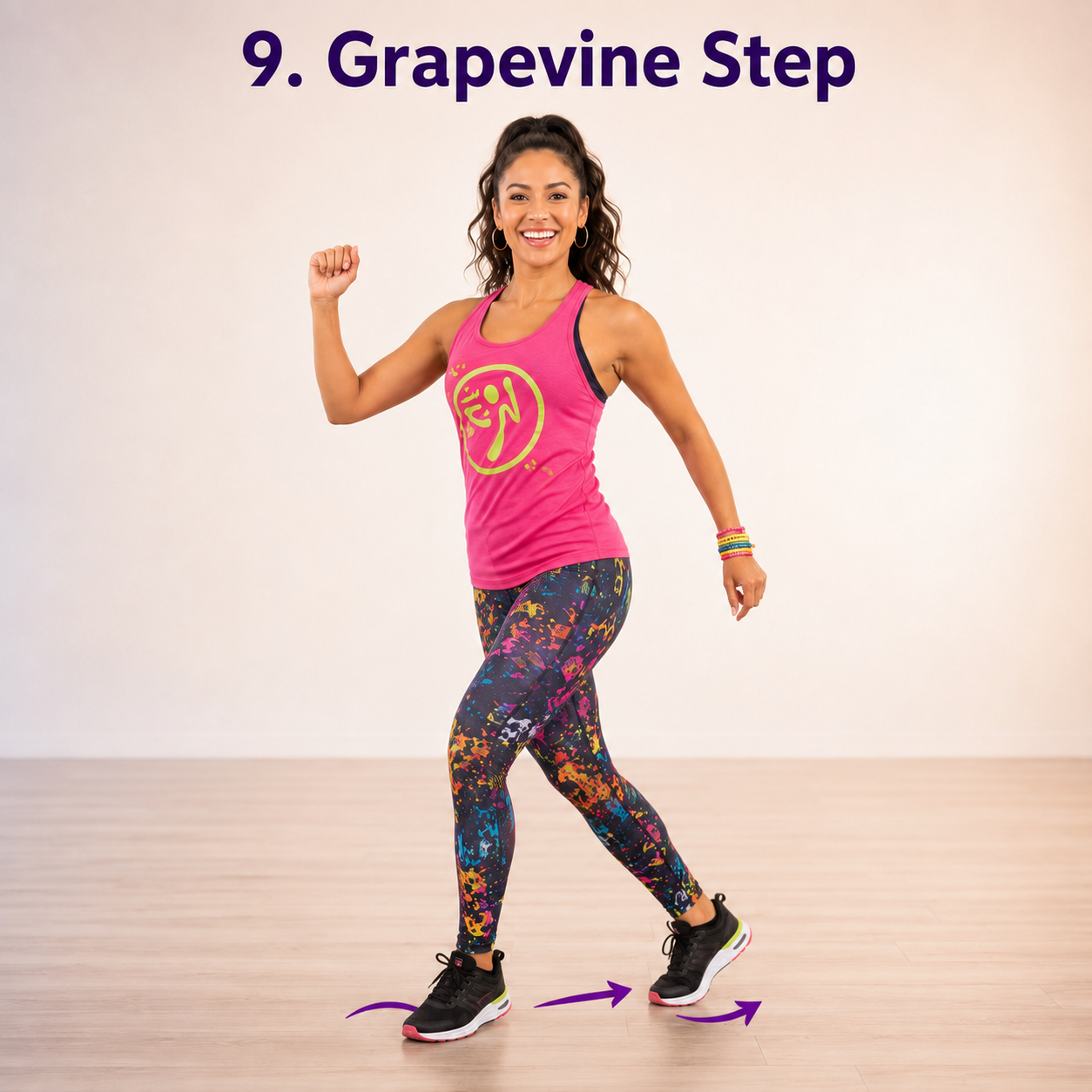
The grapevine helps you move sideways using crossing steps.
How to Perform the Grapevine
- Step to the right with your right foot.
- Cross your left foot behind the right foot.
- Step to the right again.
- Tap your left foot beside the right foot.
- Repeat the same sequence towards the left.
- Add arm movements after learning the footwork.
Practise slowly without music when the crossing movement feels difficult.
10. Basic Body Roll
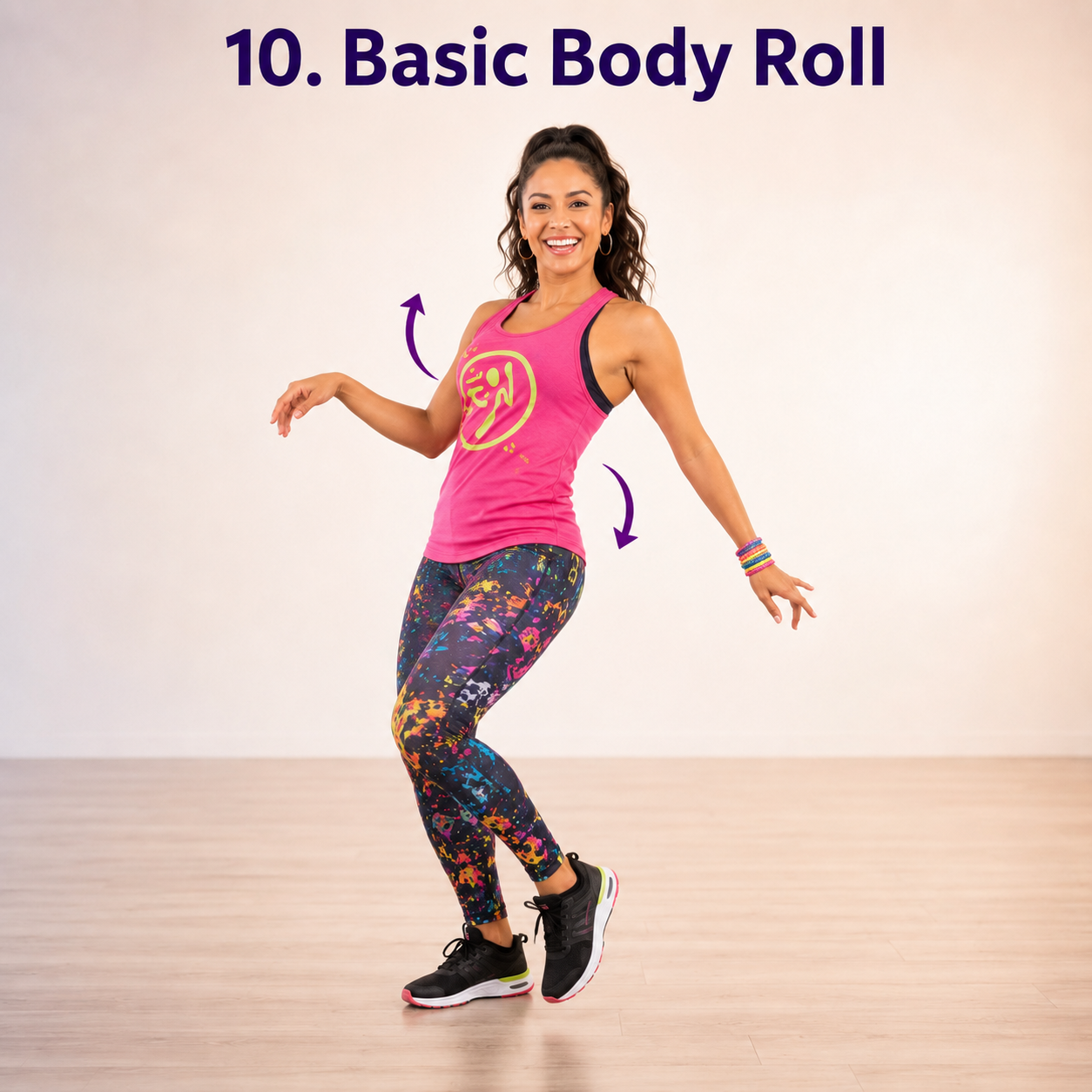
A body roll introduces smooth and fluid movement.
How to Perform a Body Roll
- Stand with your feet shoulder-width apart.
- Move your chest slightly forward.
- Allow the movement to travel through your upper body.
- Continue the movement through your stomach and hips.
- Return to the starting position.
- Repeat slowly.
Keep the movement small and avoid forcing your lower back.
Simple 20-Minute Zumba Workout for Beginners
Minutes 1–5: Warm-Up
Begin with:
- Marching in place
- Side-to-side steps
- Shoulder rolls
- Heel taps
- Gentle hip movements
- Arm reaches
Minutes 6–10: Basic Dance Steps
Practise:
- Merengue march
- Salsa side step
- Step touch
- Basic cumbia step
Repeat each movement until you feel comfortable.
Minutes 11–15: Cardio Section
Add:
- Knee lifts
- Reggaeton stomps
- Grapevine steps
- Beginner squats
Use smaller movements when you need to reduce the intensity.
Minutes 16–18: Beginner Dance Combination
Perform:
- Four merengue marches
- Four side steps
- Four knee lifts
- Two grapevine movements
- Four beginner squats
- Repeat the complete combination
Minutes 19–20: Cool-Down
Slowly march in place and gradually reduce your movement speed.
Finish with gentle stretches for your:
- Legs
- Arms
- Shoulders
- Hips
- Back
How to Follow a Zumba Instructor
Zumba instructors often use hand signals and body movements to indicate upcoming changes.
Watch the instructor’s:
- Feet to understand the direction
- Arms to recognise upcoming movements
- Body position to notice turns
- Hand signals to identify changes
- Movement size to understand the intensity
Stand where you can clearly see the instructor. During your first sessions, concentrate on the footwork before adding complicated arm movements.
Common Zumba Mistakes Beginners Should Avoid
Trying to Perform Every Step Perfectly
You do not need perfect technique during your first session. Continue moving and allow yourself time to learn.
Starting at Maximum Intensity
Large and fast movements can cause early tiredness. Begin with smaller steps and gradually increase the intensity.
Wearing Unsuitable Shoes
Unsupportive or slippery footwear can make side-to-side movements uncomfortable. Select shoes that provide stability while allowing movement.
Forgetting to Drink Water
Drink water before and after your workout. Take small water breaks whenever necessary.
Comparing Yourself With Others
Every participant has a different experience and fitness level. Focus on your own progress rather than copying advanced participants.
Ignoring Pain
Normal tiredness is different from sharp or sudden pain. Stop the movement and speak to the instructor when something feels painful.
Holding Your Breath
Breathe naturally throughout the workout, including during squats, knee lifts, and faster combinations.
Skipping the Warm-Up
Starting intense movements without warming up may make the workout uncomfortable. Always begin with gentle movements.
Tips to Improve Your Zumba Skills
Attend Classes Regularly
Regular participation helps the movements feel more natural. Begin with two or three sessions per week, depending on your comfort and schedule.
Practise the Basic Steps at Home
Spend a few minutes practising the merengue march, salsa step, grapevine, and knee lifts.
Listen for the Main Beat
Try to identify the main beat of each song. Practise stepping or clapping with the beat before adding complicated movements.
Learn Footwork Before Arm Movements
Concentrate on your feet first. Add arm movements only after you understand the basic step.
Use Smaller Movements
Smaller steps are easier to control and may feel more comfortable for beginners.
Stay Relaxed
Avoid keeping your shoulders, neck, or arms too stiff. Relaxed movement makes it easier to follow the rhythm.
Try Different Dance-Fitness Styles
People who enjoy Indian music and choreography may also like Bollywood dance classes in Dubai, which combine energetic dance movements with traditional and modern influences.
Enjoy the Workout
Zumba is not only about technique. Smile, move with the music, and focus on enjoying the experience.
Can Children and Older Adults Do Zumba?
Zumba routines can be adapted for different ages and fitness levels.
Children should join age-appropriate sessions featuring simple movements, suitable music, games, and shorter combinations. Parents can read the detailed guide explaining what age children can start Zumba classes.
Older participants may prefer lower-impact routines with controlled movements and fewer jumps. The guide to Zumba for seniors explains suitable modifications and important safety considerations.
How Often Should Beginners Do Zumba?
Beginners can generally begin with two or three sessions each week. Include sufficient recovery time when your body feels tired or sore.
You may start with shorter, lower-intensity sessions and gradually increase the workout duration. The ideal frequency depends on your fitness level, daily routine, recovery, and personal goals.
Consistency is more important than starting with a very demanding schedule.
Take the First Step Towards an Enjoyable Fitness Routine
Zumba provides an engaging way to become more active, improve coordination, develop stamina, and build movement confidence.
You do not need professional dancing skills or advanced fitness experience. Begin with basic steps, follow the instructor, take breaks when necessary, and allow your body time to adapt.
Regular practice will make the movements feel easier and help you enjoy each workout more confidently.
Join Beginner-Friendly Zumba Classes at Upaj Academy Dubai
Turn your regular workout into an exciting dance-fitness experience at Upaj Academy.
Our Zumba sessions are designed to help participants learn simple movements, stay active, improve coordination, and enjoy exercising in an encouraging group environment.
Explore Zumba classes at Upaj Academy Dubai
You can also contact Upaj Academy to enquire about class timings, age groups, availability, and registration.