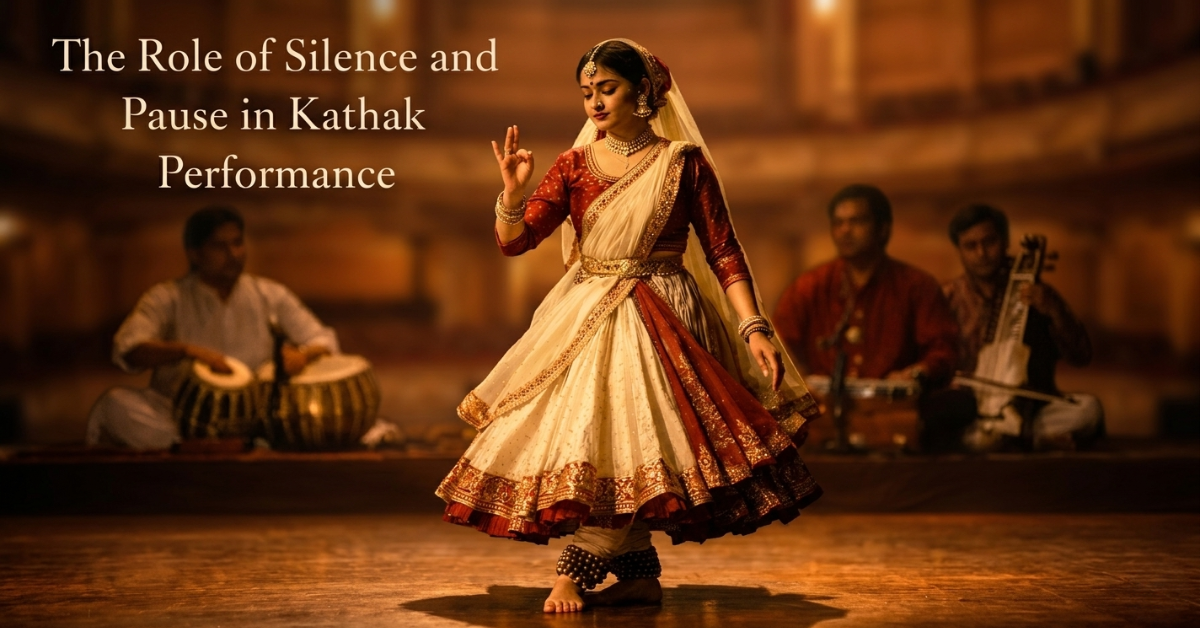
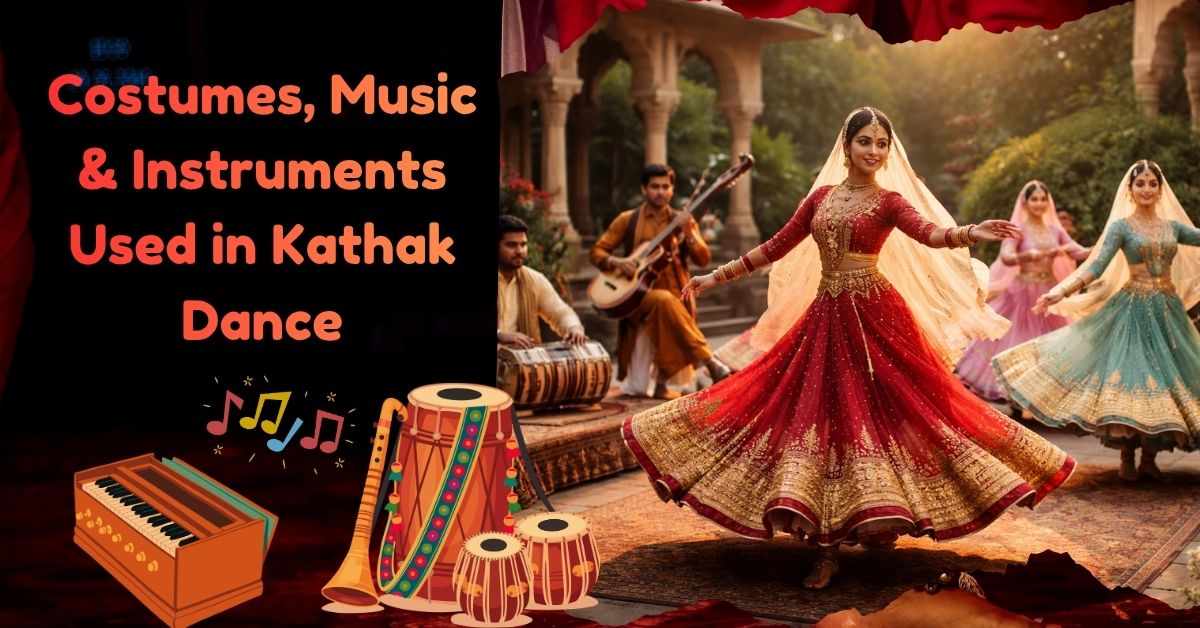
Summary: The kathak dance is one of the most graceful and expressive forms of Indian classical dance. Known for its intricate footwork, spins, and storytelling, this Kathak classical dance form beautifully blends rhythm, emotion, and tradition. When talking about kathak dance, its costumes, music, and instruments play a crucial role in enhancing every Kathak dance performance.
If you want to know all about kathak, understanding its visual and musical elements is essential. From the elegant kathak dress to the rhythmic beats of instruments, every detail contributes to making Kathak dance art truly mesmerizing.
What is Kathak Dance and Why is it So Expressive?
The kathak dance is a traditional storytelling dance form that originated in North India. It is known for expressing stories through hand gestures, facial expressions, and rhythmic footwork. This best Indian classical Kathak dance has evolved over centuries into a refined and captivating performance art.
When we talk about kathak dance, its beauty lies in how dancers combine movement with emotion. Every spin, step, and expression adds depth, making Kathak dance art not just a performance but a powerful storytelling experience.
What is the Importance of Kathak Dance in Indian Culture?
The kathak dance holds deep cultural and historical significance in India. It reflects traditions, mythology, and storytelling through movement. This Kathak classical dance form has been preserved for generations as a symbol of artistic heritage.
When we talk about kathak dance, its importance goes beyond entertainment. It promotes discipline, creativity, and cultural awareness. The beauty of Kathak dance art lies in its ability to connect the past with the present.
What Are the Costumes Used in Kathak Dance That Bring Elegance in Every Movement?
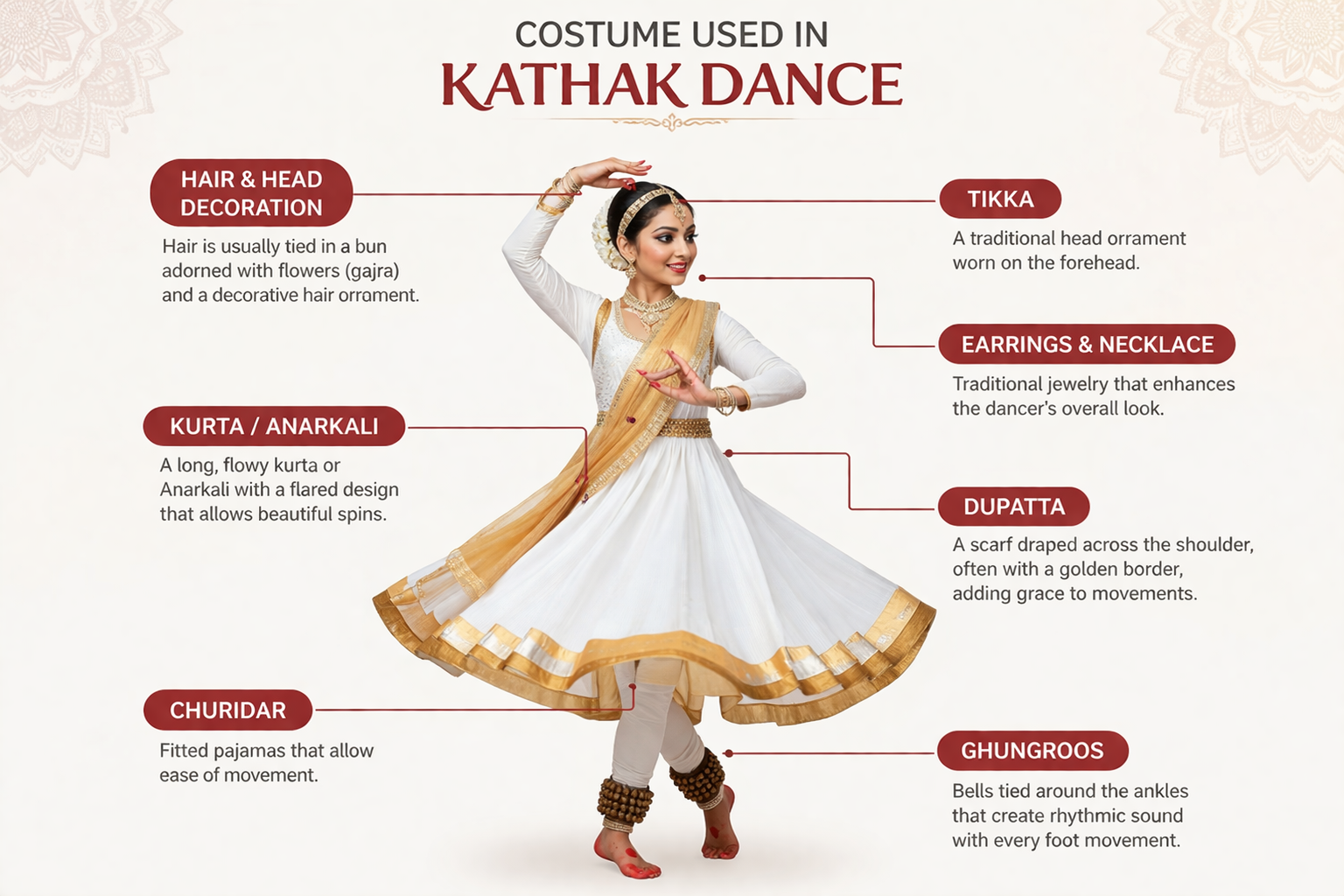
The kathak dress plays a significant role in enhancing the beauty of a performance. Traditional costumes include:
- Anarkali-style long frock with churidar
- Lehenga and choli with dupatta
- Angrakha-style costume for a royal look
- Ghungroo (ankle bells) for rhythmic sound
- Dupatta draped gracefully for expression
A well-designed costume for kathak highlights the dancer’s spins and movements. The flowing fabric adds elegance, making every Kathak dance performance visually appealing.
In Indian classical Kathak dance, costumes are not just about appearance—they help express character and emotion. The right kathak dress enhances storytelling and brings the performance to life.
Which Types of Music Are Used in Kathak Dance?
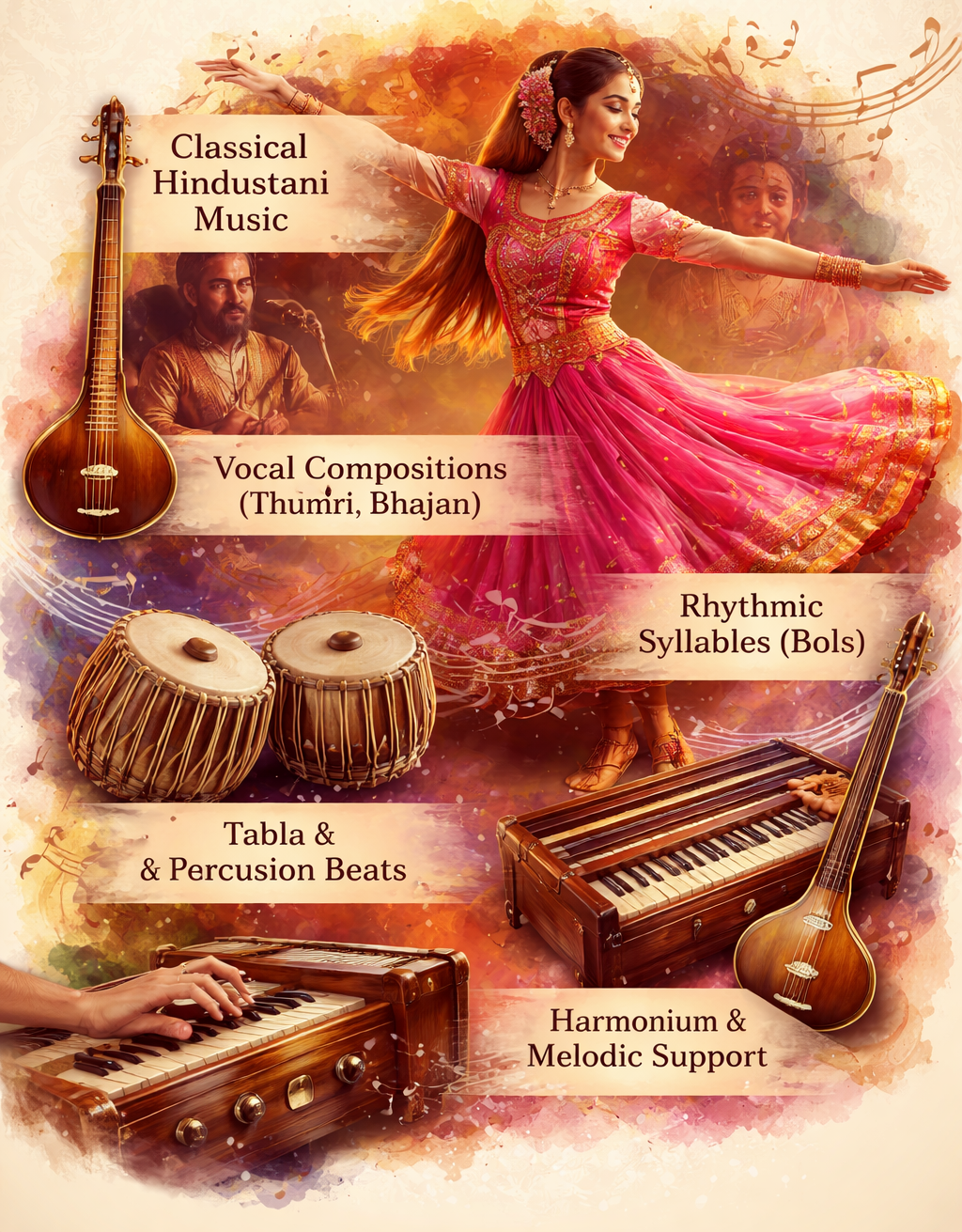
Music is the heartbeat of kathak dance and sets the rhythm for every movement. Key elements include:
- Classical Hindustani music
- Vocal compositions (thumri, bhajan)
- Rhythmic syllables (bols)
- Tabla and percussion beats
- Harmonium and melodic support
The music in this Kathak classical dance form creates the foundation for expressions and timing. Every beat guides the dancer’s footwork and gestures.
When learning about kathak dance, understanding music is essential. It connects the dancer with the audience, making the Kathak dance art more immersive and emotional.
Which Are the Instruments Used in Kathak Dance to Create Rhythm and Harmony?
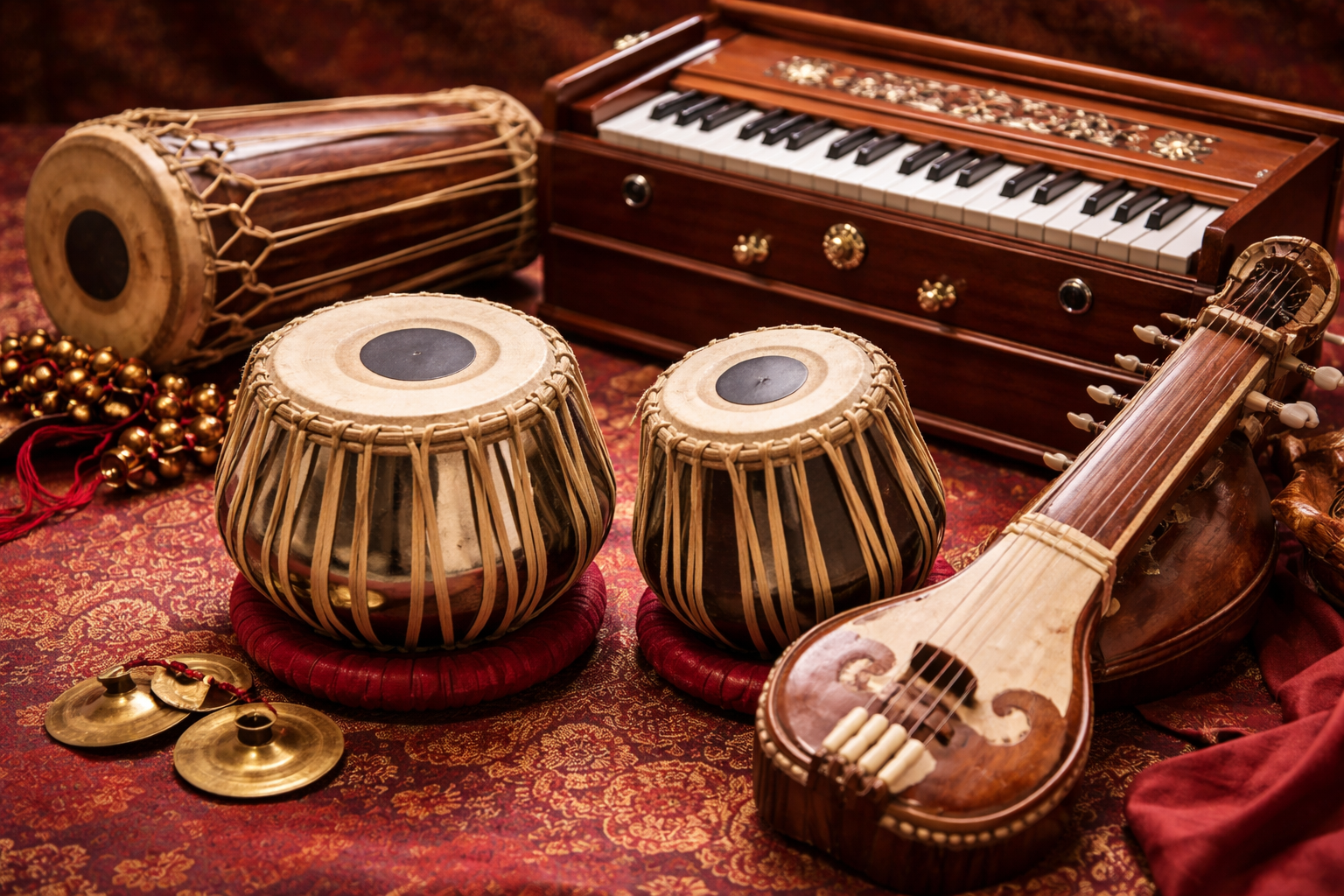
Instruments are vital in shaping a Kathak dance performance. Common instruments include:
- Tabla for rhythm and beats
- Harmonium for melody
- Sarangi for emotional depth
- Pakhawaj for traditional compositions
- Manjira for supporting rhythm
These instruments used in kathak dance work together to create a rich musical environment. The tabla, in particular, is central to synchronizing footwork in kathak dance.
In Indian classical Kathak dance, instruments do more than provide music—they interact with the dancer. This connection enhances timing, precision, and overall performance quality.
Which Features of Kathak Dance That Make It Unique?
The uniqueness of kathak dance lies in its distinctive elements:
- Fast and intricate footwork (tatkaar)
- Graceful spins (chakkars)
- Expressive storytelling (abhinaya)
- Strong rhythm and timing
- Blend of Hindu and Mughal influences
Each feature contributes to making this Kathak classical dance form both dynamic and expressive. The balance of technique and emotion sets it apart from other dance styles.
When exploring all about kathak, these features define its identity. They showcase why Kathak dance art continues to captivate audiences worldwide.
How to Learn Kathak Dance Step by Step for Beginners?
Learning kathak dance requires patience, practice, and proper guidance. Beginners can start with:
Basic footwork (tatkaar)
Tatkaar is the foundation of kathak dance, focusing on rhythmic foot movements. It helps dancers develop timing, coordination, and control.
Hand movements and postures
Graceful hand gestures and correct body posture enhance expression in Kathak dance art. They play a key role in storytelling and visual appeal.
Understanding rhythm and counting
Rhythm is essential in the Kathak classical dance form, as every step follows a beat cycle. Learning counting helps maintain synchronization with music.
Practicing spins and balance
Spins (chakkars) are a highlight of Kathak dance performance, requiring balance and precision. Regular practice improves stability and elegance.
Learning simple compositions
Beginners start with short dance sequences to understand structure and flow. These compositions build confidence and prepare dancers for advanced routines.
If you want to learn Kathak dance at home, consistency is key. However, professional training can help you master the techniques of this Indian classical Kathak dance more effectively. How to Prepare for Your First Kathak Stage Performance : Focus on mastering basic footwork, expressions, and timing through regular practice. Build confidence by rehearsing in costume and coordinating with music and instruments beforehand.
Join Upaj Academy to Master Kathak Dance!
If you are passionate about kathak dance and want to explore all about kathak, Upaj Academy is the perfect place to begin your journey. With expert guidance and structured training, you can learn everything from basic steps to advanced Kathak dance performance techniques.
At Upaj Academy, we focus on building strong foundations in Indian classical Kathak dance classes in Dubai, including proper footwork, expressions, and understanding of music and costumes. Whether you are a beginner or looking to refine your skills. Contact us and know about our academy to help you grow confidently in the world of Kathak dance art.
Frequently Asked Questions
- All Posts
- Bharatanatayam
- Blog
- Bollywood
- kathak
- Zumba