Summary : Bharatanatyam gives children more than an opportunity to learn dance. It introduces them to Indian stories, music, traditions, expressions and values through movement and performance. For children growing up in a multicultural environment, learning this classical art form can make cultural education enjoyable and memorable. Through mudras, rhythm, storytelling, costumes and expressions, children gradually discover different parts of Indian heritage while developing their own appreciation for the art. This blog explores how Bharatanatyam can help children understand their cultural roots, experience Indian traditions and build a meaningful connection with their heritage.
What Makes Bharatanatyam More Than Just A Dance Form?
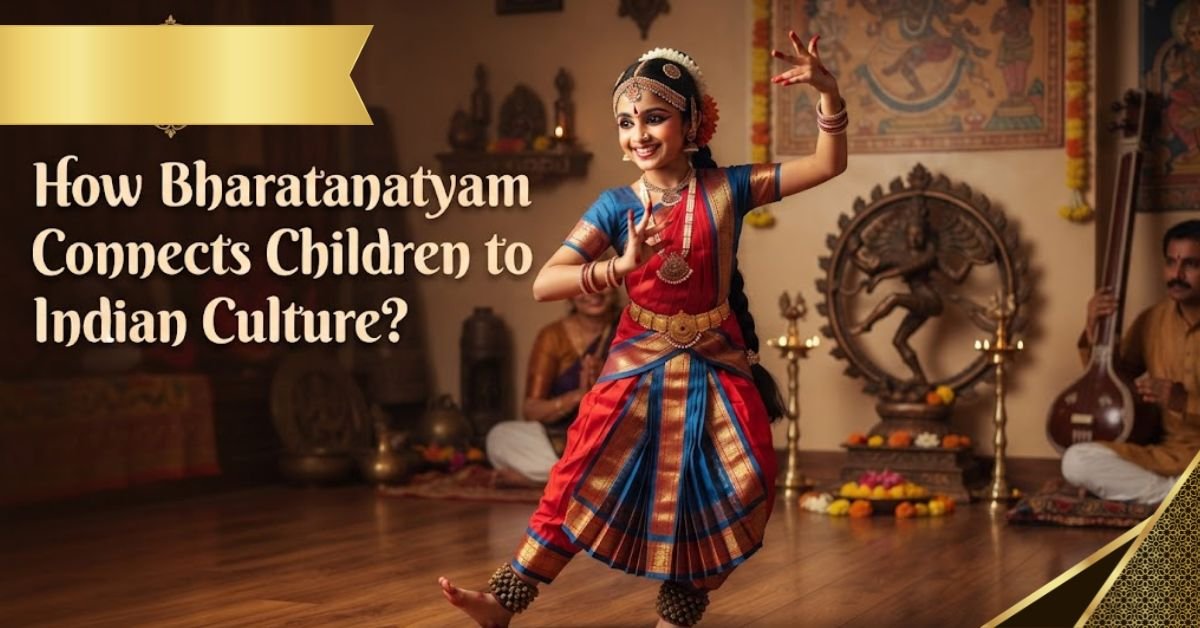
Bharatanatyam is one of India’s classical dance forms, but learning it involves much more than memorising a sequence of steps. Children are introduced to movement, rhythm, music, expressions, hand gestures and storytelling as parts of one artistic experience.
During regular practice, children learn how the body can communicate an idea, emotion or story. They practise traditional movements, improve their sense of rhythm and gradually become familiar with the language of classical dance.
They may also learn about traditional costumes, performance etiquette and the significance of beginning a practice or performance with respect. These experiences give children an opportunity to see Indian culture as something they can actively experience rather than something they only read about.
For a child, this combination can make cultural learning more engaging. A story becomes something they can perform, a gesture gains meaning, and music becomes connected to movement. Over time, these small experiences can build familiarity with Indian artistic traditions.
How Does Bharatanatyam Introduce Children To Indian Stories?
Storytelling is one of the most engaging parts of Bharatanatyam for children. Many performances draw from traditional Indian stories, mythology, literature and characters that have been passed down through generations.
Instead of only listening to a story, a child may portray a character through posture, movement, facial expressions and gestures. This makes the experience more active and encourages children to pay attention to what a character is feeling or doing.
Stories can introduce children to ideas such as courage, kindness, devotion, compassion, honesty and respect. They also give children a chance to explore different characters and situations through performance.
This is where abhinaya, or expressive storytelling, becomes especially important. A dancer uses facial expressions, gestures and body language to communicate meaning to an audience.
For children, this can create a memorable connection between storytelling and culture. They are not simply learning the name of a traditional story; they are exploring its characters, emotions and messages through their own performance.
How Does Storytelling Make Indian Traditions Easier For Children To Understand?
Children often remember experiences that allow them to participate. Bharatanatyam turns cultural stories into something they can see, hear, move through and express.
A simple process can look like this:
Story → Character → Expression → Movement → Understanding
As children repeat this process, traditional stories can become more familiar and easier to understand. Parents can also continue the conversation at home by asking what a child remembers about a character or why a particular movement was used.
How Do Mudras Help Children Understand Indian Culture?
Mudras are an important part of Bharatanatyam and help communicate meaning through hand gestures. Depending on how they are used, gestures can represent objects, actions, people, emotions, nature and ideas.
For children, learning mudras can feel like discovering a traditional visual language. They begin to understand that a hand position is not just a shape but can carry a specific meaning within a performance.
This can make the learning process interactive. A child may learn a gesture and then discover how it fits into a story or sequence. Connecting the movement to a meaning helps make the cultural element more memorable.
Mudras also show children how communication has traditionally been expressed through Indian performing arts. They encourage observation, concentration and attention to detail while giving children another way to understand the stories they perform.
Why Are Facial Expressions Important In Bharatanatyam?
Facial expressions are essential to Bharatanatyam because movement alone cannot always communicate the complete emotion behind a story.
Children learn to express feelings such as happiness, sadness, surprise, fear, anger, affection and courage. They gradually understand how a subtle change in expression can alter the way a character or situation is perceived.
This expressive training also helps children become more aware of emotions. They learn to observe how feelings can be communicated through the face and body, making storytelling more natural and engaging.
How Does Bharatanatyam Introduce Children To Indian Music And Rhythm?
Dance and music are closely connected in Bharatanatyam. Children learn that movement is guided by rhythm and that dancers need to listen carefully to music while coordinating their steps.
As they practise, they develop a stronger awareness of beat, timing and patterns. They may also become familiar with traditional compositions, vocal elements and percussion used in classical dance performances.
Learning rhythm can make children more attentive during practice because they need to listen and respond at the right moment. It also helps them understand that Indian classical dance is part of a wider performing arts tradition.
The concept of tala, which relates to rhythmic cycles, can gradually be introduced as children become more comfortable with the basics. The technical side can be taught according to their age and level, allowing cultural understanding to grow naturally alongside dance skills.
How Does Bharatanatyam Teach Children About Indian Traditions?
Bharatanatyam exposes children to several traditions associated with Indian performing arts. This can include traditional attire, jewellery, hair styling, stage presentation, music and performance etiquette.
Children may also learn namaskaram, a traditional gesture performed as part of the practice or performance process. It helps introduce ideas of respect toward the art, teachers, fellow performers and the space in which the dance is performed.
Traditional costumes can also become an opportunity for cultural learning. Rather than seeing the costume only as something worn on stage, children can learn that colours, jewellery, styling and presentation form part of the visual identity of classical dance.
The most meaningful learning happens when children understand the reasons behind these practices. Simply copying a tradition has less value than knowing what it represents and why it remains part of the art form.
What Can Children Learn Through Bharatanatyam?
Bharatanatyam Element | What Children Experience | Cultural Connection |
Adavus | Traditional movements and rhythm | Indian classical dance heritage |
Mudras | Meaningful hand gestures | Traditional visual storytelling |
Abhinaya | Facial expressions and emotions | Indian storytelling traditions |
Music | Rhythm and compositions | Indian musical heritage |
Stories | Characters and narratives | Indian mythology and literature |
Costume | Traditional dance attire | Indian performing arts traditions |
Performance | Stage presentation and etiquette | Respect for cultural art forms |
How Does Bharatanatyam Help Children Respect Their Cultural Heritage?
Understanding culture can be the first step toward appreciating it. When children regularly encounter Indian stories, music, dance and traditions, these elements can become familiar rather than unfamiliar or distant.
Bharatanatyam offers repeated opportunities to experience Indian artistic traditions in a practical way. Children may begin to recognise classical music, understand familiar stories and become curious about other forms of Indian art.
This familiarity can also encourage children to ask questions. They may want to know more about a character, a story, a festival, a costume or a particular type of music.
Over time, this sense of curiosity can develop into appreciation. Instead of viewing cultural traditions as something that belongs only to previous generations, children can see themselves as participants in a living art form.
The goal is not to make every child an expert in Indian culture. Rather, the experience can give them knowledge, familiarity and an opportunity to value an important part of their heritage.
How Can Bharatanatyam Help Children Growing Up Outside India?
Children growing up in Dubai and other multicultural environments are surrounded by many languages, traditions and cultural influences. This diversity can be enriching, but families may also look for meaningful ways to help children stay connected to their Indian heritage.
Bharatanatyam can provide one such opportunity.
Through regular classes, children can encounter Indian stories, traditional music, classical movement and performance practices in a structured setting. Performing during cultural programmes or family events can also give them opportunities to share what they have learned.
This does not mean children have to choose between their Indian heritage and the wider culture around them. Cultural learning can be part of a broader multicultural upbringing.
A child can learn about Indian dance while also exploring other art forms, languages and traditions. The value lies in giving children a strong foundation from which they can understand and appreciate where some of their family traditions come from.
For parents, this can make cultural education feel more natural because the child is learning by doing rather than simply memorising information.
How Can Parents Make Bharatanatyam A Meaningful Cultural Experience?
Parents can make the learning experience even more valuable by showing interest in what children are learning during their dance classes.
Encourage Children To Ask Questions
When a child asks why a gesture is used or what a story means, take the opportunity to explore the answer together. Questions can turn a dance lesson into a broader cultural conversation.
Connect Dance Lessons With Festivals And Stories
Parents can revisit stories or traditions introduced in class when a relevant Indian festival or cultural occasion comes around. This helps children see a connection between their classes and everyday family life.
Talk About The Music And Characters
Ask children what they heard in the music, which character they liked or what emotion they were trying to express. Simple conversations can strengthen their understanding.
Attend Cultural Performances
Watching other Bharatanatyam performances can help children see different styles, expressions and interpretations. It can also inspire them to continue learning.
Let Children Explain What They Have Learned
Ask a child to demonstrate a mudra or describe a story to another family member. Explaining something they have learned can reinforce both memory and confidence.
What Should Parents Look For In Bharatanatyam Classes For Children?
Choosing the right learning environment can make a significant difference to a child’s experience. Parents should look for classes where children receive age-appropriate instruction and have enough time to build strong foundations.
An experienced teacher should give attention to posture, movement, rhythm and technique while also helping children understand what they are performing.
It is also useful to consider whether the classes provide a supportive environment where children feel comfortable learning at their own pace. Young students may benefit from a gradual progression rather than being pushed into advanced movements too quickly.
Parents can also ask whether the programme introduces storytelling, expressions and cultural context alongside dance practice. Performance opportunities can be another valuable part of learning because they allow children to experience the art beyond regular classroom practice.
Most importantly, children should feel encouraged to learn. When a child enjoys the process, cultural education becomes something they look forward to instead of another activity they are expected to complete.
How Can Bharatanatyam Build A Lasting Connection With Indian Culture?
Bharatanatyam brings together movement, music, storytelling, expression and tradition in one learning experience. This gives children several different ways to discover Indian culture and understand why these artistic practices have continued across generations.
A child may begin by learning a few basic movements. Later, those movements can lead to rhythm, gestures, expressions, stories and performances. Step by step, the dance can introduce a much wider cultural world.
For children growing up away from India, this experience can provide a meaningful connection to their heritage while still fitting naturally into a multicultural childhood.
When children understand the meaning behind what they perform, Bharatanatyam can become more than an extracurricular activity. It can become a creative way for them to learn about, appreciate and carry forward a part of Indian cultural heritage.
Let Your Child Discover The Beauty Of Indian Culture Through Dance
Bharatanatyam can give children a beautiful way to experience Indian stories, music, expressions and traditions while building confidence and appreciation for the art. At Upaj Dance Academy, children learn through structured guidance in a supportive environment where every movement has meaning and each lesson offers a new way to discover Indian heritage.
Looking for bharatanatyam dance classes near Al Furjan for kids? Give your child an opportunity to learn, express and perform while developing a lasting connection with Indian culture. Contact Us to learn more about our classes, schedules and enrollment options, and take the first step towards your child’s Bharatanatyam journey.