
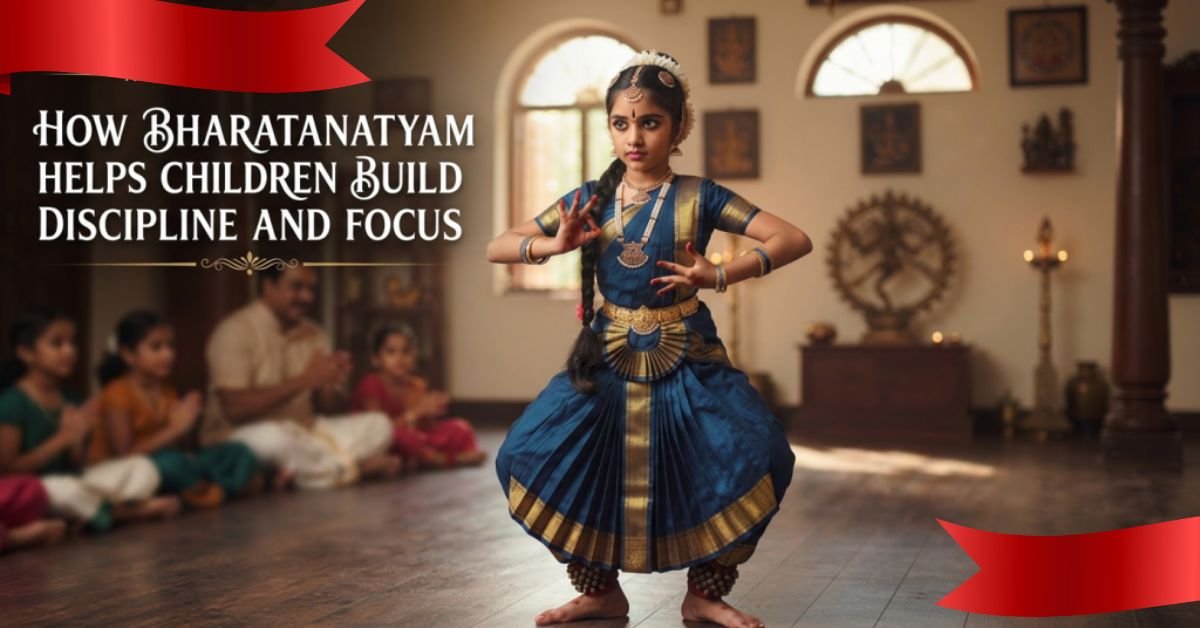
Summary : Bharatanatyam is much more than learning dance movements. For children, it can become a meaningful learning experience that encourages regular practice, patience, concentration and confidence. Every class introduces children to rhythm, posture, hand gestures, expressions and coordinated movements that require attention and consistency.
In a time when children have many distractions competing for their attention, structured activities can help them develop healthy routines. Bharatanatyam gives children a creative way to learn while also encouraging them to listen carefully, remember sequences, follow instructions and keep practising even when something feels difficult.
The value of Bharatanatyam goes beyond what happens inside the dance studio. The habits children develop through regular training can gradually become useful in schoolwork, daily routines, social situations and other activities. Here is how learning Bharatanatyam can help children develop stronger discipline and focus.
What Makes Bharatanatyam Different For Children?
Bharatanatyam combines movement, music, rhythm, expressions and storytelling. Children are expected to coordinate different parts of the body while also paying attention to timing and sequence. This makes the learning process active and engaging.
A child learning Bharatanatyam may need to watch the teacher, listen to the rhythm, remember a particular movement, maintain posture and perform the step at the correct time. These tasks require attention from both the mind and body.
Another important part of Bharatanatyam is repetition. Children often practise the same movement several times before they become comfortable with it. Instead of moving quickly from one activity to another, they learn that progress often comes from staying with a task and improving it gradually.
This combination of creativity and structure makes Bharatanatyam a valuable activity for children who are learning how to stay committed and attentive.
How Does Bharatanatyam Teach Children To Follow A Routine?
Children often learn discipline through simple routines repeated over time. Bharatanatyam naturally creates opportunities for this.
Attending dance classes at regular times helps children understand the importance of being prepared and consistent. They learn that class begins at a certain time and that they need to arrive ready to participate.
During a class, children also become familiar with a sequence of activities. They may begin with warm-ups, move into basic exercises, practise adavus and then work on choreography. Following this structure helps them become comfortable with routines.
Over time, children can start understanding that good results are rarely achieved through occasional effort. Regular participation matters.
This can also encourage useful habits outside dance. A child who becomes comfortable following a weekly practice routine may gradually find it easier to approach homework, reading, sports or other structured activities with greater consistency.
How Does Regular Practice Help Children Develop Self-Discipline?
Self-discipline does not usually appear overnight. It develops when children learn to continue doing something even when they are not immediately successful.
Bharatanatyam gives children many opportunities to experience this. A new movement may feel uncomfortable at first. A rhythm may be difficult to follow. A sequence may be forgotten halfway through. Instead of giving up, children are encouraged to repeat the movement, understand the correction and try again.
This teaches an important lesson: improvement requires effort.
With regular practice, children can begin to understand the difference between wanting to do something and working toward becoming better at it. They learn to practise even when the excitement of a new activity has passed.
Parents can support this process by encouraging consistency rather than demanding perfection. The goal is not for a child to perform every movement perfectly from the beginning. The goal is to help them understand the value of patience, effort and gradual progress.
How Does Bharatanatyam Improve A Child’s Concentration?
Concentration is an essential part of learning Bharatanatyam because children have to focus on several details at the same time.
During a dance sequence, a child may need to listen to music, follow rhythm, remember the order of movements, maintain posture, use the correct hand gesture and watch for the next instruction. Losing attention for even a moment can cause the sequence to change.
As children practise, they get more comfortable staying mentally present during a task.
This type of learning encourages them to focus on what they are doing rather than constantly switching their attention. With regular classes, children may become more familiar with the process of listening carefully, processing information and responding through movement.
It is important not to present dance as a guaranteed solution for academic performance. However, the attention and practice habits developed through structured dance learning can be useful skills in many areas of a child’s daily life.
How Do Rhythm And Footwork Train Children To Pay Attention?
Rhythm is an important part of Bharatanatyam, and learning it requires careful listening.
Children have to understand beats and coordinate their footwork with the rhythm. They learn to recognise timing and develop an awareness of when a movement should begin, pause or change.
At first, keeping up with rhythm may seem challenging. With practice, children become more comfortable listening and responding at the right moment.
This can encourage several useful habits, including careful listening, timing, observation and attention to detail. Rather than performing movements randomly, children learn that every movement has a place within a larger pattern.
The process also teaches children to notice small differences. A slightly early step, an incorrect beat or a missed movement becomes something they can identify and improve.
How Does Memorising Bharatanatyam Steps Strengthen A Child’s Mental Focus?
Memory plays a major role in learning Bharatanatyam. Children gradually learn adavus, mudras, combinations, choreography and performance sequences.
A sequence has to be remembered in the correct order, and the child must recall it while also focusing on movement and rhythm. This creates an interesting mental challenge because remembering the steps is only one part of the task.
Children also need to remember when to change direction, when to use a particular gesture and how to move into the next sequence.
Regular practice can make this process easier over time. Children become familiar with learning, storing and recalling information through movement.
These habits can be useful in everyday situations too. Remembering instructions, following a sequence of tasks and organising information are all skills children use at home and at school.
How Does Bharatanatyam Teach Children Patience And Persistence?
One of the most valuable lessons Bharatanatyam can teach is that progress takes time.
Children may not get every movement right during their first few attempts. They may struggle with posture, balance, hand positions or rhythm. This is a normal part of learning.
Instead of expecting instant results, children learn to keep practising. With time, something that once felt difficult can become familiar.
This experience helps children understand persistence in a practical way. They see that making a mistake does not mean they have failed. It simply means there is something left to work on.
That mindset can be valuable beyond dance. Whether a child is learning mathematics, reading, a musical instrument or a sport, the ability to continue after difficulty can make the learning process less frustrating.
Bharatanatyam can therefore introduce children to an important life lesson: not being able to do something today does not mean they cannot learn it tomorrow.
What Skills Can Children Develop Through Bharatanatyam Practice?
Bharatanatyam Practice | Skill Children Develop | How It Can Help In Daily Life |
Regular practice | Consistency | Following routines |
Learning adavus | Concentration | Staying attentive to tasks |
Memorising sequences | Memory | Remembering instructions |
Rhythm practice | Listening and timing | Paying attention |
Correcting movements | Patience | Handling mistakes |
Preparing for performances | Responsibility | Completing commitments |
Group practice | Cooperation | Working with others |
Stage performance | Confidence | Expressing themselves |
Each of these skills develops gradually. The experience can be different for every child depending on age, personality, learning pace and consistency.
How Can Bharatanatyam Help Children Develop Better Study Habits?
A dance class does not replace school learning, but some habits developed through dance can be useful when children approach other structured activities.
For example, Bharatanatyam encourages children to pay attention for a set period, follow instructions and practise something repeatedly. They also learn to work through mistakes instead of immediately abandoning a difficult task.
These habits may support a more organised approach to homework and study routines.
A child may begin to understand that progress often comes from breaking a challenging task into smaller steps. This is useful when learning a dance sequence, and the same approach can be helpful when completing a school assignment or studying a difficult subject.
The key is consistency. Parents should focus on encouraging healthy routines rather than expecting dance classes alone to transform academic performance.
How Does Bharatanatyam Teach Children To Handle Mistakes?
Mistakes are a natural part of learning any skill, and Bharatanatyam gives children a safe environment to practise, make corrections and try again.
A child may miss a beat, forget a movement or perform a gesture incorrectly. With guidance from the teacher, they can identify what went wrong and repeat the movement.
This process can gradually change the way children think about mistakes.
Instead of seeing an error as something embarrassing, they can learn to see it as part of learning. That can encourage resilience and a willingness to keep trying.
Support from parents also matters. Comparing children with others or focusing only on perfection may take away the joy of learning. Recognising small improvements can help children build a healthier attitude toward effort and progress.
How Does Performance Training Build Focus And Responsibility?
Preparing for a Bharatanatyam performance gives children a clear goal to work toward.
A performance may require them to remember choreography, follow stage positions, listen for cues, manage costumes and stay focused even when they feel nervous.
This preparation teaches responsibility because each child has a role to play. Forgetting a sequence or missing a cue can affect the overall performance, which helps children understand why preparation matters.
Performances can also give children a sense of achievement. Completing something they have practised for weeks can make the connection between effort and results more visible.
For children who feel shy, performing can gradually provide opportunities to become more comfortable expressing themselves in front of others.
How Can Bharatanatyam Build Confidence Along With Discipline?
Discipline and confidence can develop together.
When a child works consistently on a challenging dance movement and eventually performs it successfully, they experience the satisfaction of improvement. They learn that effort can lead to visible results.
Confidence can also grow through regular feedback. Constructive corrections help children understand what they are doing well and what they can improve.
Performing in front of an audience provides another opportunity to build confidence. Even small performances can help children practise standing in front of others, remembering what they learned and completing the routine with focus.
The aim is not to make every child a stage performer. It is to help them become more comfortable with learning, practising and expressing themselves.
How Can Parents Encourage Discipline Through Bharatanatyam Practice At Home?
Parents can make a big difference by creating a positive practice environment at home.
A fixed practice time can help children understand that dance is part of their routine rather than something they do only when they feel like it. Short, regular sessions are often easier for children to manage than very long practice periods.
Parents can also:
- Encourage consistency instead of perfection.
- Praise effort and improvement.
- Give children time to repeat difficult movements.
- Avoid comparisons with other children.
- Remind them of their progress when they feel frustrated.
- Keep practice sessions calm and age-appropriate.
- Allow enough time for school, rest and play.
A supportive approach can help children develop discipline without making dance feel like a punishment or obligation.
What Should Parents Look For In Bharatanatyam Classes For Children?
Choosing the right learning environment is important because children respond best when they feel supported and understood.
Parents should look for classes with a clear learning structure and teachers who can explain movements in an age-appropriate way. A good class should give children opportunities to practise while also receiving useful corrections.
Individual attention can be especially helpful for young learners because posture, rhythm and movement coordination may take time to develop.
The atmosphere also matters. Discipline should not be based on fear. Children should feel comfortable asking questions, making mistakes and trying again.
Parents can also consider class schedules, group size, lesson structure and opportunities for performance when deciding whether a particular programme is suitable for their child.
Most importantly, the class should help children enjoy learning while gradually developing commitment and consistency.
How Long Does It Take For Children To Develop Discipline Through Bharatanatyam?
There is no fixed timeline because every child develops differently.
Some children may quickly adapt to a regular routine, while others may take more time to become comfortable with practice and structured learning. Discipline develops gradually through repeated experiences.
Regular attendance, home practice, teacher guidance and encouragement from parents all contribute to this process.
The focus should be on steady progress rather than expecting immediate behavioural changes. A child remembering to practise without being reminded, staying focused for longer or becoming more patient with difficult movements can all be signs of growth.
Small changes matter because strong habits are usually built one step at a time.
Why Is Bharatanatyam A Valuable Activity For Children In Dubai?
Children growing up in Dubai have access to many educational, creative and recreational opportunities. Bharatanatyam offers a distinctive combination of movement, music, culture and structured learning.
For children, it can be a way to explore an Indian classical art form while developing useful personal skills. Regular practice can encourage focus, consistency, coordination, patience and confidence.
It also gives children a creative outlet where they can express emotions, learn storytelling through movement and gradually become more comfortable performing.
For parents looking for an activity that combines cultural learning with structured practice, Bharatanatyam can become a meaningful part of a child’s routine.
How Can Bharatanatyam Help Children Grow Beyond Dance?
The biggest value of Bharatanatyam is not limited to how well a child can perform a particular step. It is also about the habits developed along the way.
Children learn to pay attention, practise consistently, remember sequences, accept corrections and keep trying when something feels difficult. They also experience the satisfaction of reaching small goals through regular effort.
These lessons can stay with children long after a dance class has ended.
Bharatanatyam cannot replace education, parenting or other forms of learning, but it can complement them by giving children a structured and creative environment where discipline and focus are practised naturally.
With patient guidance and regular participation, each class can become more than a dance lesson. It can become an opportunity for children to learn how commitment, concentration and persistence can help them grow.
Build Focus, Confidence And Discipline Through Dance
Give your child an opportunity to learn Bharatanatyam in a supportive environment where every step brings a new lesson. At Upaj Dance Academy, children can explore classical dance while developing consistency, concentration, confidence and a genuine appreciation for the art. With experienced guidance and a welcoming learning atmosphere, we encourage young dancers to progress at their own pace and enjoy every stage of their journey.
Looking for the best Bharatanatyam classes in Dubai? Take the first step toward a meaningful dance experience for your child. Contact Us to learn more about our classes, schedules and enrollment options, and let your child’s passion for dance grow with the right guidance.