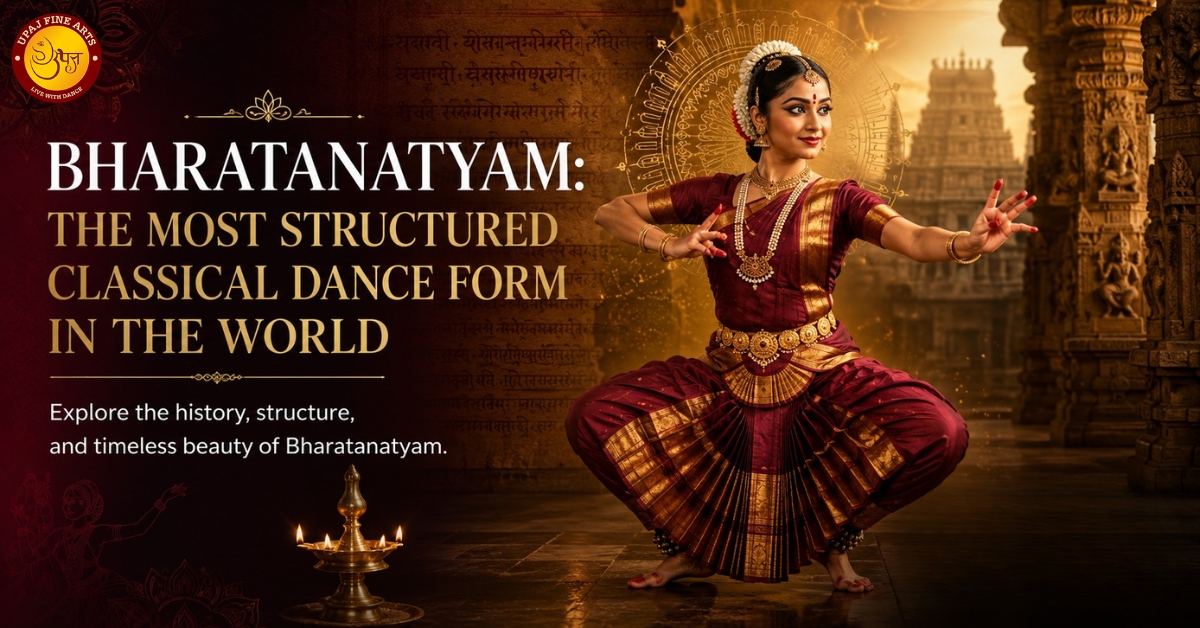
Summary: Bharatanatyam stands as the most rigorously structured classical dance form globally, with codified movements, rhythmic patterns, and technical principles documented in ancient texts. Originating from Tamil Nadu, India, this dance form combines precise body movements, hand gestures (mudras), and facial expressions into a highly organized system that has been preserved and refined for centuries.
In the realm of classical dance, structure and discipline form the backbone of artistic excellence. While various dance forms across cultures—from ballet to Kathak—possess their own systematic approaches, Bharatanatyam emerges as the epitome of structured classical dance. With its comprehensive system of movements, strict technical requirements, and deep-rooted foundation in ancient literary texts, Bharatanatyam represents the pinnacle of organized choreographic expression.
The Architecture of Bharatanatyam: Understanding Its Structure
The Foundation in Ancient Texts
Bharatanatyam’s structured nature is rooted in the Natyashastra, an ancient Sanskrit text authored by Bharata Muni approximately 2,000 years ago. This comprehensive treatise details every aspect of dance, including body positions (asanas), hand gestures (mudras), footwork patterns (taalam), and facial expressions (rasas). The dance form has been meticulously preserved through oral tradition and written documentation, ensuring consistency across generations.
Codified Movement Systems
The dance employs over 108 mudras (hand gestures), each with specific meanings and applications. These are not arbitrary movements but precisely defined positions with established rules for execution. Similarly, the adavu (basic steps) are systematically organized and must be performed with exact timing, positioning, and alignment. Every movement has a designated place within the performance structure.
Rhythmic Organization
Taalam (rhythm) is the mathematical heartbeat of Bharatanatyam. Dancers follow complex rhythmic cycles that range from three to twenty-nine beats. These patterns are strictly defined, and dancers must synchronize their movements with these mathematical frameworks. This creates a level of structure that is arguably unmatched in other dance forms.
The Rasa System: Emotional Structure
Bharatanatyam uses the Rasa theory to structure emotional expression. Nine distinct rasas (emotional sentiments) guide the dancer’s facial expressions and performance intensity. This provides a systematic framework for conveying complex emotions, ensuring that subjective feelings are expressed through objective, codified means.
Performance Structure: Margam
A traditional Bharatanatyam performance follows a specific sequence called Margam (path). This prescribed order includes Alaripu (invocation), Jatiswaram (rhythm patterns), Sabdam (piece with lyrics), Varnam (elaboration), Padam (song), and Thillana (concluding piece). This structure ensures that every performance has a logical progression and consistent framework.
Comparison with Other Classical Dance Forms
While ballet possesses highly codified technique, it focuses primarily on body mechanics and lacks the elaborate gestural vocabulary of Bharatanatyam. Kathak, another Indian classical form, is more improvisational and less rigidly structured. Contemporary classical forms in other cultures also demonstrate structure but not to the comprehensive degree seen in Bharatanatyam. The combination of textual documentation, standardized movements, rhythmic mathematics, emotional frameworks, and prescribed performance sequences make Bharatanatyam uniquely structured.
The Rigorous Training Process
Training in Bharatanatyam typically spans 6-8 years of rigorous study. Students learn movements in a precise sequence, beginning with basic steps and progressing to complex combinations. The training methodology itself is highly structured, with clear progression levels and mastery requirements. This systematic pedagogy ensures that the knowledge is transmitted accurately across generations.
Experience the Precision of Bharatanatyam at Upaj Academy
Discover the structured elegance and artistic depth of Bharatanatyam through expert training at Upaj Academy. Our experienced instructors guide you through the systematic progression of this ancient dance form, from fundamental adavus to advanced performance pieces. Join our community of dedicated dancers and experience the transformative power of one of the world’s most perfectly organized classical dance traditions. Enroll in our classes today and become part of a legacy spanning millennia.
Preserving Perfection: The Timeless Structure of Bharatanatyam
Bharatanatyam’s claim as the most structured classical dance form is not merely a matter of opinion—it is supported by centuries of documentation, systematic codification, and rigorous training methodologies. Every movement, gesture, rhythm, and emotion has a defined place within the comprehensive framework established by Bharata Muni and refined through generations of dedicated practitioners. This structure does not constrain artistic expression but rather provides a foundation upon which genuine artistry flourishes. In a world where improvisation and innovation are often celebrated, Bharatanatyam stands as a testament to the power of preserving, perfecting, and perpetuating a sacred art form through meticulous structure and unwavering dedication. If you’re inspired to experience this timeless tradition firsthand, enrolling in the best Bharatanatyam classes in Dubai can help you learn from experienced instructors while mastering the authentic techniques and discipline of this revered classical dance form.
Frequently Asked Questions
- All Posts
- Bharatanatayam
- Blog
- Bollywood
- kathak
- Zumba