Summary: This comprehensive guide offers a roadmap for beginners wishing to learn Bharatanatyam in Dubai. It covers the essential foundations of the dance form, practical advice on finding the right Guru in neighborhoods like Karama and Bur Dubai, and what to expect during the first six months of training. Additionally, the guide provides local tips on sourcing dance gear from Meena Bazaar, balancing practice with a busy expat lifestyle, and understanding the physical and mental benefits of this ancient art form.
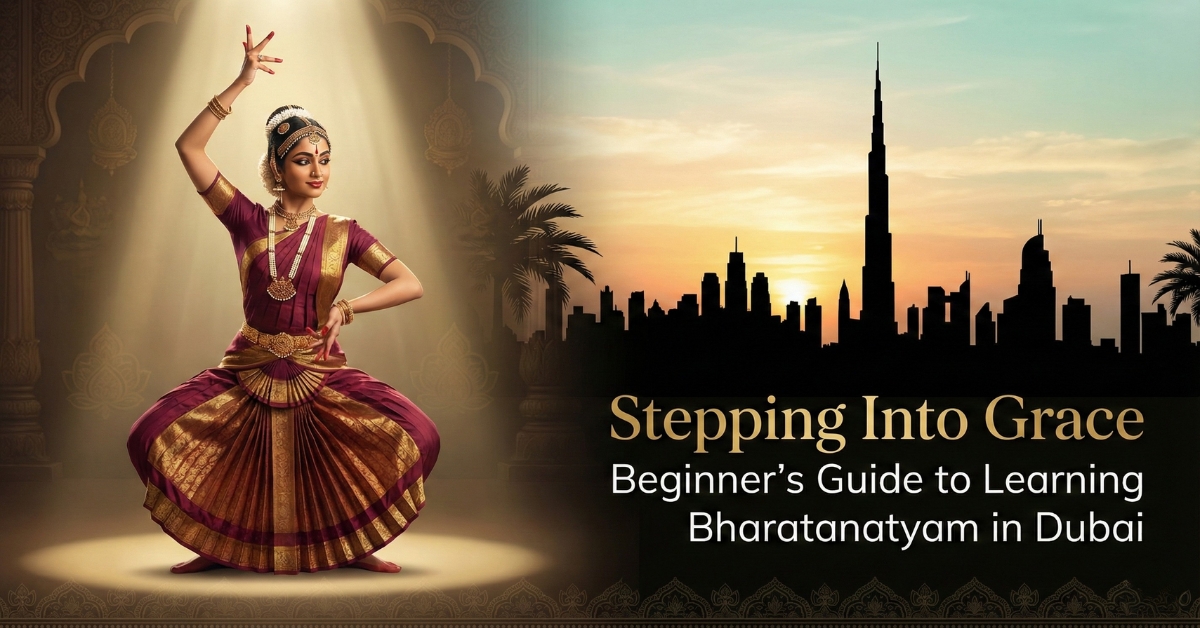
Dubai is a city where tradition meets the future, and nowhere is this more evident than in its thriving arts scene. Among the many classical dance forms practiced in the UAE, Bharatanatyam—the ancient South Indian dance known for its geometric precision, expressive storytelling, and spiritual depth—stands as one of the most popular.
Whether you are looking to reconnect with your heritage or seeking a disciplined way to improve fitness and focus, this guide will walk you through the journey of starting Bharatanatyam in the heart of the Middle East.
1. Understanding the Foundations
Before you lace up your ghungroos (dancing bells), it is essential to understand what you are embarking upon. Bharatanatyam is more than just movement; it is a “visual music.”
The dance is built on three main pillars:
- Nritta: Pure technical dance with rhythmic patterns.
- Nritya: Expressive dance where the dancer conveys emotions and stories.
- Natya: The dramatic element or storytelling aspect.
As a beginner in Dubai, you will likely start with the Araimandi (the half-sit posture), which is the foundation of almost every movement. Be prepared: it’s a serious workout for your core and thighs!
2. Finding the Right Guru in Dubai
In the world of Indian classical dance, the Guru-Shishya Parampara (teacher-student tradition) is sacred. Dubai is home to world-class performers and seasoned instructors from renowned institutions like Kalakshetra.
How to Choose a School
- Affiliation: Check if the school is affiliated with recognized boards (like Gandharva Mahavidyalaya or Alagappa University) if you wish to pursue certifications and exams.
- Style (Bani): Research different styles such as Pandanallur, Kalakshetra, or Vazhuvoor. Most schools in Dubai favor the Kalakshetra style for its linear geometry and discipline.
- Trial Classes: Most studios in areas like Al Karama, Bur Dubai, and Al Nahda offer trial sessions. Use these to gauge the teacher’s patience and technical expertise.
Pro Tip: Look for schools that participate in local festivals like the Dubai Shopping Festival or Global Village, as these provide students with vital stage experience.
3. What to Expect in Your First 6 Months
The initial phase of learning is repetitive but rewarding. You won’t be wearing a silk saree and heavy jewelry on day one.
The Curriculum of a Beginner
- The Tattadavi: Learning to strike your feet in rhythm.
- Mudras: Memorizing the Asamyuta Hastas (single-hand gestures) and Samyuta Hastas (double-hand gestures).
- Shlokas: Learning the “Natya Shastra” verses that explain the importance of eyes, hands, and heart in dance.
4. Essential Gear and Attire
Dubai has several specialty stores, particularly in the Meena Bazaar area, where you can find dance essentials.
Shopping List for New Dancers
- Practice Uniform: For classes, beginners usually wear a cotton dance sari or a comfortable Salwar Kameez with a dupatta tied firmly around the waist to support the lower back.
- Ghungroos: Do not buy these immediately. Wait for your teacher’s go-ahead. Typically, beginners start with two or three rows of bells.
- Yoga Mat: Many Dubai studios have wooden or tiled floors; a mat is helpful for the initial warm-up and stretching exercises.
5. Balancing Practice with a Dubai Lifestyle
We know life in Dubai is fast-paced. Between work commutes and social commitments, finding time to practice can be tough.
Strategies for Success
- Consistency over Intensity: 15 minutes of Araimandi practice daily at home is better than a single 3-hour marathon once a week.
- Utilize Community Centers: Many residential towers in Dubai have multipurpose rooms. These are perfect spots to practice your adavus (steps) without disturbing your neighbors.
- Attend Local Performances: Follow organizations like the Indian Consulate in Dubai or Dubai Opera. Watching seasoned artists perform is one of the best ways to “absorb” the grace and nuances of the form.
6. The Health and Mental Benefits
Why choose Bharatanatyam over a standard gym membership?
- Physical Conditioning: It improves flexibility, stamina, and balance.
- Mental Sharpness: Memorizing complex rhythmic patterns (Talam) acts as a “brain gym.”
- Stress Relief: The focus required for Abhinaya (expression) acts as a form of moving meditation, helping you disconnect from the “hustle culture” of the city.
Finding Your Rhythm in the Heart of the UAE!
Enrolling in the best bharatanatyam classes in Dubai is a beautiful way to find a “home away from home.” It connects you to a global community of artists while providing a disciplined anchor in your busy life.
The first step is always the hardest—literally! But once you master that first Tattadavu, you aren’t just dancing; you are carrying forward a legacy that is thousands of years old.