
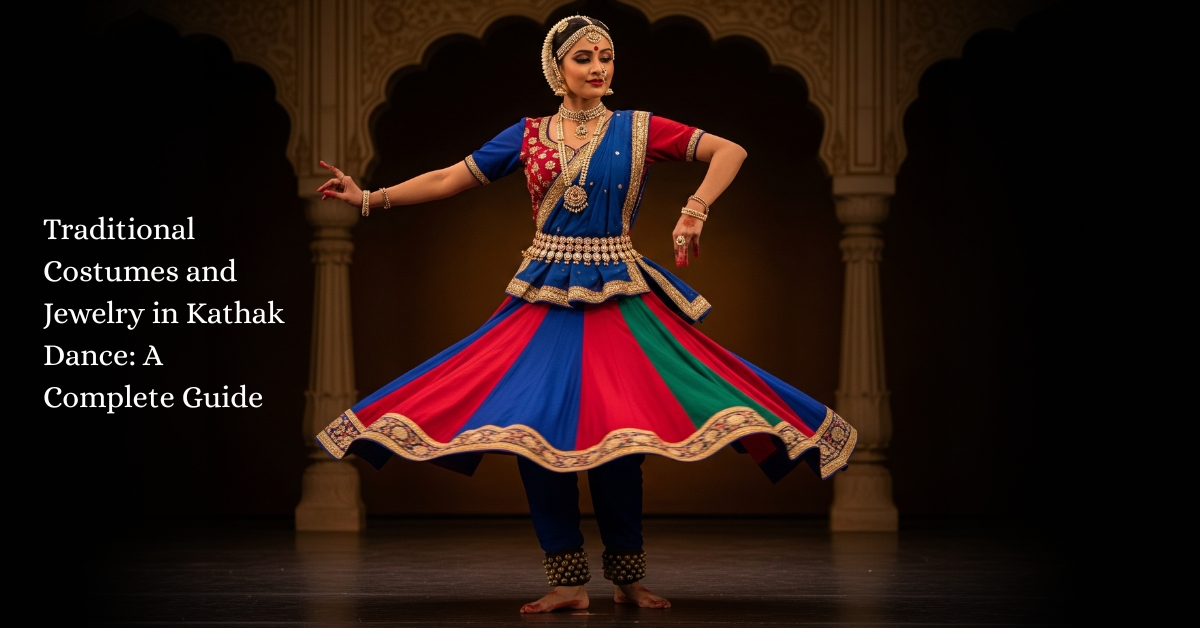
 Kathak, one of the eight classical dance forms of India, is celebrated for its intricate footwork, graceful spins, and expressive storytelling. Yet, beyond its mesmerizing movements, what often captivates audiences worldwide is the exquisite traditional attire and jewelry that complete the performance. Costumes and ornaments in Kathak are not just decorative they are deeply symbolic, rooted in centuries of cultural evolution, and essential to the dance’s visual poetry. In this guide, we’ll explore the different styles of Kathak costumes, the significance behind their design, and the beautiful jewelry that dancers wear to bring stories to life.
The Evolution of Kathak Costumes
Historically, Kathak was performed in temples as a devotional art, then evolved into the royal courts of Mughal emperors and Hindu kings. This dual heritage Hindu and Mughal influenced the costumes dancers wear today. There are two main styles: the Hindu costume and the Mughal costume, each reflecting the cultural aesthetics of its origins.
The Hindu style typically consists of a sari worn in a specific drape suitable for dance, often paired with a choli (blouse) and an ornate waistband or kamarbandh. The Mughal style, on the other hand, resembles the elegant attire of Mughal courtesans: a long, flowing angarkha (a frock-style tunic) or anarkali, churidar (tight-fitting pants), and a matching dupatta (scarf) draped gracefully over the shoulder.
Over time, these costumes have adapted in materials and design, but they continue to preserve the essence of their origins, blending tradition with the dancer’s comfort and stage aesthetics.
Hindu-Style Kathak Costumes
In the Hindu tradition, the costume’s highlight is a sari, often made from silk or georgette, chosen for its fluidity and vibrant colors that move beautifully with the dancer’s spins. The sari is typically five to six meters long and draped in a way that allows free leg movement.
Underneath, dancers wear a well-fitted choli and a cotton or silk petticoat to provide structure. A decorative waist belt, known as the kamarbandh, not only enhances the visual line of the costume but also helps secure the sari, ensuring it stays in place during fast-paced chakkars (spins). The costume is often adorned with zari work, mirror embroidery, and motifs inspired by nature and mythology, reflecting the dance’s devotional roots.
Mughal-Style Kathak Costumes
Influenced by Persian and Central Asian aesthetics, the Mughal-style costume is regal and sophisticated. The most recognizable feature is the angarkha or anarkali, which has a fitted bodice and a flared skirt that extends to mid-calf or ankles. This silhouette highlights the dancer’s movements, especially during spins, creating a mesmerizing visual effect.
The churidar pants complete the look, fitting closely around the legs and gathering in elegant folds at the ankles. A sheer or embroidered dupatta, often draped across the chest or over the head, adds grace and modesty. These costumes are usually crafted in rich fabrics like silk, brocade, or velvet, and decorated with intricate embroidery, sequins, and gota patti (metallic lace).
The Role of Jewelry in Kathak
Jewelry in Kathak is not merely ornamental; it’s an extension of the dance’s storytelling and heritage. The traditional jewelry set includes pieces for the head, ears, neck, arms, and hands, each with cultural and aesthetic significance.
Headpieces and Hair Ornaments
One of the most iconic headpieces worn by Kathak dancers is the maang tikka, placed along the center parting of the hair and resting on the forehead. It adds elegance and draws attention to the dancer’s facial expressions, which are central to storytelling in Kathak. Dancers may also wear jhumar (side hair ornaments) and small decorative pins to keep the hair bun neat and adorned.
Earrings and Nose Rings
Large, dangling earrings known as jhumkas or chandbalis complement the dancer’s head movements and add rhythmic shimmer with each nod or turn. In some traditional performances, dancers may also wear a delicate nath (nose ring), usually attached to the hair with a thin chain, enhancing the dancer’s profile.
Necklaces and Chokers
Kathak dancers often layer multiple necklaces of varying lengths. A short choker, typically encrusted with stones or pearls, frames the neckline, while longer necklaces cascade down the chest, adding richness to the costume. These pieces not only signify beauty but also reflect the dancer’s devotion, as necklaces in Indian culture often symbolize respect and offering to the divine.
Bangles, Armlets, and Rings
The dancer’s arms are decorated with kangan (bangles) and sometimes bajuband (armlets worn on the upper arms). Bangles accentuate the graceful hand gestures or mudras, making them visually striking. Rings may also be worn on the fingers, adding sparkle during intricate hand movements.
Ghungroos: The Soul of Kathak
No discussion of Kathak adornment is complete without mentioning ghungroos, the musical anklets made of dozens or even hundreds of small metallic bells strung together. More than an accessory, ghungroos are central to Kathak, as they transform the dancer’s feet into musical instruments, marking rhythm and accentuating the percussive footwork that defines the dance.
The sound of ghungroos becomes part of the performance itself, allowing audiences to feel the rhythm, making the connection between movement and music almost tangible.
Colors and Symbolism
The choice of colors in Kathak costumes is often deliberate and symbolic. Red represents passion and devotion, white symbolizes purity, blue and green evoke serenity, and gold and silver highlight festivity and grandeur. Dancers often select colors based on the theme of the performance, the story being told, or the occasion.
Modern Adaptations and Continuity
While modern Kathak dancers sometimes experiment with lighter fabrics, simplified designs, or fusion elements for contemporary performances, the essence of traditional Kathak costumes and jewelry remains unchanged. They continue to celebrate India’s rich textile and jewelry heritage, linking every performance to centuries of history and cultural evolution.
Final Thoughts on Kathak Attire
Traditional costumes and jewelry in Kathak dance are far more than beautiful adornments—they are a living heritage. Each pleat of the sari or flare of the anarkali, each glint of gold or silver jewelry, adds depth to the performance, turning dance into a visual narrative of devotion, grace, and history. Through these costumes and ornaments, Kathak dancers carry forward a timeless tradition, connecting modern audiences to the rich cultural legacy of India. If you’re inspired to experience this elegance firsthand, consider joining the best kathak classes near Discovery Gardens, Dubai to start your own journey into this graceful art form.