How to Wear a Bharatanatyam Dance Dress?
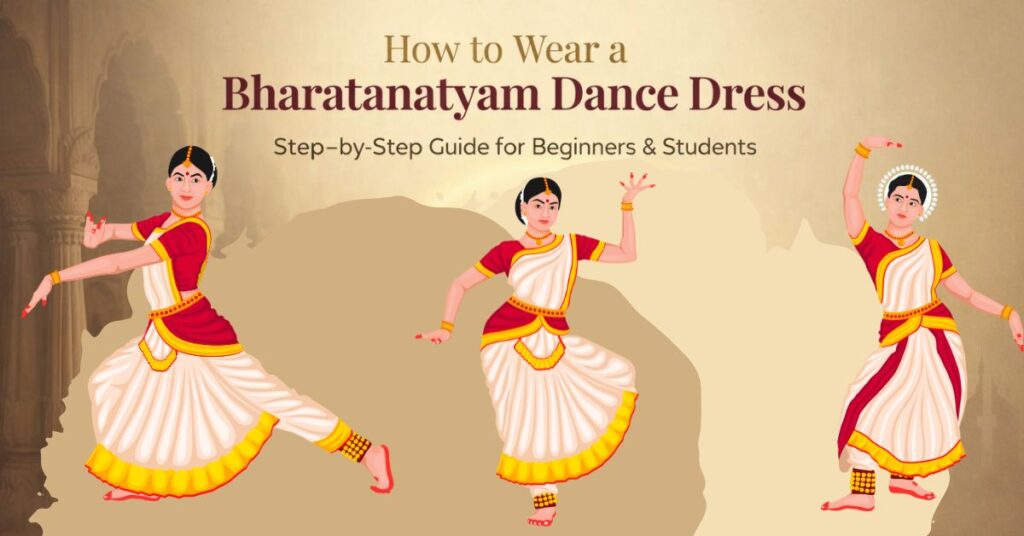
How to Wear a Bharatanatyam Dance Dress? Summary: Bharatanatyam is one of the oldest and most graceful forms of Indian classical dance. Known for its intricate footwork, expressive gestures, and storytelling through facial expressions, this dance form requires not only skill but also the proper attire to perform beautifully. Wearing a Bharatanatyam dance dress correctly is essential for comfort, freedom of movement, and authenticity on stage.By following a step-by-step process—from arranging the pleats and tying ghungroos to adding jewellery and completing the hairstyle—you can achieve the traditional Bharatanatyam look. Proper dressing not only enhances your appearance but also allows you to move comfortably and perform gracefully on stage. In this guide, we will take you step by step through the process of wearing a Bharatanatyam costume, from the base outfit and pleats to jewellery, ghungroos, hair, and makeup. Whether you are a beginner or preparing for your first performance, these tips will help you look elegant, feel confident, and move gracefully in your Bharatanatyam dress. Things You’ll Need to Wear a Bharatanatyam Dance Dress Before you start dressing up for Bharatanatyam, it’s important to gather all the essential items. From the costume and jewellery to hair accessories and makeup, having everything ready ensures a smooth and stress-free preparation. Below is a complete checklist of everything you’ll need: 1️. Dress Components The Bharatanatyam costume consists of multiple pieces designed for comfort, flexibility, and traditional elegance: Blouse (Upper Part): Fitted top to allow free arm movement. Pyjama (Lower Part): Dhoti-style pants or leggings for smooth leg movements. Small Fan (Waist): Pleated section at the front that opens beautifully during steps. Pallu (Drape Over Bosom): Decorative drape over the chest, completing the traditional look. 2️. Jewellery Essentials Jewellery is a key part of the Bharatanatyam costume, enhancing expressions and stage presence: Jhumka: Traditional earrings with an upward extension. Oddiyanam: Decorative waist band to secure the pleats and accentuate the waist. Nathni: Nose ring for a traditional touch. Long Mala: Long necklace for elegance. Short Mala (Choker): Necklace around the neck to complement the long mala. Vaanki (2 Pieces): Arm bands to highlight graceful hand movements. Chudiya: Colored bangles matching your costume. Ghungroo: Musical anklets with metallic bells that emphasize rhythmic footwork. Mattal: Forehead jewellery worn across the hairline. Chandra: Moon-shaped hair ornament. Surya: Sun-shaped hair ornament. Red Stick-on Bindi: Decorative mark worn in the center of the forehead. 3️. Hair Accessories Proper hair styling is crucial for traditional appearance and secure movement during performance: Kunjalam: Three cotton pom-poms used at the end of a braid. Rubber Bands (2): For securing hair in buns or braids. Hair Extension: To create a long plait if your hair is short. Real or Fake Gajra: String of flowers, usually white, to decorate the bun or braid. Scissors: To trim excess thread or adjust hair accessories. Black String: To tie the braid or secure ornaments. 4️. Makeup Essentials Classical makeup enhances expressions and highlights features on stage: Eye Shadow: Color matching your costume. Brushes: For applying powder, blush, and eye makeup. Face Powder & Blush: For an even skin tone and glowing appearance. Liquid Foundation: For stage-ready flawless skin. Red Lip Color & Nail Polish: Traditional vibrant look. Eyeliner, Mascara, Kohl: To emphasize eyes for abhinaya (expressions). Eyelash Curler: For enhancing eye definition. Alta: Red liquid used to decorate hands and feet. Small Container & Cotton Buds: For precise application and corrections. Safety Pins: Useful for securing costume pleats, jewellery, or drapes. Wearing the costume correctly is just as important as learning the steps because it ensures comfort, proper movement, and an authentic look on stage. In this blog, we’ll guide you step by step on how to wear a Bharatanatyam dance dress for practice or performance. Step 1: Wear the Base Costume The base costume is the foundation of your Bharatanatyam attire. Getting this layer right is essential because it provides comfort, flexibility, and proper support for your movements. Without a well-fitted base, performing adavus (basic steps) and intricate footwork can become uncomfortable or awkward. Components of the Base Costume Blouse (Choli): The blouse should fit snugly but comfortably to allow complete freedom of movement in your arms, shoulders, and torso. A properly fitted blouse ensures that your posture looks elegant, and it prevents the costume from shifting during spins, jumps, or complex steps. Bottom/Dhoti-style Pants or Stitched Saree: The lower garment may be a dhoti-style pant, leggings, or a pre-stitched saree that allows ease of movement. This garment is essential for performing lunges, stretches, and footwork smoothly. The waistband should be secure to prevent slipping, and the fabric should stretch or drape comfortably without restricting movement. Tips for Choosing the Base Costume Secure Waistband: Always ensure the waistband is tight enough to stay in place but not uncomfortable. Flexible Fabric: Use a soft and flexible material that supports jumps, spins, and adavus. Breathable Material: Since Bharatanatyam practice can be physically demanding, breathable fabric keeps you comfortable during long rehearsals or performances. Step 2: Arrange the Front Pleats (Fan) One of the most recognizable features of a Bharatanatyam costume is the pleated fan in the front. This fan not only adds elegance to the dancer’s movements but also highlights the graceful flow of adavus (basic steps) during performances. Properly arranging the pleats is essential for both aesthetics and comfort. How to Arrange the Pleats Evenly Arrange the Pleats: Start by carefully folding the fabric into neat, equal pleats. Ensure that each pleat aligns symmetrically for a balanced look on stage. Tuck the Pleats at the Waist: Secure the pleats by tucking them neatly into the waistband of the costume. This keeps them stable and prevents shifting during dance movements. Check the Length: The fan should ideally reach just above the knees. This length allows full freedom for bending, stretching, and performing intricate steps. Secure with Pins if Needed: If the fabric feels loose or heavy, use safety pins discreetly to prevent slipping. Make sure pins do not interfere with your footwork or get caught in the
Is Zumba Safe for Kids? A Parent’s Guide to Age Guidelines and Safety Tips
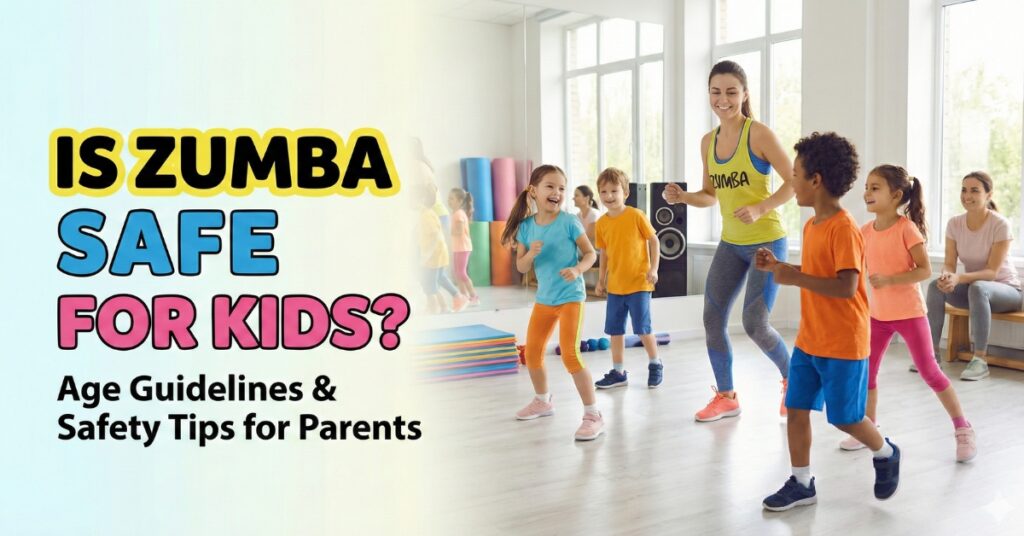
Is Zumba Safe for Kids? A Parent’s Guide to Age Guidelines and Safety Tips Summary: This comprehensive guide addresses the safety concerns parents have regarding Zumba for children. It details the official age guidelines (Zumba® Kids Jr. vs. Zumba® Kids), explains why certified youth programs are specifically designed for developing bodies, and provides essential safety tips covering instructor certification, footwear, and hydration. The post concludes that with the right precautions, Zumba is a safe, beneficial, and confidence-boosting activity for kids. If you are a parent today, you are likely fighting an uphill battle against screens. Finding an activity that gets your child off the couch, burning energy, and actually enjoying exercise can feel like searching for a unicorn. Enter Zumba. You’ve likely seen the classes at your local gym: adults sweating, smiling, and shimmying to infectious Latin beats. It looks fun, energetic, and like a fantastic workout. Naturally, many parents wonder: “Can my child do that? Is Zumba safe for kids?” The short answer is a resounding yes—but with crucial caveats. Zumba is not a “one-size-fits-all” program. A seven-year-old should not be doing the same high-intensity interval routine as a thirty-year-old. Their bodies are still developing, their coordination is different, and their attention spans require a different approach. To ensure safety and enjoyment, the Zumba brand has developed specific programs tailored to growing bodies. This guide will walk you through the age guidelines, why these specific programs are safe, and the essential safety tips every parent needs to know before signing up their little dancer. Understanding the Difference: Adult Zumba vs. Zumba Kids Before diving into safety, it is vital to understand that “Zumba” is an umbrella term. Standard, adult Zumba classes often involve complex choreography, rapid hip movements, high-impact jumping, and sustained cardiovascular intensity. While exhilarating for adults, these elements can be risky for young children whose growth plates are still open and whose neuromuscular coordination is still developing. Zumba for children is fundamentally different. The official youth programs are designed specifically for kids’ physiological and psychological needs. They take the core philosophy of Zumba—fitness disguised as a party—and adapt the movements to be age-appropriate. The focus shifts from intense calorie-burning to movement exploration, coordination, socialization, and fun. Official Zumba Age Guidelines Zumba has structured its youth programs into two distinct categories based on developmental stages. Sticking to these guidelines is the first step in ensuring safety. 1. Zumba® Kids Jr. (Ages 4-6) At this age, children are still developing basic gross motor skills. They are learning to hop, skip, and balance. The Focus: Zumba Kids Jr. is less about “following the leader” perfectly and more about imaginative play set to music. How It’s Safe: The movements are very simple and repetitive. There is almost no high-impact jumping. The class structure breaks down steps slowly and often incorporates games where music and movement are central. It’s about socializing and associating movement with joy, rather than drilling technique. 2. Zumba® Kids (Ages 7-11) Children in this bracket have better coordination, longer attention spans, and are ready for slightly more structure. The Focus: These classes introduce basic rhythms like Cumbia, Salsa, Reggaeton, and Hip-Hop, but with simplified choreography compared to adult classes. How It’s Safe: While more active than the Junior version, the impact level is still moderated. Certified instructors are trained to avoid movements that torque the knees or stress the lower back. The goal is building confidence, rhythm, and coordination in a non-competitive environment. 3. What About Teens (Ages 12+)? Once children hit adolescence, their bodies are more capable of handling standard adult fitness classes. However, this depends heavily on the individual teen’s fitness level and maturity. Many teens transition comfortably into regular adult Zumba classes, but parents should ensure they listen to their bodies during growth spurts. Why Certified Kids Programs Are Generally Safe? When led by a qualified instructor in the appropriate age bracket, Zumba is considered a low-risk physical activity. Here is why: Non-Contact and Non-Competitive Unlike soccer, basketball, or martial arts, there is zero risk of collision with other players or equipment. There is no pressure to “win,” which reduces the likelihood of a child pushing themselves past their physical breaking point to impress a coach. Controlled Environment Zumba takes place indoors on a flat surface. This eliminates outdoor risks like uneven terrain, traffic, or extreme weather (an important factor in climates like Dubai’s). Scalable Intensity A good instructor always demonstrates modifications. If a child is tired, they can march in place. If a move feels too tricky, they can simplify it. The ethos of Zumba is that as long as you are moving and smiling, you are doing it right. Crucial Safety Tips for Parents While the program itself is designed for safety, parents play a critical role in ensuring a safe experience. 1. Verify Instructor Certification (E-E-A-T Crucial Step) This is the most important safety tip. Do not just look for a “Zumba certified” instructor; look for a “Zumba Kids certified” instructor. An instructor licensed only to teach adults may not understand the physiological limitations of a 6-year-old. They might inadvertently include high-impact jumps or complex rotational movements that are inappropriate for developing joints. You can verify an instructor’s credentials on the official Zumba website. 2. The Right Footwear is Non-Negotiable Zumba involves lateral (side-to-side) movements, pivoting, and shuffling. NO: Crocs, sandals, flip-flops, dress shoes, or bare feet. These are recipes for rolled ankles, slips, and toe injuries. YES: Supportive athletic sneakers with a relatively smooth sole. Running shoes with very deep treads can sometimes stick to studio floors during pivots, causing knee strain. Look for “cross-training” or dance-fitness style sneakers. 3. Hydration Strategy Kids overheat faster than adults and are often having too much fun to notice they are thirsty. Ensure your child drinks water before class and has a water bottle easily accessible during the session. Instructors should always build in water breaks. 4. The “Too Much” Talk Before the first class, talk to your child about listening to their
How Long Does It Take to Learn Bharatanatyam?
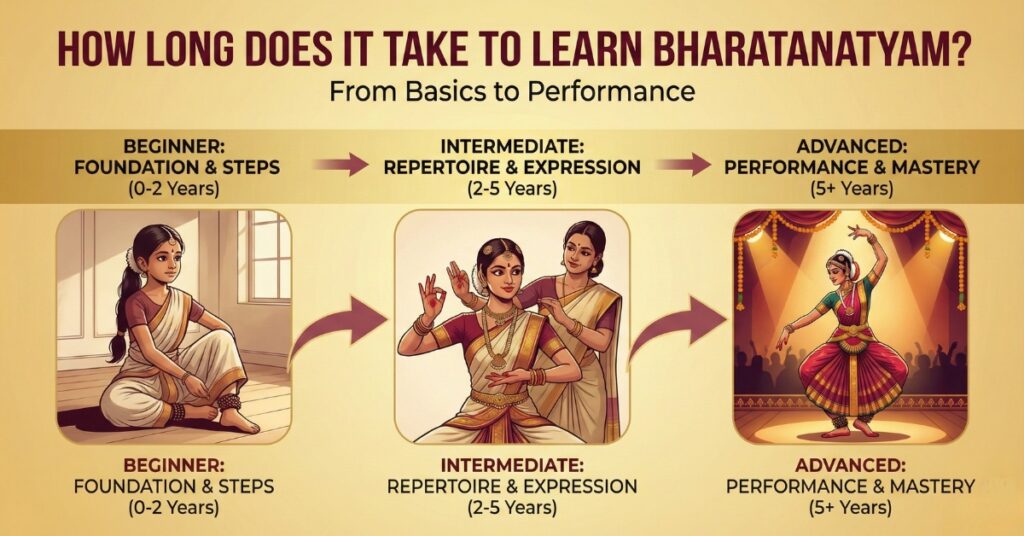
How Long Does It Take to Learn Bharatanatyam? Summary: This guide breaks down the realistic timeline for learning Bharatanatyam, from mastering basic steps to performing a solo debut (Arangetram). It explores the different stages of learning—beginner, intermediate, and advanced—and discusses key factors that influence your progress, such as practice consistency, age, and individual goals. Whether you are learning for fitness or professional performance, this article helps set the right expectations for your dance journey. One of the most common questions aspiring dancers ask is, “When will I be ready to perform?” In a world of crash courses and instant results, Bharatanatyam remains a steadfast exception. It is not just a dance; it is a discipline that requires patience, endurance, and dedication. While there is no single finish line, the journey can generally be mapped out in distinct phases. Understanding these milestones will help you stay motivated and set realistic goals. 1. The Foundation Phase (0 to 1 Year) The first year is often the most physically demanding but also the most crucial. During this time, you are not just learning steps; you are retraining your body to hold the fundamental posture. What You Will Learn? Adavus (Basic Steps): There are roughly 60 to 100 distinct steps divided into families (like Tatta, Natta, Mandi). You will spend months perfecting the rhythm and geometry of these movements. Posture (Araimandi): Developing the strength to hold the half-sit posture for extended periods without compromising your back or knees. Hastas (Hand Gestures): Memorizing the single and double-hand gestures that form the alphabet of the dance. Goal: By the end of year one, you should be able to execute the basic adavus with correct rhythm (Talam) and posture. 2. Building the Repertoire (Years 2 to 4) Once your foundation is strong, you will begin learning the Margam (the traditional repertoire). This is where the dance transforms from repetitive drills into fluid artistic expression. The Items You Will Master Alarippu: An invocation piece that warms up the body and focuses on rhythm. Jatiswaram: A pure dance piece (Nritta) that combines complex adavu patterns with musical notes. Shabdam: Your introduction to Abhinaya (expression), where you begin to interpret lyrics and tell stories through facial expressions and hand gestures. Varnam: The centerpiece of Bharatanatyam. This is a demanding item that tests your stamina, combining intricate footwork with deep emotional storytelling. Goal: By the end of this phase, you will have the stamina to dance for 20-30 minutes continuously and the ability to convey basic emotions. 3. The Road to Arangetram (Years 5 to 7+) For many, the Arangetram (solo stage debut) is the ultimate milestone. It signifies that the student is now capable of performing a full concert solo. Preparation for Debut Reaching this stage typically takes a minimum of 5 to 7 years of consistent training (at least 2-3 times a week). The preparation for the event itself is intense, often requiring 6 to 12 months of daily practice to build the endurance needed for a 2-hour performance. Note: An Arangetram is not a “graduation” in the sense that learning stops; rather, it is a commencement of your journey as a serious artist. 4. Factors That Influence Your Timeline The “5 to 7 years” rule is an average, not a law. Several factors can speed up or slow down your progress. Frequency of Practice A student who practices 15 minutes daily will progress significantly faster than one who attends a 2-hour class once a week but never practices at home. Muscle memory is built through repetition, not just instruction. Age and Fitness Level Children: Often have better flexibility but may take longer to grasp the subtle emotional nuances (Abhinaya). Adults: Often understand the theory and emotions faster but may need more time to condition their bodies for the deep knee bends (Araimandi). Your Personal Goals Not everyone aims for an Arangetram. If your goal is fitness, cultural connection, or stress relief, you can feel a sense of accomplishment within just a few months of mastering the basics. 5. Can You Learn Faster? While you cannot rush art, you can optimize your learning. Private Lessons: One-on-one attention can correct errors immediately, preventing bad habits from setting in. Listening to Carnatic Music: Familiarizing yourself with the music structure helps you understand the rhythm (Talam) intuitively, saving time in class. Supplemental Fitness: Yoga and Pilates complement Bharatanatyam perfectly by building the core strength and flexibility required for the dance. Embracing the Endless Rhythm of Learning! So, how long does it take to learn Bharatanatyam? To learn the basics, it takes a year. To perform a debut, it takes roughly six years. To master the art? It takes a lifetime. The beauty of Bharatanatyam lies in the fact that there is always more to discover—a new mythological story to interpret, a complex rhythm to master, or a deeper emotional layer to uncover. The joy is found not in the finish line, but in every step of the dance. If you are ready to embark on this endless journey, finding the best bharatanatyam classes near Dubai Marina is the perfect place to start your training. More than 2 results are available in the PRO version (This notice is only visible to admin users) Most Recent Posts All Posts Bharatanatayam Blog Bollywood kathak Zumba How Long Does It Take to Learn Bharatanatyam? Stepping into Grace: A Beginner’s Guide to Learning Bharatanatyam in Dubai How to Find the Best Zumba Classes in Dubai? Category Bharatanatayam (9) Blog (46) Bollywood (8) kathak (38) Zumba (13) Explore Our Services Join our fun and engaging dance, music, and art classes for all ages! Explore More
Stepping into Grace: A Beginner’s Guide to Learning Bharatanatyam in Dubai
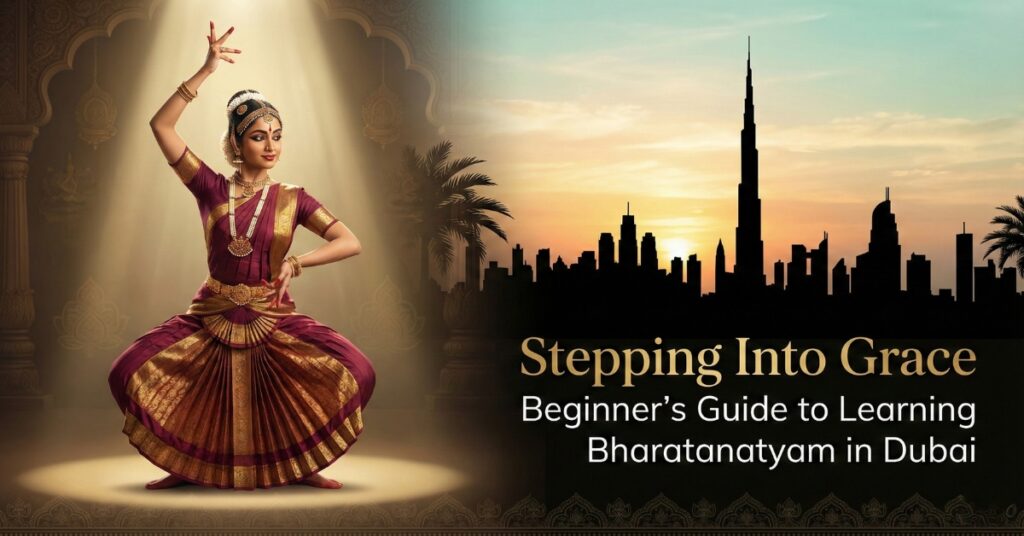
Stepping into Grace: A Beginner’s Guide to Learning Bharatanatyam in Dubai Summary: This comprehensive guide offers a roadmap for beginners wishing to learn Bharatanatyam in Dubai. It covers the essential foundations of the dance form, practical advice on finding the right Guru in neighborhoods like Karama and Bur Dubai, and what to expect during the first six months of training. Additionally, the guide provides local tips on sourcing dance gear from Meena Bazaar, balancing practice with a busy expat lifestyle, and understanding the physical and mental benefits of this ancient art form. Dubai is a city where tradition meets the future, and nowhere is this more evident than in its thriving arts scene. Among the many classical dance forms practiced in the UAE, Bharatanatyam—the ancient South Indian dance known for its geometric precision, expressive storytelling, and spiritual depth—stands as one of the most popular. Whether you are looking to reconnect with your heritage or seeking a disciplined way to improve fitness and focus, this guide will walk you through the journey of starting Bharatanatyam in the heart of the Middle East. 1. Understanding the Foundations Before you lace up your ghungroos (dancing bells), it is essential to understand what you are embarking upon. Bharatanatyam is more than just movement; it is a “visual music.” The dance is built on three main pillars: Nritta: Pure technical dance with rhythmic patterns. Nritya: Expressive dance where the dancer conveys emotions and stories. Natya: The dramatic element or storytelling aspect. As a beginner in Dubai, you will likely start with the Araimandi (the half-sit posture), which is the foundation of almost every movement. Be prepared: it’s a serious workout for your core and thighs! 2. Finding the Right Guru in Dubai In the world of Indian classical dance, the Guru-Shishya Parampara (teacher-student tradition) is sacred. Dubai is home to world-class performers and seasoned instructors from renowned institutions like Kalakshetra. How to Choose a School Affiliation: Check if the school is affiliated with recognized boards (like Gandharva Mahavidyalaya or Alagappa University) if you wish to pursue certifications and exams. Style (Bani): Research different styles such as Pandanallur, Kalakshetra, or Vazhuvoor. Most schools in Dubai favor the Kalakshetra style for its linear geometry and discipline. Trial Classes: Most studios in areas like Al Karama, Bur Dubai, and Al Nahda offer trial sessions. Use these to gauge the teacher’s patience and technical expertise. Pro Tip: Look for schools that participate in local festivals like the Dubai Shopping Festival or Global Village, as these provide students with vital stage experience. 3. What to Expect in Your First 6 Months The initial phase of learning is repetitive but rewarding. You won’t be wearing a silk saree and heavy jewelry on day one. The Curriculum of a Beginner The Tattadavi: Learning to strike your feet in rhythm. Mudras: Memorizing the Asamyuta Hastas (single-hand gestures) and Samyuta Hastas (double-hand gestures). Shlokas: Learning the “Natya Shastra” verses that explain the importance of eyes, hands, and heart in dance. 4. Essential Gear and Attire Dubai has several specialty stores, particularly in the Meena Bazaar area, where you can find dance essentials. Shopping List for New Dancers Practice Uniform: For classes, beginners usually wear a cotton dance sari or a comfortable Salwar Kameez with a dupatta tied firmly around the waist to support the lower back. Ghungroos: Do not buy these immediately. Wait for your teacher’s go-ahead. Typically, beginners start with two or three rows of bells. Yoga Mat: Many Dubai studios have wooden or tiled floors; a mat is helpful for the initial warm-up and stretching exercises. 5. Balancing Practice with a Dubai Lifestyle We know life in Dubai is fast-paced. Between work commutes and social commitments, finding time to practice can be tough. Strategies for Success Consistency over Intensity: 15 minutes of Araimandi practice daily at home is better than a single 3-hour marathon once a week. Utilize Community Centers: Many residential towers in Dubai have multipurpose rooms. These are perfect spots to practice your adavus (steps) without disturbing your neighbors. Attend Local Performances: Follow organizations like the Indian Consulate in Dubai or Dubai Opera. Watching seasoned artists perform is one of the best ways to “absorb” the grace and nuances of the form. 6. The Health and Mental Benefits Why choose Bharatanatyam over a standard gym membership? Physical Conditioning: It improves flexibility, stamina, and balance. Mental Sharpness: Memorizing complex rhythmic patterns (Talam) acts as a “brain gym.” Stress Relief: The focus required for Abhinaya (expression) acts as a form of moving meditation, helping you disconnect from the “hustle culture” of the city. Finding Your Rhythm in the Heart of the UAE! Enrolling in the best bharatanatyam classes in Dubai is a beautiful way to find a “home away from home.” It connects you to a global community of artists while providing a disciplined anchor in your busy life. The first step is always the hardest—literally! But once you master that first Tattadavu, you aren’t just dancing; you are carrying forward a legacy that is thousands of years old. More than 2 results are available in the PRO version (This notice is only visible to admin users) Most Recent Posts All Posts Bharatanatayam Blog Bollywood kathak Zumba Stepping into Grace: A Beginner’s Guide to Learning Bharatanatyam in Dubai How to Find the Best Zumba Classes in Dubai? Zumba Benefits: Transform Your Body, Skin, Weight, and Health Category Bharatanatayam (3) Blog (45) Bollywood (8) kathak (38) Zumba (13) Explore Our Services Join our fun and engaging dance, music, and art classes for all ages! Explore More
Top Reasons to Join a Zumba Class in Dubai

Top Reasons to Join a Zumba Class in Dubai Summary: This guide highlights why Zumba is one of the most effective and enjoyable fitness choices for residents in Dubai. It covers the practical benefits of indoor training to beat the UAE heat, the social advantage of connecting with a multicultural community, and the mental health benefits for busy professionals. Whether you are a beginner or a dance enthusiast, this post explains why Zumba fits perfectly into the Dubai lifestyle. Dubai is a city that never stops moving. Between the fast-paced corporate culture, the incredible dining scene, and the year-round sunshine, finding a fitness routine that sticks can be a challenge. Enter Zumba. It’s not just a workout; it’s a global phenomenon that has found a massive, loyal following in the UAE. If you are on the fence about trading the treadmill for the dance floor, here are the top reasons why joining a Zumba class in Dubai is one of the best decisions you can make for your health and social life. 1. The Ultimate Way to “Beat the Heat” Let’s be honest: for several months of the year, outdoor running or cycling in Dubai is punishing. Zumba provides a high-intensity cardio workout in the comfort of a climate-controlled studio. It allows you to maintain peak fitness levels during the scorching summer months without the risk of heat exhaustion. Bonus: Many Dubai hotels and fitness centers also offer Aqua Zumba—a pool-based version that is perfect for the UAE climate. 2. A Cultural Melting Pot Dubai is home to over 200 nationalities, and a Zumba class is one of the few places where you see that diversity in perfect sync. Instructors in Dubai often infuse their playlists with a global mix—expect to hear not just the traditional Latin tracks (Salsa, Merengue, Reggaeton), but also Bollywood hits, Afrobeat rhythms, and Arabic pop. It is a unique cultural exchange where language barriers disappear, and rhythm takes over. 3. Stress Relief for the “Dubai Hustle” Life in Dubai can be stressful. The city moves fast, and corporate burnout is real. Zumba is widely recognized as a “happy workout.” The combination of upbeat music and aerobic movement triggers a massive release of endorphins (the body’s feel-good hormones). The “Brain Break”: Unlike lifting weights where you might count reps and think about work, Zumba requires you to focus entirely on the choreography. It is a form of moving meditation that forces you to disconnect from your emails for 60 minutes. 4. Accessible to Everyone (Yes, even “Two Left Feet”) One of the biggest misconceptions is that you need to be a professional dancer to join. In Dubai’s fitness community, the motto is usually “fake it till you make it.” No Judgment: Classes are typically dark or dimly lit with disco lights, reducing self-consciousness. Modifiable Intensity: Whether you are a 20-year-old athlete or a 60-year-old beginner, you control the intensity. You can march instead of jump, or simplify the arm movements until you find your groove. 5. Incredible Calorie Burn If you have been enjoying Dubai’s Friday brunches a little too much, Zumba is a powerful counter-balance. A standard 60-minute session is a mix of high and low-intensity intervals (HIIT style). Depending on your effort level, you can burn anywhere from 500 to 800 calories in a single class. It tones the entire body—legs, glutes, core, and arms—without the monotony of a stair-climber. 6. A Gateway to Socializing Making friends in a transient city can be tough. Zumba fosters a strong sense of community. The “tribe” mentality is strong here; you will often see Zumba groups grabbing coffee or smoothies after class. It is an organic, low-pressure way to meet like-minded people outside of the office or nightlife scene. Why Zumba Will Be the Best Hour of Your Day? Zumba works because it doesn’t feel like “work.” It is an hour where you can let your hair down, sweat out the stress, and energize your body. In a city as vibrant as Dubai, your workout should match the energy of your lifestyle. If you are ready to experience this energy firsthand, signing up for one of the best Zumba classes in Dubai is the perfect way to start your journey. More than 2 results are available in the PRO version (This notice is only visible to admin users) Most Recent Posts All Posts Bharatanatayam Blog Bollywood kathak Zumba How Long Does It Take to Learn Bharatanatyam? Stepping into Grace: A Beginner’s Guide to Learning Bharatanatyam in Dubai Top Reasons to Join a Zumba Class in Dubai Category Bharatanatayam (9) Blog (47) Bollywood (8) kathak (38) Zumba (14) Explore Our Services Join our fun and engaging dance, music, and art classes for all ages! Explore More
How to Find the Best Zumba Classes in Dubai?
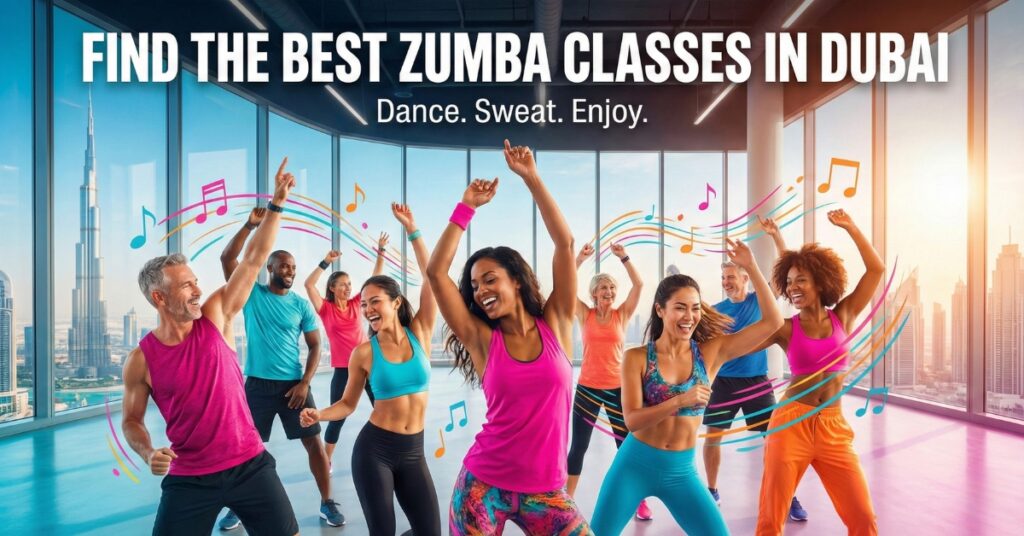
How to Find the Best Zumba Classes in Dubai? Summary: Finding the best Zumba classes in Dubai involves more than choosing the nearest gym or studio. From instructor certification and class structure to location, reviews, and safety standards, several factors influence the quality of your Zumba experience. This guide provides a detailed, practical approach to help you identify reliable, effective, and enjoyable Zumba classes that match your fitness goals and lifestyle. Why Zumba Is a Popular Fitness Choice in Dubai? Dubai has a strong fitness culture, with residents actively participating in group workouts and wellness programs. Zumba stands out because it combines high-energy dance routines with effective cardio training, making workouts enjoyable rather than exhausting. Health Benefits of Zumba Zumba helps improve cardiovascular endurance, coordination, flexibility, and muscle tone. The continuous movement also supports weight loss and boosts mental well-being by reducing stress and improving mood. Zumba for All Fitness Levels One of the reasons Zumba is widely popular in Dubai is its inclusivity. Classes are designed for beginners, intermediate participants, and advanced fitness enthusiasts, allowing everyone to progress at their own pace. Identify Your Fitness Goals Before Choosing a Zumba Class Understanding your personal fitness goals is essential before enrolling in a Zumba class. Zumba for Weight Loss and Cardio Fitness If your primary goal is burning calories and improving stamina, look for Zumba fitness classes that focus on high-intensity routines and continuous movement. Zumba for Dance, Fun, and Stress Relief For those who prefer rhythm, music, and relaxation, dance-focused Zumba classes emphasize enjoyment and coordination rather than strict calorie targets. Choose Between Gyms and Dance Studios in Dubai Zumba classes in Dubai are commonly offered by both gyms and dedicated dance studios. Zumba Classes at Gyms Gyms usually include Zumba as part of their group fitness schedule. These classes are suitable for individuals who want a complete fitness solution with access to gym equipment and other workout programs. Zumba Classes at Dance Studios Dance studios often provide a more expressive Zumba experience. These classes typically have smaller groups, personalized instruction, and a stronger sense of community. Evaluate Instructor Certification and Experience Instructor quality plays a critical role in determining how effective and safe a Zumba class will be. Importance of Certified Zumba Instructors Certified instructors follow internationally recognized Zumba training standards. This ensures proper movement techniques, reduced injury risk, and structured class flow. Teaching Style and Participant Engagement An experienced instructor should be energetic, approachable, and capable of adapting routines for different fitness levels. Trial classes help assess this firsthand. Look for Trial Classes and Flexible Membership Options Trying a class before committing helps you make a confident decision. Benefits of Trial Zumba Classes Trial sessions allow you to evaluate music selection, class intensity, instructor interaction, and overall comfort level. Understanding Pricing and Membership Plans Zumba classes may be offered as single sessions, multi-class packages, or monthly memberships. Choose an option that aligns with your schedule and budget. Read Reviews and Assess Online Reputation Reviews provide valuable insights into real participant experiences. Where to Check Reviews Google reviews, social media platforms, and fitness directories are reliable sources for feedback on Zumba studios and instructors in Dubai. How Reviews Build Trust and Credibility Consistent positive reviews indicate professionalism, good class structure, and a safe workout environment. Consider Location and Accessibility Convenience strongly influences consistency in attending classes. Choosing the Right Location Select a Zumba class near your home or workplace to reduce travel time and increase motivation. Transport and Parking Availability Studios with easy parking or access to public transport make regular attendance more practical. Review Class Schedule and Group Size Class timing and size affect both comfort and results. Flexible Timings Studios that offer morning, evening, and weekend classes provide greater flexibility for busy schedules. Ideal Class Size Smaller classes allow instructors to give more personalized guidance, while larger classes may offer higher energy. Assess Studio Environment and Safety Standards A professional studio prioritizes safety and hygiene. Cleanliness and Space Clean floors, proper ventilation, and sufficient space are essential for a safe Zumba session. Flooring and Sound Levels Shock-absorbing floors protect joints, and balanced music volume ensures comfort during workouts. Making the Right Choice for a Long-Term Zumba Fitness Journey Choosing the best Zumba classes in Dubai comes down to finding a balance between professional instruction, convenience, comfort, and motivation. By attending trial classes, checking instructor credentials, and selecting a studio that aligns with your goals, you can build a sustainable fitness routine that keeps you active, energized, and consistent over time. FAQs Is Zumba suitable for complete beginners? Yes, most Zumba classes in Dubai are beginner-friendly and include simple routines with instructor guidance. How many times a week should I attend Zumba classes? For best results, attending Zumba classes two to four times per week is recommended. Are there ladies-only Zumba classes in Dubai? Yes, many gyms and studios offer ladies-only Zumba sessions across different areas of Dubai. What should I wear to a Zumba class? Comfortable workout clothing and supportive athletic shoes with good grip are ideal for Zumba. Can Zumba help with weight loss? Yes, regular Zumba sessions combined with a healthy diet can support effective weight loss and overall fitness. More than 2 results are available in the PRO version (This notice is only visible to admin users) Most Recent Posts All Posts Blog Bollywood kathak Zumba How to Find the Best Zumba Classes in Dubai? Zumba Benefits: Transform Your Body, Skin, Weight, and Health How Bharatanatyam Promotes Mental Health and Discipline? Category Blog (44) Bollywood (8) kathak (37) Zumba (13) Explore Our Services Join our fun and engaging dance, music, and art classes for all ages! Explore More
Zumba Benefits: Transform Your Body, Skin, Weight, and Health
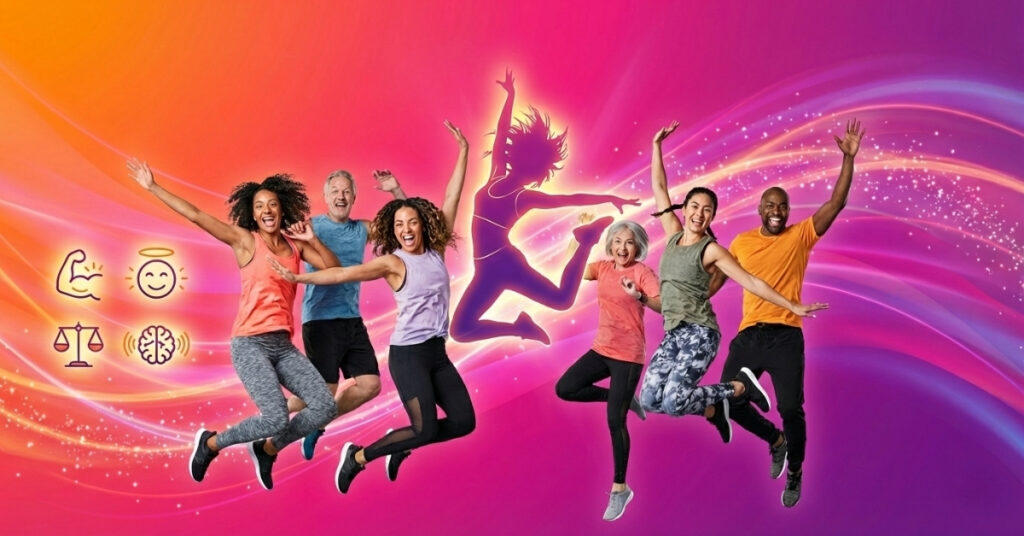
Zumba Benefits: Transform Your Body, Skin, Weight, and Health Summary: Zumba is a fun, high-energy dance workout that improves physical fitness, aids weight loss, boosts mental health, and promotes glowing skin. With its combination of cardio, strength, and rhythmic movements, Zumba offers a complete wellness solution for body, mind, and overall health. Discover how regular Zumba sessions can transform your life. Zumba is more than just a fun dance workout—it’s a full-body fitness routine that improves your physical health, mental well-being, skin glow, and helps with weight loss. Combining lively Latin and international music with dynamic dance moves, Zumba turns exercise into an enjoyable experience. Whether you want to tone your body, shed extra pounds, boost your mood, or simply have fun, Zumba provides a holistic approach to wellness. In this blog, we explore the Zumba benefits for body, skin, weight loss, and mental health, along with tips to maximize your results. What is Zumba? Zumba is a high-energy fitness program that blends aerobic movements, dance steps, and interval training. Inspired by Latin music genres like salsa, merengue, reggaeton, and cumbia, Zumba engages multiple muscle groups at once, improving coordination, stamina, flexibility, and cardiovascular fitness. Unlike traditional workouts, Zumba feels like a dance party, making it easier for people of all ages and fitness levels to stick to it consistently. Key highlights of Zumba include: Fun and engaging music-driven workouts Full-body exercise targeting arms, legs, core, and glutes Suitable for all fitness levels, from beginners to advanced Focuses on both physical and mental well-being Zumba Benefits for the Body Zumba offers a complete workout for your body. Here’s how it enhances physical health: Burns Calories Effectively: A single 60-minute Zumba session can burn 400–600 calories, helping you manage weight naturally. Muscle Toning: Zumba movements like squats, lunges, twists, and jumps tone the legs, glutes, arms, and core. Improves Flexibility and Balance: Regular dance sequences enhance joint mobility and coordination, reducing the risk of injuries. Boosts Cardiovascular Health: Continuous movement elevates heart rate, strengthens the heart, and improves blood circulation. Enhances Endurance and Stamina: High-energy sessions improve your overall physical stamina, making daily activities easier. Zumba Benefits for Weight Loss Zumba is highly effective for those looking to lose weight because it combines cardio, strength, and high-intensity interval training in a fun format. Here’s how it helps: High-Calorie Burn: The dynamic dance moves help burn fat efficiently while keeping you energized. Boosts Metabolism: Consistent Zumba sessions stimulate metabolism, aiding long-term weight management. Targets Problem Areas: Moves like side kicks, lunges, and twists help tone the stomach, thighs, and hips while burning calories. Sustainable Fitness: Because Zumba is enjoyable, it encourages consistent participation, which is key to weight loss. Improves Body Composition: With regular practice, you can lose fat while toning muscles for a leaner appearance. Zumba Dance Benefits for Skin Exercise doesn’t just improve your body—it also works wonders for your skin. Here’s how Zumba contributes to glowing, healthy skin: Improves Blood Circulation: Sweat and movement increase blood flow, delivering oxygen and nutrients to the skin for a natural glow. Detoxifies the Body: Sweating during Zumba helps eliminate toxins, reducing acne, dullness, and other skin issues. Reduces Stress-Related Skin Problems: Lowering stress levels helps prevent pimples, eczema flare-ups, and other stress-related skin conditions. Boosts Collagen Production: Improved circulation and oxygenation promote skin elasticity and anti-aging benefits. Zumba Benefits for Mental Health Zumba isn’t just a physical workout—it also provides significant health advantages : Reduces Stress and Anxiety: Dancing to upbeat music releases endorphins, the feel-good hormones, reducing stress levels. Boosts Confidence and Self-Esteem: Learning and mastering new dance routines enhances self-confidence. Encourages Social Interaction: Group classes foster a sense of community, helping reduce feelings of loneliness or isolation. Improves Mood and Motivation: Music, rhythm, and movement create a joyful environment that enhances mental well-being. Increases Focus and Coordination: Following complex steps improves mental alertness and cognitive functions. Tips to Maximize Zumba Benefits To enjoy the full range of benefits, follow these tips: Consistency is Key: Attend 3–5 Zumba sessions per week for noticeable results. Hydrate Well: Drink plenty of water before, during, and after your workout to stay energized. Start Gradually: Beginners should start with lower intensity and gradually increase the complexity and speed of routines. Pair with Healthy Eating: A balanced diet enhances weight loss, energy levels, and skin benefits. Focus on Form: Proper posture and movement techniques prevent injuries and maximize results. Track Progress: Monitor your calorie burn, weight, or performance improvements to stay motivated. Transform Your Lifestyle with Zumba Zumba is not just a fitness trend—it’s a lifestyle that integrates fun, fitness, and wellness. Regular practice improves your body tone, mental clarity, skin glow, and supports weight management. Unlike repetitive gym exercises, Zumba keeps workouts exciting and sustainable, which is why it is one of the most popular fitness programs worldwide. For those in Dubai looking to start or elevate their Zumba journey, finding the best zumba classes in Dubai ensures professional guidance, structured routines, and an engaging environment that makes fitness fun. FAQs About Zumba How many calories can I burn in a Zumba session? A 60-minute session can burn between 400–600 calories, depending on intensity and individual weight. Can Zumba help me lose belly fat? Yes, Zumba combines cardio and core-focused movements that target belly fat over time when combined with a healthy diet. Is Zumba suitable for beginners? Absolutely. Zumba classes cater to all fitness levels, with modifications for beginners and advanced participants. How often should I do Zumba to see results? For noticeable results, attend 3–5 sessions per week consistently. Does Zumba improve flexibility? Yes. Regular Zumba routines improve flexibility, mobility, and joint coordination. Can Zumba improve my skin? Yes. Increased blood circulation, detoxification, and stress reduction from Zumba promote healthier, glowing skin. Is Zumba good for mental health? Definitely. Zumba reduces stress, boosts mood, enhances confidence, and encourages social interaction. Can I do Zumba at home? Yes, many online classes and videos allow you to practice Zumba at home, though studio classes offer better
How Bharatanatyam Promotes Mental Health and Discipline?
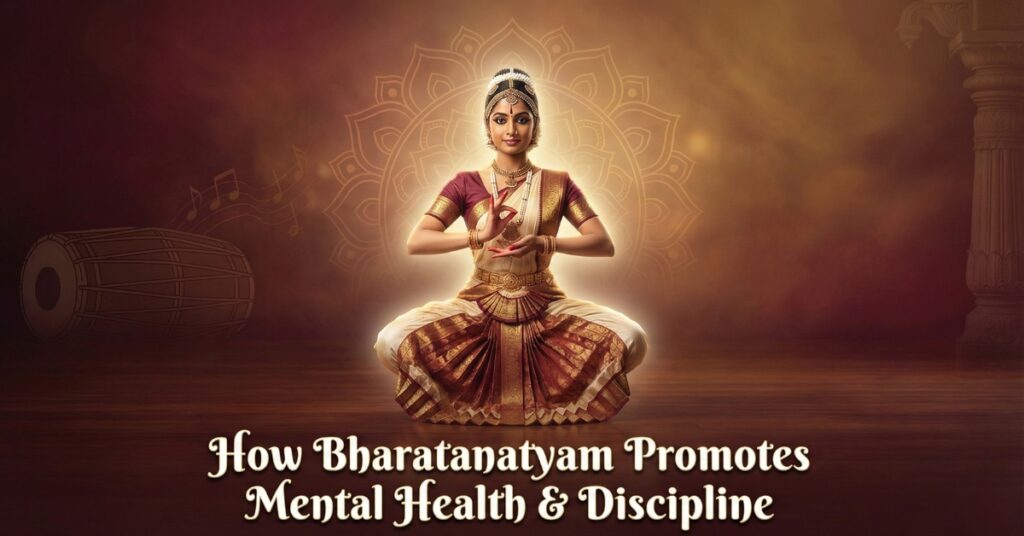
How Bharatanatyam Promotes Mental Health and Discipline? Summary: Bharatanatyam is not only a classical Indian dance form — it is a powerful practice that nurtures emotional balance, focus, confidence, and inner discipline. Through rhythmic movement, storytelling, breath control, and structured training, it strengthens both the body and the mind, helping students develop resilience, self-awareness, and mental clarity at every stage of life. Stress, distraction, and emotional fatigue have become common challenges — especially for children and working professionals. While many people turn to fitness classes or meditation for relief, classical art forms like Bharatanatyam offer something deeper and more holistic. Bharatanatyam integrates movement, music, expression, spirituality, and mindfulness. Practicing it regularly can improve mental health, build inner strength, and cultivate discipline that extends far beyond the dance studio. Let’s explore how this ancient art form contributes to emotional well-being and personal growth. 1. Bharatanatyam Encourages Emotional Expression and Release At the heart of Bharatanatyam lies Bhava — the language of emotion. Through carefully structured gestures, facial expressions, and storytelling, dancers express joy, devotion, sadness, compassion, and courage. Instead of suppressing emotions, students learn to channel them constructively. This process reduces emotional tension, promotes emotional awareness, allows healthy self-expression, and builds empathy toward others. For children and teenagers who often struggle to articulate feelings, Bharatanatyam offers a safe, artistic outlet that strengthens emotional intelligence. 2. Improves Focus, Memory, and Cognitive Skills Each performance requires coordination between rhythm (tala), melody (raga), steps (adavus), gestures (mudras), timing, and storytelling. Learning to synchronize all these layers trains the brain like a mental workout. Students must remember complex patterns, transitions, and cues — improving memory retention and concentration. Over time, this helps them stay more focused in academics, work, and daily life. Many parents notice that children who practice Bharatanatyam become more attentive, organized, and patient in school. 3. Builds Self-Confidence and Stage Presence Performing on stage is a powerful confidence-building experience. Students learn how to stand tall, maintain posture, stay composed, and project their presence to an audience. This sense of achievement gradually reduces shyness and boosts self-belief. Even introverted students begin to feel more comfortable speaking, presenting, and participating in public activities. The discipline of rehearsal and positive encouragement from teachers help students develop healthy self-esteem grounded in effort — not comparison. 4. Encourages Discipline and Consistency Bharatanatyam training is structured and methodical. Students repeat foundational steps, refine details, and strive for precision over time. This cultivates regular practice habits, respect for guidance, patience, perseverance, and responsibility toward commitments. These qualities naturally translate into academic success, work ethic, and personal integrity. Discipline learned through dance becomes a lifelong strength. 5. Reduces Stress Through Movement and Mindfulness The rhythmic footwork, breathing patterns, and musical flow create a calming effect similar to meditation. When dancers immerse themselves in choreography, their minds become present in the moment. This mindful state helps reduce anxiety, slow racing thoughts, improve emotional regulation, and promote relaxation after a hectic day. Bharatanatyam also releases endorphins — natural “feel-good” hormones — which lift mood and combat stress. 6. Enhances Body Awareness and Posture Mental health is closely connected to how we carry ourselves. Bharatanatyam focuses on spinal alignment, grounded stance, coordinated movement, and balanced footwork. Students become more aware of how they move, breathe, and hold tension. Improved posture boosts confidence and lowers physical strain, preventing fatigue, back issues, and stress-related discomfort. 7. Strengthens Cultural Identity and Belonging Bharatanatyam connects students to a rich heritage of mythology, music, and tradition. Learning stories of devotion, courage, and morality helps build values and inner grounding. For children growing up away from their cultural roots, it creates a sense of identity and pride — an important foundation for emotional stability and self-acceptance. 8. Encourages Social Connection and Team Spirit Dance classes create a supportive community. Students rehearse together, encourage one another, and celebrate achievements. This environment reduces loneliness, builds friendships, teaches teamwork, and nurtures mutual respect. Supportive peer relationships are essential for mental well-being, especially during adolescence. 9. A Positive Alternative to Screen Time With increasing exposure to phones and gadgets, many children struggle with distraction and restlessness. Bharatanatyam offers a constructive alternative — engaging the mind and body creatively. It shifts attention away from screens and toward purposeful learning. 10. A Lifelong Practice for Inner Balance Unlike many hobbies that fade over time, Bharatanatyam can be practiced at any age. Whether one continues professionally or simply dances for joy, the lessons of discipline, expression, and mindfulness remain. It becomes a lifetime companion that supports inner peace and personal growth. Bharatanatyam as a Path to Balance and Growth Bharatanatyam is more than performance — it is a journey toward clarity, resilience, and emotional strength. By combining art, tradition, and mindful practice, it nurtures both mental health and disciplined living. For students and families exploring authentic training, enrolling with experienced teachers — such as thebest bharatanatyam classes near Jumeirah Park, Dubai — can provide the right guidance, structure, and inspiration to grow confidently through dance. Bharatanatyam reminds us that when the mind, body, and heart move in harmony, life becomes more centered, meaningful, and deeply fulfilling. Get AI Insights on This Post: CHat – gpt Perplexity Google AI Grok More than 2 results are available in the PRO version (This notice is only visible to admin users) Most Recent Posts All Posts Blog Bollywood kathak Zumba How Bharatanatyam Promotes Mental Health and Discipline How to Choose the Right Bharatanatyam Classes in Dubai How to Improve Footwork and Body Posture in Bharatanatyam Category Blog (42) Bollywood (8) kathak (37) Zumba (11) Explore Our Services Join our fun and engaging dance, music, and art classes for all ages! Explore More
How to Choose the Right Bharatanatyam Classes in Dubai?

How to Choose the Right Bharatanatyam Classes in Dubai? Bharatanatyam is more than just a dance form — it is a beautiful blend of discipline, devotion, expression, and storytelling. For families and students in Dubai, choosing the right Bharatanatyam class can shape not only technical skills, but also confidence, cultural connection, and lifelong passion for the arts. With so many academies and teachers now offering classical dance programs, it can feel overwhelming to decide where to enroll. The right choice should balance authenticity, safety, structure, and inspiration. In this guide, we’ll explore the key factors to consider before joining Bharatanatyam classes in Dubai so you can make a confident and informed decision. 1. Check the Teacher’s Training and Lineage Bharatanatyam is traditionally passed down through guru–shishya parampara (teacher–student lineage). A well-trained teacher ensures that technique, posture, rhythm, and expressions are taught correctly and respectfully. What to look for: Formal training under a recognized guru or institution Performance experience on reputable stages Knowledge of nritta (pure dance), abhinaya (expression), and theory Ability to break complex movements into simple steps for beginners Don’t hesitate to ask about their background. A good teacher will always be happy to discuss their journey and approach. 2. Review the Curriculum and Learning Structure A strong Bharatanatyam program follows a structured syllabus that gradually builds strength, flexibility, coordination, and expression. A quality curriculum typically includes: Warm-ups and conditioning Basic steps (adavus) Rhythmic exercises Hand gestures (mudras) Facial expressions and storytelling Repertoire items such as Alarippu, Jatiswaram, and Varnam History, theory, and cultural context Avoid classes that rush students into choreography without developing a strong foundation. 3. Class Size and Personal Attention Bharatanatyam requires precise corrections — from foot alignment to hand placement and facial expressions. Smaller batches make a big difference, especially for children. Ideal class sizes: Beginners: 6–10 students Intermediate: up to 12 students If classes are too crowded, students may miss important guidance that shapes long-term progress. 4. Studio Environment and Safety A safe, supportive learning environment encourages students to thrive. Consider: Clean, spacious studio Non-slip flooring Proper ventilation and lighting Injury-free training methods Respectful and inclusive culture A welcoming studio builds confidence — especially for young beginners. 5. Opportunities for Performances and Exams Performances motivate students and build stage presence. Exams and certifications add credibility and structure. Ask whether the academy: Hosts annual shows or cultural events Encourages exam participation through recognized boards Balances performance opportunities without pressure The right exposure helps students grow steadily. 6. Communication with Parents and Students Clear communication builds trust. Look for academies that: Share regular progress feedback Maintain transparent fee structures Offer trial classes Are open to questions A supportive teacher–parent partnership truly enhances learning. 7. Location, Timing, and Consistency Choose a class that comfortably fits your routine to maintain consistency. Consider: Distance and travel time Parking or public transport access Class schedules Flexibility for make-up sessions Convenience plays a big role in long-term commitment. 8. Student Reviews and Word of Mouth Speak to parents and students who have trained at the academy. Observe the confidence and discipline of senior students during performances. Genuine feedback tells you a lot about teaching quality and environment. 9. Trial Class — The Final Deciding Factor Attend a trial session before enrolling. Notice how the teacher explains, corrects posture, and motivates students. Ask yourself: Was the class structured? Did I feel comfortable and encouraged? Did I understand the steps clearly? Your comfort and confidence matter most. Why Choosing the Right Bharatanatyam Class Matters? The right academy does more than teach dance — it shapes character. Students often gain: Better posture and fitness Improved focus and memory Emotional expression and confidence Cultural connection Discipline and grace Bharatanatyam becomes a meaningful journey. Your Path to the Right Bharatanatyam Class! Choosing Bharatanatyam classes in Dubai is an investment in culture, creativity, and personal growth. Whether you are just starting or looking to advance your training, exploring options such as thebest bharatanatyam classes in Jebel Ali Village, Dubai can help you find a school that truly matches your goals and learning style. Visit studios, talk to teachers, watch performances, and trust your instincts. The right environment will nurture both skill and passion. Get AI Insights on This Post: CHat – gpt Perplexity Google AI Grok More than 2 results are available in the PRO version (This notice is only visible to admin users) Most Recent Posts All Posts Blog Bollywood kathak Zumba How to Choose the Right Bharatanatyam Classes in Dubai How to Improve Footwork and Body Posture in Bharatanatyam Key Elements of Bharatanatyam: Bhava, Raga, Tala, Natya Category Blog (41) Bollywood (8) kathak (36) Zumba (11) Explore Our Services Join our fun and engaging dance, music, and art classes for all ages! Explore More
How to Improve Footwork and Body Posture in Bharatanatyam
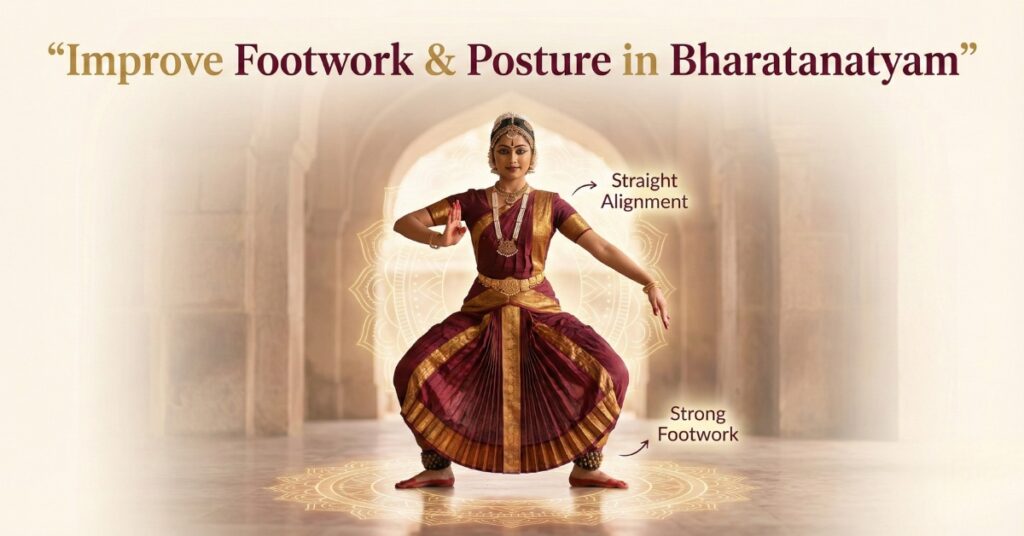
How to Improve Footwork and Body Posture in Bharatanatyam Summary: Strong footwork and proper body posture form the foundation of Bharatanatyam. This blog explains practical techniques, training tips, and mindful habits dancers can use to improve balance, rhythm, alignment, and grace while performing. Bharatanatyam is celebrated for its precision, power, and expressive elegance. Behind every captivating performance lies disciplined training — especially in two core areas: footwork (adavus) and body posture (araimandi and alignment). Good technique not only enhances stage presence, but also prevents injuries, improves stamina, and builds confidence. Whether you are a beginner or refining your skills, understanding how to correctly use your feet and maintain posture can completely transform your dance. Let’s explore simple, effective ways to train smarter and dance with greater strength and beauty. 1. Understanding the Importance of Footwork Footwork in Bharatanatyam forms the rhythmic base of every movement. Each adavu requires clarity — the sound of the anklets should be clean, controlled, and perfectly timed. Clear footwork helps: Maintain rhythm with the tala Support hand gestures and expressions Enhance stage presence Synchronize with music and percussion Practicing slowly first, then increasing speed gradually, allows accuracy to develop without tension. 2. Strengthening the Araimandi (Half-Sitting) Position Araimandi is the classic Bharatanatyam posture: knees turned out, back straight, hips grounded. It may feel difficult initially, but it builds stability and grace. Focus on: Keeping the chest lifted, not collapsing forward Relaxing shoulders instead of tightening Engaging the core muscles for support Short practice sessions held for 20–30 seconds and gradually increasing duration help build endurance safely. 3. Building Rhythm Awareness Even perfect steps lose impact without rhythm. Training your ear to recognize patterns improves control and confidence. Try: Practicing with a metronome or basic tala beats Clapping the rhythm before dancing Counting aloud while performing adavus Rhythm training ensures your feet land precisely and naturally. 4. Training for Balance and Stability Proper posture reduces unnecessary strain on the knees and back. Work on distributing weight evenly between both legs during movements. Useful exercises include: Standing balance holds Slow transitions between poses Controlled turns while focusing on a fixed point Balanced dancers move with calmness rather than struggle. 5. Improving Foot Strength Strong feet help produce sharp, crisp sounds without excessive effort. Simple exercises: Toe lifts and flexes Tapping patterns while seated Practicing barefoot to feel the ground better Over time, these drills enhance support and articulation. 6. Coordination Between Upper Body and Feet Many learners focus so much on steps that hands and expressions lag behind. The goal is harmony. Practice: Adavus first with hands on the waist Then add mudras slowly Finally include expression and eye movements Layering movement trains coordination without overwhelm. 7. Breathing and Relaxation Tension affects posture and rhythm. Controlled breathing keeps movements fluid. Inhale during preparation, exhale through effort — this makes difficult sequences feel lighter and more natural. 8. Using Mirrors and Video Feedback Watching yourself practice helps catch mistakes early: leaning forward, uneven knee positions, or sloppy landings. Record short clips during rehearsals — they reveal details your teacher may correct later. 9. Learning from a Trained Instructor Guidance matters. Personalized feedback prevents habits that become hard to correct later. If you are seeking expert coaching, you may consider exploring the best bharatanatyam classes in Dubai, structured training, posture correction, and systematic adavu practice can accelerate improvement. Building Strength, Grace, and Confidence Through Practice Improving footwork and posture is a journey of patience, repetition, and awareness. With dedicated practice, dancers develop stronger legs, cleaner technique, and a centered presence on stage. Over time, the body remembers alignment naturally — allowing expression, storytelling, and devotion to shine through. FAQs 1. How often should I practice to improve footwork? Practicing 20–30 minutes daily, focusing on accuracy before speed, produces steady improvement. 2. Why does araimandi hurt at first? It uses muscles that are often weak. Gradual strengthening and correct alignment reduce discomfort over time. 3. Should I use anklets while practicing? Yes — they help track rhythm and clarity, but start light and increase weight gradually. 4. How do I avoid knee pain? Keep knees aligned with toes, avoid leaning forward, and warm up before practicing. 5. Can beginners improve posture quickly? Yes — with consistent corrections, core strengthening, and mindful practice, results appear within a few weeks. Get AI Insights on This Post: CHat – gpt Perplexity Google AI Grok More than 2 results are available in the PRO version (This notice is only visible to admin users) Most Recent Posts All Posts Bharatanatayam Blog Bollywood kathak Zumba Bharatanatyam Dance Costumes, Jewellery, And Makeup Guide Top 10 Benefits Of Learning Kathak Dance For Children and Adults How Long Does It Take to Learn Kathak? Category Bharatanatayam (14) Blog (65) Bollywood (8) kathak (41) Zumba (24) Explore Our Services Join our fun and engaging dance, music, and art classes for all ages! Explore More
